Imagine walking into a room on a cold morning. The air bites a little, so you glance at the thermometer and it tells you the room is 58 degrees. But the thermometer doesn’t change a thing. It just reflects the environment. The thermostat, however, quietly kicks on the heat and begins to shape the environment.
The Thermometer of Reactive Theology
Too often, Christians develop their theology (i.e. their deepest beliefs about God and life’s biggest questions) more like a thermometer rather than a thermostat. They simply react to whatever temperature their life experiences set for them.
A hurtful church experience makes them suspicious of authority, so they redefine it.
Grandpa was a mean MAGA Christian so now they think talking politics is sinful.
A lady had bad experience in church leadership so she keeps an arms length from any church ministry or quits church altogether.
Someone was told Complementarians are chauvinistic woman haters so they reject with vigor.
Someone grew up in a janky mega-church so they denounce having a nice website as evil.
Some judgmental Christian hurt their feelings, so they swing to an uncritical tolerance.
A Calvinist was mean to them so they hate Calvinism.
A cold, theologically rigid church makes them recoil from anyone who quotes a theologian or cares about theology.
When cultural pressure pushes, their beliefs subtly shift to fit the moment.
The examples are legion, but the impulse is the same. This is reactive theology. It is throwing out babies with the dirty bathwater because of their limited perspective. It is a faith molded by our experiences, wounds, biases, or cultural moods rather than by Scripture.
The Thermostat of Proactive Theology
What we need instead is proactive theology. An understanding of God that doesn’t merely reflect our experiences but reorients them. Proactive theology begins with the assumption: God is God and I am not; his Word is authoritative and my experiences are not. A Christian with a proactive mindset wants to develop their deepest beliefs according to the true and authoritative words of God and not their present preferences or past pains. To accomplish this, they intentionally and carefully read Scripture on its own terms, test their conclusions through meaningful and humble conversation with other believers, and anchor their worldview in the character of God rather than the failures of His people or pop-culture. Proactive theology sets the temperature of our hearts and minds according to the Word of God rather than merely reflecting the hardships of the past or the present climate of our culture. They’re ruled by the thermostat of God’s Word rather than the thermometer of their hearts.
All of us carry experiences, biases, and wounds that shape who we are. No one is immune to life’s shaping influences. To claim otherwise is either embarrassingly ignorant or deeply dishonest. Yet Scripture calls us to have our minds renewed by God’s Word (Romans 12:1-2), not enslaved by our past or present (Ephesians 2:3). Our responsibility is clear: humbly, sincerely, and earnestly ensure that our experiences do not dictate what we believe. That work belongs to God alone.
If we let our deepest beliefs about God be formed by our experiences, we are doomed to build a theology as unbalanced (and as harmful) as the one we were trying to escape. In love, God forbids that. And so should we.
Beloved, don’t let your wounds write your theology.
We’re told the Left is secular—a party of reason, free thought, and evidence. No gods, no dogma, no rigid rules. Just progress. Right? That may have been closer to the truth of the old Left (e.g. the Clinton-era liberalism that still believed in debate, persuasion, and tolerance).
But today’s radical Left is something entirely different. It has moved from political philosophy to religious faith. Radical Progressivism (i.e. Leftism) is a religion. It has a faith it proclaims, sacred doctrines it holds, idols it worships, heretics it condemns, and a priestly class of elitists that enforces its absolute orthodoxy. Question or challenge it at your own peril.
The Marks of Leftist Religion
If you’re unsure whether radical Leftism is a religion, consider its practice of indoctrination, the doctrines it preaches, and the excommunication of gleefully carries out for those who dissent from within her ranks.
Leftist Indoctrination
Progressives see education as a tool to teach people what to think, not how to think.
I was public-school educated from K–12. I’ve met hundreds of students through teaching high school and college professionally for ten years and serving in youth ministry for twenty. This is exactly my experience: Leftist education practices indoctrination. The Left doesn’t want students to reason their way to belief—it commands them what to believe. Anyone who questions the sacred teachings triggers anger or disdain from their teachers.
Unlike Christianity, which calls for reasonable faith supported by evidence and argument, Leftism demands blind faith. Accept the dogmas without question—critical race theory, macro-evolution, gender ideology, climate alarmism. Challenge them, and students are accused of every phobia, judged moral failures, treated as heretics, or socially excommunicated from the ranks of the faithful.
Leftist Doctrines
In addition to the teaching method of indoctrination they, Leftism has a few sacred doctrines, void of any philosophical or scientific reasoning, demand total adherence to. Here are a few of the biggies.
Abortion: The Left preaches all women have a fundamental right to “terminate their pregnancy” (i.e. kill the unborn human inside of her) if they so choose. Anyone who questions this doctrine faces public shaming, vitriolic accusations of being a misogynist who’s callous to the plight of women, and social exile.
Gender: Reality bends to one’s own personal belief for feelings. Biological sex is irrelevant. Anyone insisting otherwise (like athletes defending women’s sports) faces attacks, firings, or boycotts.
Critical Theory: All must see the world through the lens of systemic oppression. There are only two kinds of people: the oppressors and the oppressed. One is judged not by the conduct of their character, but the color of their skin or how high they score in the intersectionality olympics. Question the narrative, advocate colorblind policies, and you’re labeled a racist/(insert-marginalized-group-of-choice) phobic heretic.
Redistribution of Wealth (i.e. Theft): Taxation and wealth redistribution are holy mandates. The poor are entitled to the extra-abundant riches of the wealthy. The government is Robin Hood and must take from the rich to give to the poor. Criticize this questionable economic principle and you’ll be deemed greedy and unloving the those in need.
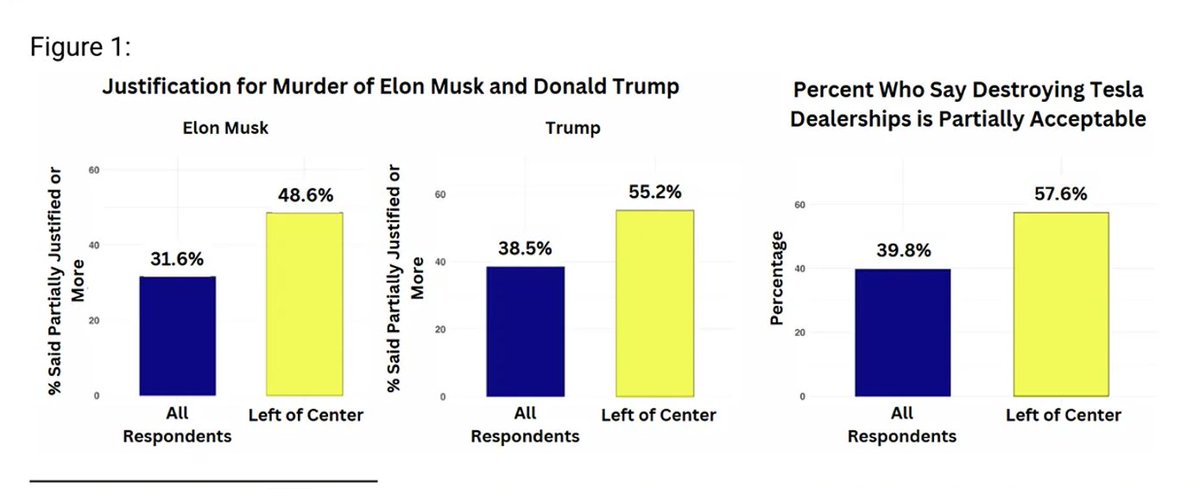
Violence:Recent polls and current events show that those on the Left are increasingly OK with political violence as long as its “in service of justice” or against those pesky “Nazis, Secret Police, or Gestapo”. Riots, assassinations, and online harassment are framed or even celebrated as righteous acts against evil.
What once claimed to be reasoned politics has become a rigid orthodoxy where dissent is sin and submission is salvation.
Leftist Excommunication
As mentioned above, the Religion of the Left is not shy about its doctrines and will happily excommunicate if any transgress the Sacred Doctrines. Consider J.K. Rowling, the celebrated author of Harry Potter, once a darling of the Left, now lives with the Scarlet Letter of “T” (for Transphobe) upon her back for the crime of denying that a man can become a woman. Joe Rogan has faced similar trials for platforming forbidden ideas and allowing forbidden people from sharing their ideas in civil dialogue. Depart from Leftist orthodoxy and the masked faithful crowd will cry (or type in all caps), “Crucify them!”
The New Religious Fundamentalists
Maybe you can see it now? Modern Leftists are more fundamentalist than the boogeyman Bible-thumpers of the South we’ve heard so much about. They’re dogmatic about their dogmas. More authoritarian in their demand for utter uniformity in faith and practice. More aggressive in policing anyone who strays even a hair from the sacred line. The political beliefs and the enthusiasm with which they’re proclaimed and defending by Progressives are so hardcore, they make Bob Jones look like a kitten.
Progressivism isn’t secular. It’s creed requires no evidence or allows no dissent, just blind faith. Its rituals (e.g. social shaming, canceling, ideological indoctrination) are employed with religious fervor. We ignore this reality to our peril.
Recognizing Leftism as a religion helps explain why Christians should care about today’s political landscape and why pastors should speak on it. Leftism is a false religion disguised as mere politics. Pastors are called to expose false religions and warn people against contrary gospels (Matt 7:15; Rom 16:17–18; 1 Tim 4:16; Titus 1:9). It’s not that pastors are becoming more political (though some may be) but that politics is becoming more religious. Condemning pastors for addressing Leftism may reveal that we don’t see the wolf beneath the sheep’s clothing.
A Better Gospel
Modern Leftism is not just a political movement. It’s a religion, a really bad one at that. It has creeds and rituals, but no gospel. Samuel James pointed this out a few years ago:
“The modern campus culture is a religious culture, but it’s a religion without God, and consequently it is a religion without grace… Evangelical Christians have an understanding that secular, culture-policing social-justice activists can only mimic—an understanding that the world is a guilty place and that truth, goodness, and beauty must be striven for instead of assumed. The gospel of Christianity offers new life through repentance and spiritual rebirth. There is no such gospel in the worldviews of secular students; the best that can be strived for in them is tribal purity.”
Christians must wake up to the reality that modern Leftism is a false religion masquerading as neutral politics. Our task is not only to expose it for what it is, but to evangelize those trapped within it. Leftism offers only bad news: a message of guilt without grace, purity without pardon. But we’ve been entrusted to guard and herald the good news: the gospel of Jesus Christ, which alone brings forgiveness, freedom, and new life. We must expose the wolf of Leftism and be ready to proclaim the saving gospel of Christ to those caught in its jaws
I grew up being taught and believing that Christians shouldn’t get involved in politics. We’re supposed to be about the spiritual things and leave the world to their games of power. Christ is on the throne so we shouldn’t be bothered by who is in the Oval. Jesus isn’t Left or Right so we shouldn’t be or even appear to be. The Christian life, I was told, stays out of politics.
As I grew and learned more, I realized that political aloofness isn’t the default Christian posture throughout history, but rather an expression of a specific tradition called quietism. Emerging in 17th-century Catholicism through figures like Miguel de Molinos and Madame Guyon, quietism taught that the highest form of the Christian life was total passivity before God—a “quiet” soul that ceased striving or willing. Unsurprisingly, this view discouraged moral action, evangelistic effort, and political or social engagement as worldly distractions (pietism often yields the same result). Recognizing this helped me see that political inaction is not inherent to biblical Christianity, but rooted in a particular spiritual tradition.
I then realized my next question: does the Bible teach that Christians ought to be political aloof? Fast forwarding through years of personal study, discussion, and experience, I came to believe it isn’t.
Three Truths for a Christian in a Democratic Republic
To grab hold of some clarity, let’s first start with three truths I think most of us can all agree on.
Christians have an obligationto love their neighbor
Jesus clearly teaches us that we are to love our neighbor as ourselves (Matt. 22:39). When he was cheekily asked, “Who is my neighbor?” he answered clearly: everyone (Luke 10:25-37). This means every Christian has the responsibility to love our families, our cities, and the neighbors in our country. Whenever we’ve the chance and ability, we’re to work for the good of those within our sphere of influence.
Christians have a responsibility to govern
This is true for a Christian who is a citizen of a free democratic republic. Christians in other governing structures would have different rights and responsibilities depending on the governmental environment they’re in. Christians in America have a right and duty to govern (and love) the nation through casting their informed votes for leaders, legislation, and other significant societal matters. Being an American comes with a responsibility of governance. It is a right that should not be taken for granted nor a duty to be forsaken.
Christians have a right to express truth
The First Amendment protects the right to free speech. Christians have the freedom to teach, correct, protect, and promote truth, goodness, and beauty in our society with their words. Scripture calls believers to lovingly exercise the ministry of their tongues—to speak words “fitly spoken” (Prov. 25:11), to offer gracious speech “seasoned with salt” (Col. 4:6), to “speak the truth in love” (Eph. 4:15), to communicate what is “good for building up” (Eph. 4:29), and to give “a ready answer” that brings joy (Prov. 15:23). Knowing ideas have consequences, it is crucial that Christians minister with their mouths in their areas of influence to enlighten, encourage, correct, and build up society so our neighbors may live in reality and not fall victim to destructive illusions.
This third point is one of the reasons I write on this blog and post on social media. I want to use my words to help my brothers, sisters, and neighbors think well on important issues. I don’t write publicly to stir people’s emotions or build a platform, but to bring light into the public square to help others (myself included!) to see things more clearly and live better because of it. I write to tear down what’s bad and build what’s good.
Given these three truths, here is my argument:
An American Christian ought to vote and speak in a way to as an act of love for their neighbor (i.e. their family, city, state, and country).
The way a Christian does these things will be different according to their resources, influence, and skill, but the activity of doing these things should not be neglected since it’s an expression of our duty to love.
Some Caveats
A few clarifying notes on what the above does not mean may help.
First, this does not mean that political engagement is the primary mission of the church. The church’s sole mission is to proclaim the gospel and make disciples of Jesus Christ from all nations (Matt. 28:18–20).
Second, this does not mean that gathered worship should become a political rally. When the church gathers, its aim must be to worship Jesus, preach Jesus, administer the ordinances of Jesus (i.e., baptism and communion), and call people to trust and obey Jesus through the faithful teaching of Scripture.
Third, this does not mean that all Christians must agree on every political issue or policy. As Andy Naselli has shown, many political questions are complex and can be approached in good faith by different people in different ways.
What this does mean is that Christians should not be hesitant to engage politically. They should be eager to do so for the good of their neighbor and the glory of King Jesus. Political engagement is not ultimate, but it is necessary. The church must never confuse the gospel with politics or elevate earthly citizenship above heavenly allegiance; yet followers of Jesus must remember that their gospel-shaped convictions are meant to inform every sphere of life, including the political one.
Christian Faithfulness in Nazi Germany
To put some flesh on this, consider what faithfulness to Christ looked like during the rise of the Nazi regime.
If you or I were Christians living in Germany in the 1930s, would it have been faithful to Christ to stay politically aloof—to remain “above” politics while Hitler consolidated power, silenced dissent, and began his campaign of hatred, tyranny, and violence? Of course not. We would expect Christians to use every means available to resist such evil: to speak publicly against Nazi ideology in order to persuade neighbors of its moral corruption and to protect Jewish friends and families. If given the right, we’d vote against the Nazi Party’s rise to power and call other believers to do the same. In that situation, political action would be an obvious expression of neighbor love. Refusing to engage politically would have meant abandoning our neighbors to destruction.
You could do the same hypothetical by asking, “How should Christians have engaged with the African slave trade, the Jim Crow laws, the South African apartheid, the Soviet suppression of religious liberty, or the regimes that persecute Christians and minorities?” In each case, faithful discipleship demanded more than private piety. Each called for public, courageous, neighbor love.
Political engagement, rightly understood, is a necessary arena where Christians live out the command to love our neighbor as ourselves. It is not ultimate, but it is necessary.
There’s a lot more to say (likely to come later), but not less. Loving our neighbors in America means that, in ways suitable to our position, skills, and influence, we are to be light and salt in both spiritual and political matters.
Last night at our home group, we opened the Word and discussed this past Sunday’s sermon text on 1 John 4:7–21, which offers a compelling picture of where love comes from, what love looks like, and how we can enjoy and express it. It was dope.
The World’s Definition of Love
One of the questions we discussed was, “What are the definitions of love we often see in the world?” Of the many good answers, one struck me with peculiar force:
“Love is unconditional affirmation.”
I think that’s right. There is a widespread belief that loving someone means always accepting and embracing whatever they choose to think, feel, or do and that it’s always unloving to challenge, confront, or correct. This view thinks love should be all sugar and no scalpel.
The Problem with Unconditional Affirmation
In truth, that kind of “love” is lazy, selfish, and utterly unlike the love Christ shows at the cross. Kevin DeYoung describes this well:
“Love is so much more difficult than the bumper stickers make it out to be. It requires so much more than a general sentiment of good will. It is so much deeper and better than unconditional affirmation.
What does unconditional affirmation require of you by way of sacrifice? Nothing. All it requires is a wave of the hand—‘Whatever you do, I’m fine. However you live, that’s fine.’ The problem with unconditional affirmation is not that it is too lavishly loving, but that it is not nearly loving enough.
When God tells us to love our brothers, he means more than saying, ‘I’m okay. You’re okay. Whatever you do is fine and I don’t judge.’ To really love your brother is to lay down your life for him. It requires you to die to yourself, which may mean a sacrifice of your time, your reputation, and your comfort. Unconditional affirmation only asks that you sacrifice your principles.”
Indeed, true love accepts others as they are, but it cares too much to leave them that way. Sometimes, when someone is being foolish or destructive, love leaves their side and gets in their face for their good.
The Cost of True Love
Love is harder than we think. Of course, we love our kids, our grandkids, and those who treat us well. We love nice people. But Jesus says even the pagans do this. It’s not hard. People naturally love those who love them.
The real test is this:
Will we keep loving when it means bearing burdens we’d rather avoid?
Will we love when the people we love do not love us in return?
Will we lay down our lives for those who are unlovely, undeserving, and ungrateful?
Isn’t that what Christ did for us? When we were unlovely, undeserving, and ungrateful, Christ died for us. He loved us not because we were holy, but so that we might be holy. His love was self-sacrificing, sin-atoning, and life-transforming.
He loves us with a love that the world does not understand—and it is infinitely better than unconditional affirmation.
A Better Kind of Love
Christians are products of a love that isn’t unconditional affirmation, but selfless confrontation. The love of Jesus compelled Him not only to be our sacrifice, but also to convict us of sin in the deepest places of our hearts. His is a love that would not affirm us, but interfered with us. And for that reason, His people will sing His eternal praise.
The recent death of Charlie Kirk has sent me into a tailspin of emotion and deep reflection. From reflection, I believe there is an important note that needs be said out loud.
When we look honestly at political violence in America over the past few years, a clear pattern emerges in assassinations (attempted or successful), riots, and school shootings.
Increased Assassinations
There have been increased targeted attacks on individuals:
Aaron Danielson (Aug 29, 2020): Patriot Prayer supporter shot and killed in Portland by an ANTIFA activist during protests.
Brett Kavanaugh (Jun 7, 2022): Supreme Court justice targeted near his home by an armed man angry over Roe v. Wade; plot foiled.
Donald Trump (Jul 13, 2024): Former president grazed by a bullet during a Pennsylvania rally; one innocent bystander killed, shooter neutralized.
Donald Trump (Sep 15, 2024, unconfirmed): Alleged foiled plot at a Florida golf club.
Brian Thompson (December 4, 2024): Assassinated UnitedHealthcare CEO in protest of corporate greed; act praised in radical anti-corporate and accelerationist circles and justified by many in mainstream media.
Charlie Kirk (Sep 10, 2025): Conservative commentator shot and killed while speaking at Utah Valley University.
Increased Riots
There have been numerous, destructive riots.
George Floyd Protests / Minneapolis Riots (May 2020): Police precinct burned, widespread looting and arson across the city.
Kenosha Unrest (Aug 2020): Arson, looting, and destruction after Jacob Blake’s shooting.
Portland Federal Courthouse Siege (Summer 2020): Molotov cocktails, fires, and vandalism targeting federal buildings.
Seattle CHAZ/CHOP Occupation (Jun 2020): Autonomous zone created after police left a precinct; shootings and lawlessness followed.
Atlanta “Stop Cop City” Riots (Jan 2023): Rioters torched police cars and construction equipment at a police training site.
George Floyd Anniversary Protests (May 2021): Destructive riots in multiple cities marking the one-year anniversary.
Increased School Shootings
Tragically, our schools have become increasingly unsafe as well.
Covenant School (Mar 27, 2023): Transgender former student murdered six at Christian school in Nashville.
Feather River School (Dec 4, 2024): Shooter with possible anti-Christian motive wounded two at Seventh-day Adventist school.
Abundant Life Christian School (Dec 16, 2024): Shooter killed two at Christian school; motives under investigation.
Annunciation Catholic School (Aug 27, 2025): Former student, who identified as transgender, opened fire during a Catholic Mass—killing two children and injuring 17 others—before committing suicide; authorities are investigating the attack as a hate crime and domestic terrorism.
Did You Spot the Theme?
There is a pattern emerging through these events.
What ties many of these tragedies together is not just anger but a worldview shaped by rhetoric that is consistently, unitedly, and relentlessly voiced within a sector of the political left—and only the left. Hear me clearly: I am not saying leaders are openly calling for violence. I am saying that a segment of the left promotes ideas and frames their opponents in ways that create a mental framework which encourages, motivates, and justifies violence.
Political violence is a feature, not a bug of progressivism.
Because progressivism is built on top of a Critical Theory lens that sees the world through “Oppressed vs Oppressor” categories rather than a Christian Theology lens of “Right vs Wrong”, it trains people to see opponents not as mistaken, but as evil oppressors.
If you believe someone is mistaken, you try to persuade them (what Charlie Kirk did).
If you believe someone is an evil oppressor (“literally Hitler!”, “fascist”, “existential threat to democracy”, virtually everything and everyone is “racist”), you will feel a moral obligation to stop them.
This is why there is radically disproportionate violence emerging on the Left.
When political leaders, media figures, and cultural influencers within the Left say “Trump is Hitler,” “ICE is the Gestapo,” “conservatives are fascists,” or “America is on the brink of theocracy”—and when TikTok voices openly mourn assassination attempts or celebrate assassination successes —they are not merely exaggerating. They are working from and building into an intellectual framework and moral permission system that convinces unstable people that violence is not only justified, but necessary. They teach and speak in a way that, if taken seriously, makes violence inevitable.
Last month I mentioned this ideological and rhetorical pattern and some pushed back with “What about January 6th?” But given the events listed above, even in brief, it is inaccurate and dishonest to equate January 6th—foolish, chaotic, and reckless though it was—with the scale, destructiveness, death toll, and intentionality of these other incidents. January 6th was a single outburst. These others are repeated waves of riots, arson, assaults, and assassinations fueled by years of overheated rhetoric. Recognizing that difference does not excuse January 6th, but it does acknowledge reality: it is nothing like the tragedies above. To claim otherwise is, at best, inaccurate—or, at worst, willfully deceptive.
Why Am I Writing About This?
I’m not a politician—I’m a pastor, professor, and teacher. I write this because Jesus calls us to “speak the truth in love” (Ephesians 4:15). Valuing that will affect our words and how we evaluate the words of others. Doing that is always wise, good, and beautiful. Promoting that will help us, our families, and our nation flourish. Speaking truth in love, though it isn’t always easy or liked by others, is always good.
Brothers and sisters in Christ, we must freshly commit ourselves to truth and goodness in word and deed. Ready to speak a word in season and equally ready to condemn what is false and evil wherever it shows up—whether on the Right or the Left. Our commitment to the Lord must make its way into our speech and our evaluation of the speech we hear.
Sadly, Kirk’s death highlights, underlines, and italicizes his assessment. Even more, the data matches our news feeds, doesn’t it? There is a cancer of thinking and speaking that lives on the Left aisle of modern politics. This is a pattern that wisdom says to recognize, truth says to admit, and love demands a response to.
None of this means those in the center or on the right are always correct. Nor does it mean every liberal is evil or that all on the left are guilty or complicit. This is not a blanket condemnation of everyone in one party, nor is it a blanket justification of the other. It is, rather, a condemnation of specific ideologies and consistent rhetoric—found and nurtured in some sectors of the left—that fuel patterns of disaster and tragedy.
We must be honest, on both the left and the right, about the words and ideas that create the permission structure for political violence. If you identify with “the left,” hear me: I am your friend. I am asking you to join me in condemning these deadly ideologies and reckless words—wherever they come from.
For Truth & Love’s Sake, We Must Do Better
I write this not as a “gotcha” or to score points, but as a humble attempt to help my fellow Americans—left, right, and center—see this violence and chaos are coming from, justified, and nurtured by ideologies and rhetoric that only exists on the Left. If we want our nation to heal and if we want to love our neighbor well, we must acknowledge the source of this violence, refuse to participate in it, and never let it pass without rebuke. As the Apostle Paul reminds us, “Have nothing to do with the fruitless deeds of darkness, but rather expose them” (Ephesians 5:11).
By all means, we should freely disagree about policies, ideas, strategies, and arguments. We must value rigorous, honest, and intellectual debate. Don’t mince words or hide arguments—but may we all argue with integrity, always exposing error while holding fast to truth and love. Ideas and words are not neutral; they shape our perception of reality. Think clearly. Speak wisely. Speak well. Your words matter.
The gospel of Jesus is against earning, not effort. In fact, for those who’ve trusted in Christ for salvation, effort is commanded. After all, didn’t Paul write, “Make every effort...to be holy” (Hebrews 12:14) and “work out your salvation with fear and trembling” (Phil. 2:13). Jesus won us our salvation in full (justification by faith alone; Romans 3:21-26), but we experience and grow into its fullness only inasmuch as we intentionally walk in it (sanctification by grace-fueled effort). Like our physical bodies, we don’t work for our salvation, but we do work it out.
I wonder, how much effort are making to become more like Jesus in how you think, feel, and act? What are you doing to grow?
Epictetus, the Stoic Philosopher, once lovingly rebuked his own students and their lackadaisical efforts to improve themselves. I think his words speak even more powerfully to Christians saved by grace.
How long will you wait before you demand the best of yourself…? You have been introduced to the essential doctrines and claim to understand them. So what kind of teacher are you waiting for that makes you delay putting these principles into practice until he comes? You’re a grown man already, not a child any more. If you remain careless and lazy, making excuse after excuse, fixing one day after another when you will (finally get serious)…you will have lived and died unenlightened.
Decide that you are an adult who is going to devote the rest of your life to making progress. Abide by what seems best as if it were an untouchable law. When faced with anything painful or pleasurable, anything bringing glory or disrepute, realize that the crisis is now, that the Olympics have started, and waiting is no longer an option. The chance for progress, to keep or lose, turns on the events of a single day. That’s how Socrates got to be the person he was, by depending on reason to meet his every challenge. You’re not yet Socrates, but you can still live as if you want to be him.
God has equipped you, dear Christian, with every grace needed to grow, mature, and flourish into the image of Jesus. His Son’s blood cleansed your sin and saved you from judgment. His Spirit dwells within. His Word lights your path. His church is alive and well to walk with you in the Way. The only thing stopping you from growing is you.
How long will you wait before you demand the best of yourself? Decide the kind of person you want to be and “make every effort to be holy.” Joy is to be had.
In my personal worship time with the Lord I am making my way through 2 Samuel and I came upon a section that stirred some thoughts about home life.
In 2 Samuel 6:1-19, King David attempts to bring the Ark to Jerusalem, but it ends disastrously by Uzzah’s death for touching it (2 Sam. 6:1-9). After pausing the move and seeing God’s desire to lavishly bless his people if they only seek him rightly (2 Sam. 6:10-15) , David brings the Ark to Jerusalem with extraordinary reverence and celebration (2 Sam. 6:16-19).
After the celebration, David comes home. Sadly, his happiness in the Lord is confronted by the bitterness of his wife, Michal:
“And David returned to bless his household. But Michal the daughter of Saul came out to meet David and said, ‘How the king of Israel honored himself today, uncovering himself today before the eyes of his servants’ female servants, as one of the vulgar fellows shamelessly uncovers himself!’”
His people celebrated him. His wife condemned him. For David, home was not where the heart was, it was where the heat was.
Some Reflections on Home Life
Here are a few reflections, in no particular order and linked by no other theme than life at home.
It Is Good to Worship at Church and Home
“David returned to bless his household.” 2 Samuel 6:20
David intended that worship wouldn’t stop at church, but continue at home. After he blessed his second sheep, he went home to minister to his first sheep. He desired his home to be a little church where God would not be assumed, but admired.
It Is Good for Men to Bless Their Households
“David returned to bless his household.” 2 Samuel 6:20
Lots of men err in thinking home only as a place where they’re blessed, but not a place where they’re to bless (2 Sam. 6:20). Not David (at least in this instance!). He didn’t want to be a drain, but a fountain to his family; not a taker, but a giver. He came home to infuse the joy of the Lord into the heart of his home. He came home to make happy sheep.
Good Men Worship by Example
In worship, David was, “David leaping and dancing before the Lord” 2 Samuel 6:16.
He didn’t merely command devotion with his words, he exemplified it in his worship. Forgive me the crass phrase, but David smoked what he sold.
This is relevant for all, but especially for men: at home, what you celebrate will always eclipse what you articulate. One of the best ways to lead your families in the Lord is by enjoying the Lord in front of them. Our passions preach loudest.
Good Wives Bless Their Husbands
“But Michal the daughter of Saul came out to meet David and said, ‘How the king of Israel honored himself today.'” 2 Samuel 6:20
Michal is just the worst here. David makes his way home abounding in joy, absolutely on fire for the Lord, ready to bless his house and she meets him with a cold bucket of water. She doesn’t even wait, but she comes out of the house to catch him (2 Sam. 6:20). In modern terms, she sends a flurry of disgruntled and mean text messages.
What a powerful counterexample of what a “Helper” (Gen. 2:15) should be! Wives, do you double your husband’s joy in the Lord or half it? Are you a blessing like Ruth or a curse like Job’s wife (Job 2:9)? Are you water or gasoline to your husband’s work and worship?
Spouses Can Sometimes Be Enemies
“She despised him in her heart.” 2 Samuel 6:16
Not even King David could avoid problems at home. Unfortunately, Michal took after her father Saul and not after her brother Jonathan. She wasn’t a helper, she was just plain hostile. David isn’t alone in this experience. Socrates once said, “Other men find it hard to put up with the neighing of horses, the roaring of lions, and the bawling of pigs. But I have learned to endure all these. There is only one creature that I cannot master—my wife.”
Having a ring on your finger doesn’t mean you’re a blessing in your home. In your words, habits, and deeds, are you friend or foe to your spouse? Making a vow to “love and cherish” is different than keeping it.
Empty Hearts Recoil from Expressive Worship
“Michal the daughter of Saul looked out of the window and saw King David leaping and dancing before the Lord, and she despised him in her heart.” 2 Samuel 6:16
Matthew Henry nails this one, “Michal was not displeased at his generosity to the people, nor did she grudge the entertainment he gave them; but she thought (David) degraded himself too much in dancing before the ark. It was not her covetousness, but her pride, that made her fret.” And then the zinger, “The exercises of religion appear embarrassing in the eyes of those that have little or no religion themselves.” Haters gonna hate.
Our Joy in God Must Be Our Guide
“It was before the Lord… and I will celebrate before the Lord.” 2 Samuel 6:21
David is unmoved by her grumbling resentment. In fact, he doubles down. First, he makes it clear to her that worships God and not her (2 Sam. 6:21). God’s pleasure is sweeter to him than the bitterness from her pride. She doesn’t direct his actions, he does. Second, he fears God and not the opinions of others (2 Sam. 6:22). In a word, David would not allow his wife to determine what he did or didn’t do, but God alone. He was directed by his pleasure in God and not her displeasure in him.
A lesson for men, do you fear your wife more than God? Does her displeasure weigh more heavily in your life than God’s pleasure? Are you tossed around by the storm of her desires or the sunlight of his grace?
Sometimes, the fiercest battles aren’t always fought in public but in private. Loving your home in the fear of God, not the fear of man (or spouse), requires courage, conviction, and joy. Whether you’re a husband or wife, don’t be the one who quenches the fire—be the one who fans it.
Protecting kids is a see-saw between over-doing it (i.e. helicoptering) or under-doing it (i.e. neglecting). The extremes are easy to identify. Finding the golden mean is difficult, especially when our kids live in two different worlds: the real world and the digital world.
Psychologist Jonathan Haidt wrote two very important books about both of these worlds and the respective traps parents often fall into. The first book, The Coddling of the American Mind, demonstrates parents’ tendency to overprotect their kids from the real world. To use a proverb quoted in the book, “They prepare the road for their child, but not their child for the road.” The second book, The Anxious Generation, explores how parents often under-protect their kids in the digital world, leaving their minds to be subtly shaped by its worst offerings. Both of these are traps parents should be informed of and intentional to avoid for their kids’ sake.
I am digging into the second book and Haidt has only solidified my plans to never get my kids a smartphone. Here are seven reasons why.
I Don’t Want My Kids to Be Awkward
Smartphones train kids to be comfortable with screens and uncomfortable with human faces. The more they’re on phones the less they’ll engage with real people in real situations and learn the skills of eye contact, attention to detail and nuance, and conversation. Those are important skills to learn for life’s most important joy – relationships. I don’t want to unnecessarily make it harder for my kids to not act or feel awkward in real life. Going through puberty provides enough difficult in that realm.
I Don’t Want My Kids to Be Lonely
Haidt says, “Since the rise of smartphone use around 2012, loneliness among U.S. teens has increased by 50%, with 1 in 4 high school students reporting frequent feelings of loneliness.” Why? It should be obvious, Haidt says, “The more time teens spend on social media, the less time they spend in face-to-face interaction, which is a recipe for loneliness and disconnection.” If I have the decision to get some quiet time for myself or please my kids at the increased risk of helping them feel lonely, I don’t find it a hard one to make.
I Don’t Want My Kids to Have Depression, Anxiety, or Suicidal Thoughts
Heavy social media use (4+ hours daily, which is on the lower end with the students I teach) among teen girls is associated with a 65% higher likelihood of reporting symptoms of depression and anxiety. The social comparison and pressure from curated online images is disastrous. Even more, it’s deadly. Hospital admissions for self-harm among girls aged 10-14 tripled from 2010 to 2020, correlating with the rise in social media use.
I Want to Increase My Kids Focus and Attention
Smartphones destroy kids’ ability to focus and lower their academic achievement or enthusiasm. Continual smartphone use steals the little attention kids have and leave none for the hard, focused work their education requires, especially in the area of reading. The data about this is so significant it has caused states like Arizona, California, and New York (plus eleven other states) and countries like Hungary, the Netherlands, and Italy to implement school smartphone bans since 2023. Moves like these aren’t easy or popular to make, nor are they usually so bipartisan. Could it be that the data is just that good and smartphones are just that bad for kids’ minds?
I Value the Effect of Real-World Play for My Kids
If my child is playing on a screen, they’re not playing in real life. Physical play – which demands imagination, fair play, hard work, and learning how to win and losing respectfully – is crucial to grow in creativity, emotional resilience, and social skills. Every hour spent online is one hour lost in experiencing these valuable skills.
I Want My Girls to Learn the Value of Delayed Gratification
Smartphones breed addiction to immediate comfort. They make kids uncomfortable with the discomfort involved to develop their bodies, minds, and contentment. Smartphones condition children to seek instant dopamine rushes and foster a preference for quick pleasure over sustained focus. The more they practice scrolling for the quick hit of pleasure the less able they are to hit the pause button to enjoy the long-lasting pleasure that only comes after hard work. They get addicted to comfort and recoil from the hard work needed to grow. My kids won’t have a chance of cultivating a love for truth and virtue born only of focused and sustained work if I allow them to experience the incessant, instant gratification of social media.
I Want My Girls to Feel Bored
I’ve grown to love the phrase, “Daddy, I’m bored,” because I know its the necessary start for them to learn or do something useful and satisfying. Creativity, resilience, and resourcefulness need the soil of boredom to grow. The National Library of Medicine says, “boredom can be a source of creativity and innovation in that when bored, brains are more likely to wander and explore new ideas or perspectives. Boredom can encourage one to seek novel experiences, discover new interests, or challenge oneself to learn and grow.” If I deny my kids the experience of boredom or “save” them from it by putting a phone in their hands, I am choosing to stunt their ability to enjoy or create good and beautiful things.
Parents, You Are Responsible
Your kids are too immature and uninformed to make this decision for themselves. Other parents are responsible for what they do with their kids, not yours. You alone can make the decision and you alone are responsible for the decision you make.
Though there are more reasons to cite, these are enough for me to see giving my children a smartphone isn’t very smart. If you don’t agree, that’s your choice, but consider asking, “What great good does a smartphone offer that is valuable enough to risk even one of these potential problems?”
Maybe one more word for parents. We’d be amiss to think about how smartphones affect our kids without considering how they may be affecting us too. How is your smartphone affecting you? What kind of relationship do you have with your phone and social media? Is it making your relationships, learning, and life better or worse? Is your social media use making you more content, cheerful, and Christ-like or is it shaping you in other ways you may not have noticed?
Feel free to push back or add reasons I haven’t mentioned.
No matter who you are, love is a big deal. The Beatles say it’s all you need. Elvis keeps falling into it. Our culture loves love, but it doesn’t seem very good at it, especially in marriage. Fewer people are getting married and many who do end up divorcing. Some think love is overrated because of this, but I don’t think love needs a better PR team—it needs a better definition.
How can a world that loves love be so bad at it, especially in the most important human relationship we have? The answer: the world values the appearance of love, but not its substance. The world’s definition of love we often see in movies and hear about in songs is counterfeit—cheap and short-lived. It is a Temu love.
Seth and Ellie, I’ve good news for you, God answers Haddaway’s question. In Paul’s letter to the Corinthians, the Scripture Ethan read for us, God offers five truths about what true love actually is. This is the love that will make your marriage not just survive but thrive.
1. Love’s Character (1 Corinthians 13:4a)
First, Paul teaches us two essential characteristics of love, “Love is patient and kind.” First, love is patient. It willingly endures the hard things from our spouse for their good. Like I tell my girls, patience is waiting with a smile. Second, love is kind. It isn’t only willing to patiently stomach our spouse’s hard things, love eagerly desires to give our spouse good things. In patience, love is resilient. In kindness, it’s generous. Love is not only prepared to take our spouse’s hard things, but excited to give them our good things.
Love’s patience and kindness are like the two wings of the plane; you need both. Love without patience is temporary. Love without kindness is miserable. Together, these characteristics make love a fountain that kindly gives and patiently lasts.
So, what is love? Patiently working for the good of another.
2. Love’s Focus (1 Corinthians 13:4b-5)
Second, Paul explains love’s focus. “Love does not envy or boast; it is not arrogant or rude. It does not insist on its own way; it is not irritable or resentful.” What do all these have in common? Self-focus.
We envy because we want what others have. We boast because we want others to notice what wehave. We’re arrogant and rude when we insist on our way without regard for how our words, tone, or actions affect others. We get cranky when the world doesn’t revolve aroundus. Self-love puts a microscope on the faults that make our life harder—nothing escapes our notice, and everything gets on our nerves.
But true love flips the focus. It looks outward. It puts the good of the other first and puts the burden to change upon ourselves. When we love this way, we trade our microscope for a mirror. Instead of zeroing in on how our spouse is failing us, we begin asking how we might be failing them. When we stop focusing on King-Me, we toss the list of ways they’ve failed us and start writing a list of ways we need to grow for them.
When that happens, arrogance gives way to humility, crankiness gives way to patience, and resentment gives way to grace. And that’s when real love begins to take root.
3. Love’s Values (1 Corinthians 4:6)
Third, we see what love values. What exactly does love love? “Love does not rejoice at wrongdoing, but rejoices with the truth.” Your marriage will always offer you two paths: what is easy or what is good. What you value most determines the path you take.
True love always chooses the second path; the good over the easy. When you are corrected by your spouse, the easy road is to become defensive or combative, but the hard road of love accepts correction and learns from it because it seeks to grow. It’s easy to fight for our preferred way, but love travels the hard road of giving up our preferences when it contributes to marital unity. In the daily grind, love doesn’t seek the good I want today, but the good we need tomorrow. True love shares God’s standards, forsakes the easy road and takes the hard road toward what is true, good, and beautiful.
4. Love’s Power (1 Corinthians 13:7)
Fourth, Paul explains love’s power. True love “bears all things, believes all things, hopes all things, endures all things.” This power is essential because marriage is hard.
Your marriage will face challenges from outside and inside your relationship. Love will teach you to bear them. At times, Seth, Ellie may say or do things that confuse you, but love will train you to “believe all things” – to give her the benefit of the doubt instead of jumping to conclusions. Ellie, if your optimistic view of Seth is shattered by reality, love will make you hope and work for his best. The love Paul speaks of here doesn’t give up when things get hard. It endures.
For how long? Notice Paul doesn’t say, “Love bears some things” or “Love endures most things.” No, true love works in all times, difficulties, and circumstances. “It bears all things, believes all things, hopes all things, endures all things.”
5. Love’s Permanency (1 Corinthians 13:8a)
Fifth, Paul tells us of true love’s permanency. “Love never ends.” The world speaks about falling in or out of love like it’s a pothole, but any love you can fall out of was never really love.
It’s important to remember you cannot force your spouse to love you, but you can choose to love your spouse. True love has no expiration date. It doesn’t quit. Because it is not a fleeting feeling, but a permanent choice, love never ends.
Though the love we sing about or see in movies may thrill us, it won’t sustain us. The world’s version of love is temporary, self-focused, superficial, and cheap. But the love described here is permanent, others-focused, meaningful, and priceless.
Three Lessons for Seth and Ellie
These truths will only help you if you remember them. If you are considering tattoo ideas, consider these three lessons because your marriage and joy depend on remembering them.
1. This is the love you promise today
The world thinks love is a feeling, but God says it’s an action. Feelings come and go, but actions are a daily choice.
Think of your marriage as a private garden that only the two of you can tend. It’s a place meant to be enjoyed—full of shade, fruit, and beauty. But like any garden, it only thrives with regular work: watering, planting, pruning, and pulling weeds. If you neglect the work, you won’t enjoy the garden.
Marriage is the same. You won’t enjoy it unless both of you are personally committed to the daily work of love—especially when you don’t feel like it. You work toward enjoyment, not from it.
As Gary Thomas puts it, “Couples don’t fall out of love; they fall out of repentance.” When we stop humbling ourselves, stop saying sorry, stop forgiving, and stop growing, love withers. But when repentance is regular, love stays alive—and the garden flourishes.
Seth and Ellie, when you vow, “to love and cherish,” you’re not promising to feel something, but to do many things. Seth, you’re promising that if Ellie is ever making you late, you will be patient. Ellie, when Seth leaves dishes in the sink, you’re promising to address it with kindness. When Ellie turns down every restaurant idea you propose, you’re promising not to be irritable. When apologies happen, you’re promising to forgive and forget. When the baby isn’t sleeping, you’re promising to endure.
The love you’re promising today doesn’t always feel good, but it always does good and not just in some things, but all things.
2. This is the love you need tomorrow
You’ll fall short and you will need the church’s help—godly marriages to watch, sound Bible teaching to learn from, faithful pastors to watch over you, and Christ-centered friendships to cheer and challenge you toward Christ when your love wobbles.
I just saw the movie F1 so forgive me if this is corny, but see the church as a pit crew that works with you, at your side, to keep the engine of your love running smoothly so you finish the race. It may take a village to raise a child, but it takes a church to nurture a marriage.
3. This is the love you have always
Romans 5:8 says, “God demonstrates his love for us in this: while we were still sinners, Christ died for us.” If God loved you when you ran from him, how much more will love you when you run to him? His is the love that will sustain your love.
Your love for one another and even the church’s love for you won’t be enough. You have a God sized hole in each of your hearts that your spouse, church, work, or family cannot fill. Only with Christ firmly enthroned in your heart will this kind of love overflow in your marriage and your life.
Seth, if you want to love Ellie best, love Christ the most. Ellie, if you want to bless Seth, savor the blessing of Christ above all. Just like plants need water and cars need gas, your marriage needs the love of Christ daily. If your hearts aren’t full of his love, you’ll have none to give one other.
The good news is, his love never runs out. Remember the words of Jesus:
Come to me, all who labor and are heavy laden, and I will give you rest.Take my yoke upon you, and learn from me, for I am gentle and lowly in heart, and you will find rest for your souls.” Matthew 11:28-29
Jesus Christ, God in human flesh, is the love we read about in 1 Corinthians 13 personified. What if we’re slow learners? His love is patient and kind. What if we’re difficult? He is not arrogant, rude, cranky, or resentful. He doesn’t rejoice in wrongdoing so he won’t lead you into it. He rejoices in the truth so he’ll always guide you by it. His love has born your sins, it works for your good, and will endure to the end.
The love you give each another depends entirely on the love you receive from Him. Seek daily to be happy in Jesus like your marriage, family, and life depend on it, because they do. He alone can and will help you love one another with the true love described here, until death do you part.
“We must distinguish between commands of God and rules we make for ourselves in light of God’s commands.” — Andrew Naselli
Recently, Christianity Today published a piece on the use of Zyns—nicotine pouches that are all the rage right now, especially among younger Christians. It raised concerns and encouraged refraining from using Zyns because they are “subtle, efficient, and enjoyable” and (the implication seems to be) therefore idolatrous and sinful. That’s where the trouble begins.
Because if subtlety, efficiency, and enjoyment are enough to deem something dangerous, then coffee, tea, a good hobby, a long run, or even a strong marriage are (or should be) equally suspect. These qualities don’t make something sinful. They just make something pleasant.
I’ve no desire to defend Zyns or even focus on them. The problem I want to point out isn’t about Zyns—or coffee or CrossFit or cigars—it’s about conscience binding.
When Personal Convictions Become Public Commands
To bind someone’s conscience is to require of them what God has not. It’s adding to his word and demanding others obey our curated law. This is the very evil Jesus condemned the Pharisees for: “teaching as doctrines the commandments of men” (Mark 7:7).
The Law of God isn’t Jazz. We don’t get to improvise it. Ten commandments are enough. We don’t need eleven. Or twelve.
Some here may say, “But what of addiction?” and they’d be absolutely right to identify addiction as a problem. But, what is addiction? Addiction, for the Christian, is when something has gained such power over us that is causes us to obey it rather than Christ. However, as the article seems to imply, enjoying something regularly and even deeply is not addiction. If that were true, we’d be forced to confess sin every time we brewed our morning coffee or returned to our favorite jogging trail.
The danger in articles like these is not that they raise concern—it’s what kind of concern they raise. They shift the conversation away from the heart and toward the object, making enjoyment itself seem suspect. That’s a different law. A quieter one. A subtler one. But way more deadly and damning than Zyns – or any other enjoyment – could ever be.
“For Me, It Was Bad”: The Wisdom of Personal Conscience
One of the best phrases to emerge as I talked about this piece with others was: “I felt that for me it was bad.” That’s the language of conscience. That’s wisdom. That’s humility. Because what might be unwise for me isn’t necessarily sinful for you.
As Paul reminds us in Romans 14, each of us will stand before the judgment seat of God, and we are not to pass judgment on one another in matters where Scripture is silent. As Andy Naselli wisely says in his excellent little book on the conscience: “It is possible to have strong convictions without insisting others adopt them.”
When you say, “I don’t use Zyns because for me they’re not helpful,” that’s Christian maturity. When you say, “You shouldn’t use Zyns because I don’t,” that’s adding to God’s law. That’s legalism. And legalism always ends in spiritual pride, division, and bondage.
Legalism Doesn’t Produce Holiness
Over the years, I’ve seen this kind of confusion play out again and again. I’ve known teetotaling fathers who denounce all alcohol as sinful, yet show no restraint in their harsh, controlling posture toward their families. I’ve watched believers condemn any use of tobacco while indulging in sugar and soda to the point of chronic health issues caused by gluttony and lack of self-control. Others gossip freely, sow division, and bind consciences—all while claiming to be calling out the great sins of others who have violated their personally crafted Temu Law. In their zeal for righteousness, they act unrighteously. In naming the sins of others, they sin greatly themselves. As Alanis Morissette once asked, “Isn’t it ironic, don’t you think?”
In my experience as a pastor, those who enjoy things like tobacco, Zyns, or alcohol in a godly and self-controlled way are often a blessing to the church. They show us what Christian liberty looks like: enjoying God’s good gifts with gratitude and restraint. But those who craft 11th and 12th commandments and demand others obey them pose a great danger—both to themselves and to the body of Christ.
Because here’s the sober truth: When we create laws God didn’t, we often grow comfortable breaking the ones He did.
Loving God and Doing What We Please
Here’s a better way forward: The Christian life is about loving God and doing what we please. Augustine famously quipped, “Love God and do what you will (Dilige et quod vis fac) because those who truly love Him will want to do what pleases Him. And what pleases Him is not just abstaining from bad things but enjoying good things rightly, with gratitude, moderation, and freedom.
So yes, avoid addiction to anything or anyone that makes you disobey Jesus and fail in your responsibilities. Let’s examine our habits and their effects love of God and neighbor. And let’s be careful not to label permissible things as sinful just because we personally dislike them or come from a culture that frowns on them. That’s not holiness. That’s not discernment. That’s just pride in a spiritual disguise.
We are not saved by Christ only to be shackled by man. Let’s help one another live in joyful, wise, and Spirit-led liberty—neither indulging sin nor binding the consciences of others, but walking together in love.












 A Pilgrim's Friend