

Ever have trouble thinking through how important certain theological truths are in relation to others? As Christian, we understand that all truth is important, but not all truth is equally important. For example, believing Jesus is God is far more important than believing the earth is young or old. How are we supposed to evaluate the significance of truths we hear or believe?
The idea of medical triage is helpful here. Medical triage is what doctors do to determine the significance of a patient’s ailments to know what needs to be treated first and what can be treated later. This helps doctors decide that the guy with the broken toe can wait and the fella with the gunshot wound to the chest needs immediate attention. It isn’t enough for doctors to know about sicknesses, but also how to determine their seriousness and urgency. Like doctors, Christians need to be skilled in theological triage. We need to know what doctrines are vital and need to be carefully thought about and courageously defended and we need to know what we can be flexible on without disavowing someone’s Christianity. We need to know when to fight and when to chill.
Three Levels of Truths
To give help you evaluate various theological truths, I find it 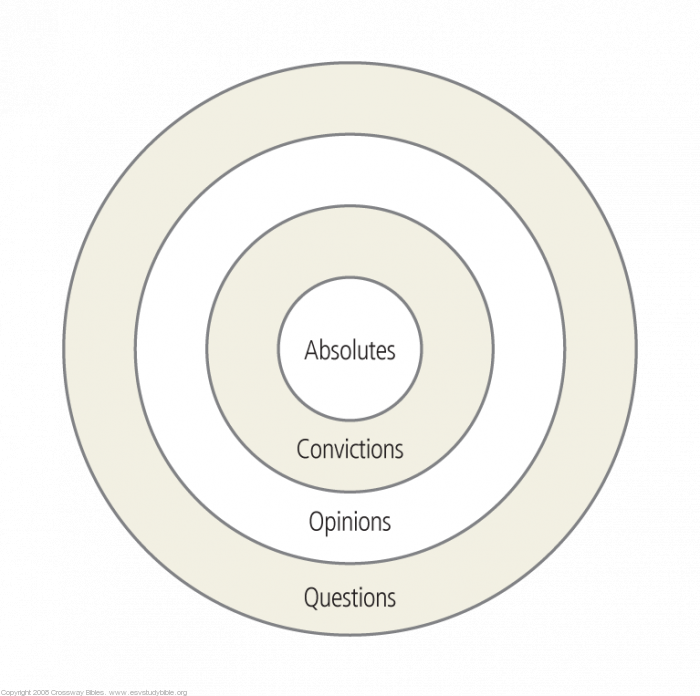 helpful to ask, “Is this a first, second, or third level issue? Categorizing truths like this will help us know how seriously we should take certain beliefs.
First Level Issues. These are doctrines that have to do with things that are central and inextricable from apostolic, Christian faith. In other words, these are things that make or break your Christianity. Non-negotiable absolutes. Some examples of these doctrines would be things such as the Trinity, justification by grace through faith in Christ, the incarnation, etc. To think about it simply, these are truths one must believe in order to be a meaningful Christian as defined by Scripture and demonstrated in Christian history. They’re the vitals organs of the faith.
Second Level Issues. These are doctrines that genuine Christians can believe while still faithfully following Christ, yet they often divide Christians into different local churches. In many cases, these truths determine what kind of church you choose to belong to. For example, if you believe baptism should only be administered to those who have repented of their sin and trusted in Christ as Savior (i.e. Credobaptism), you’ll likely attend a church that shares that conviction. You would probably feel uncomfortable in a church that baptizes infants (i.e. Paedobaptism). It would be difficult to remain in a church where the pastors encourage you to baptize your babies while you continually decline. Other second-level doctrines include views on communion and possibly gender roles within the church. Disagreeing on these matters doesn’t remove someone from the Kingdom of God, but it can make life in a local church challenging to navigate while maintaining a clear conscience.
Third Level Issues. These are doctrines that true Christians can believe and, if they disagree with one another, can still fellowship in the same local church. Some examples of third level doctrines are views over the millennium or the age of the earth. Each church is filled with people who disagree on various third level doctrines without it affecting their unity or ability to fellowship.
How Do I Tell Which Level a Truth Is?
Some of you may ask, how can I know it a belief is a first, second, or third level issue? To answer that, I commend following seven questions (with a little help from my friend) to help you decide on the importance of any particular doctrine.
- How clear is the Bible on this subject?
- Is this closely connected to the character of God?
- Is this closely connected to the essence of the gospel?
- How often does the Bible speak about this doctrine?
- What significance or weight does the Bible put onto it?
- What is the effect this may have on other doctrines?
- What has the church thought about this doctrine historically and what do faithful church leaders think today?
- What effect does this have on personal and church life.
None of these question is an end all, but taken together they serve as helpful criteria to judge the level of any given doctrine.
Why Is This Important?
This process of theological triage matters for two key reasons.
First, we don’t want to treat smaller issues as if they’re bigger ones. The unity of the church matters deeply to Jesus—and it should matter to us (John 17:20–23; Ephesians 4:3). It’s unfruitful, unhelpful, and dishonoring to God to break fellowship over issues where faithful Christians can genuinely agree to disagree. Arguing over third-level issues as if they’re ultimate truths is like doctors fighting over the order of the waiting room chairs while a patient bleeds out in the ER, our priorities are tragically misplaced.
Second, we don’t want to treat bigger issues as if they’re smaller ones. Christians are called to guard the gospel (2 Timothy 1:13–14), expose false teaching (Titus 1:9; Romans 16:17), and contend for the faith (Jude 3). Compromising the core truths of Christianity in the name of being “nice” or “loving” isn’t kind, it’s deadly like a doctor refusing to tell a patient they have cancer because he doesn’t want to upset them. What seems gentle in the moment ultimately destroys.
If we want to remain faithful to the gospel and preserve true Christian unity, we must not only know and live according to sound doctrine, we must also know how to weigh it. Not all doctrines are created equal, some are life-or-death and others are stubbed toes. Make sure you learn how to tell the difference.




 A Pilgrim's Friend