I recently shared this message titled, “A Wild Goose Chase: The Pursuit of Happiness” at the “Women in Electronics” Annual Leadership Development Summit in the Balboa Bay Resort in Newport Beach, California.
——-
I’d like to begin by telling you about three very different people.
John is middle management in a large corporation. Having gone through the rookie phase of his career, he’s now a seasoned employee. He’s got aspirations for promotion where he’d enjoy all the benefits—better pay, more power, a corner office, and the respect of one who’s made it. He likes where he’s at now, but he’s excited to do the hard work required for the goal ahead.
Mackenzie is an artist. She works at a local coffee shop and has a side gig doing deliveries for Amazon. But, after paying rent, she’s basically broke. However, she’s okay with it. Sure, she’d love to have more financial stability and maybe a five-year plan, but not if it gets in the way of her art. As it is, being broke and aimless is fine as long as she has the freedom to paint.
Joe is a common criminal. Pickpocketing is his specialty. It pays his bills quite well. But he isn’t against more serious crimes if they make sense for him. Right now, he’s working on a team that’s ready to scam someone out of their life savings. He’s nervous, but he’s taking the risk for the reward.
Three very different people—John, Mackenzie, Joe—living very different lives—businessman, artist, thief—doing very different things—sacrificing, scrounging, stealing. But they have one thing in common: they all want to be happy.
Our Common Pursuit
These stories remind me of something Aristotle wrote in a book called *Nicomachean Ethics*. It’s one of the oldest—and best—self-help books ever written. On the first line, he makes a profound claim:
“Every… action and pursuit… (aims) at some good.”
What he means is that everything we do and pursue is always aiming at some good. In all we do, we act and advance always and only toward some big goal. What’s that goal? He says it’s to be happy.
“Now such a thing is happiness, above all else… for (we always choose happiness) for self and never for the sake of something else.”
Why does the businessman work? For happiness. Why does the student study? Happiness. Why does the father raise his kids? Happiness. Why does the thief steal or the murderer murder? Because, even though their actions are wrong, they think doing them will bring them some kind of happiness. His point is simple: everyone, everywhere—including everyone in this room—is always seeking and working for happiness.
Now, if you agree with that, it’d be good to look around and ask, “How are we doing on the happiness front?” At first, this seems like it will go in a positive direction for us today. After all, we live in one of the most developed countries in the world. Relatively speaking, our economy, affluence, and freedom are better than most. Even more, we live in a day when there has never been better technology, better medical treatment, better access to knowledge, better living conditions, or better luxuries. What used to be extravagances only the rich could enjoy are now the basic conveniences of the poorest among us. If we measure by life expectancy, wealth, and decreasing poverty, the 21st century is objectively the best time to be alive.
However, that hasn’t affected levels of happiness. Studies seem to show that our grasp on happiness is slipping and only getting worse:
“The percentage of U.S. adults who report having been diagnosed with depression at some point in their lifetime has reached 29.0%, nearly 10 percentage points higher than in 2015. The percentage of Americans who currently have or are being treated for depression has also increased, to 17.8%, up about seven points over the same period. Both rates are the highest recorded by Gallup since it began measuring depression.”
Even more relevant for this group:
“Over one-third of women (36.7%) now report having been diagnosed with depression at some point in their lifetime.”
My question is this: “If now is objectively the best time to be alive, why are people so miserable?” How can we have so much stuff but be so unhappy? It’s a good question that deserves careful thought.
To help, I would like to offer you three things to consider to help you think and discuss it with others. The first consideration is this: what are we chasing to make us happy? Because, if we’re honest, they don’t seem to be working. We all seem to be on a wild goose chase without an actual goose. So, what are the things people commonly chase to make them happy? What are our favorite “gooses”?
Our Gooses: What We Think Will Make Us Happy
In our common pursuit of happiness, we all seem to have copied the same person’s homework because we all use the same equation: “If I just have ______, then I’ll be happy.” What we put in the blank may differ, but our formula is the same.
To think about it, let’s list the four most popular “gooses” people chase for happiness and let’s “kick the tires”—test them out—to see if they deliver the happiness they promise.
1) If I Just Have More Money, Then I’ll Be Happy
I once had a brave student say in a class discussion, “I know what everyone says, money doesn’t buy happiness, but, to be honest, if I had a billion dollars, I think I’d be fairly happy.”
Now, money is necessary to provide for your basic needs like food, clothes, and shelter, but research indicates that once those things have been taken care of, more money does not bring more happiness. One peer-reviewed study done by the University of Virginia, after studying the emotional well-being of thousands of people from low and high incomes, concluded this: “Beyond household income of $75,000 a year, money does nothing for happiness, enjoyment, sadness, or stress.” Assuming basic needs are met, more money in the bank does not bring more happiness in your heart. More money gets you more toys, but it doesn’t get you more joy. In fact, chasing money tends to make life more miserable because you’ll never feel you have enough, and the more you have, the more you worry about. As the great theologian P-Diddy once said, “Mo money, mo problems.”
What’s the second goose? Experiences.
2) If I Just Have Better Experiences, Then I’ll Be Happy
But we say, what if I “Eat, Pray, and Love?” What if I choose to pursue meaningful experiences like traveling, vacationing, or doing exciting things? What if, as they say, it’s not about the destination but the journey?
The thing about experiences is that they all quickly come to an end, normal life returns, and we’re left unable to live in the normal and painfully yearning for the next experience. A vacation is nice until you’re back at work Monday morning. Even worse, work on Monday is even more miserable when happiness doesn’t exist in the normal experience now, but the extraordinary experience later. At best, experiences leave us fond memories of the past, but they don’t help us better enjoy the present or live in the future. Good memories don’t make a good life.
Here’s the third.
3) If I Just Have Greater Success, Then I’ll Be Happy
We think, “Once I get my ‘dream job,’ then I’ll be satisfied.”
Now, know that there is nothing wrong with a good career. It is a good thing. It just does not guarantee the good life. Careers are not permanent or unlimited. If your whole life is poured into your career, what happens to your happiness if you get demoted, laid off, or fired? Or what happens to your joy when you retire? One paper by the Economic Institute of America stated that “Retirement increases the probability of suffering from clinical depression by about 40%.” Good careers are good, but they are temporary, limited, and ever-changing. They’re good to have in life, but they’re not the good life!
Our last popular goose of happiness is legacy. We say…
4) If I Just Have a Lasting Legacy, Then I’ll Be Happy
This is the most honorable-seeming of them all. It isn’t about superficial things like paychecks or promotions, but about prestige; being remembered well.
When we think of legacy, we often remember the few in recent memory who did great things—Martin Luther King Jr., Abraham Lincoln, or Winston Churchill—but they’re all once-in-a-generation kinds of people; unicorns. Most of us won’t measure up to that.
What about the people who are much closer to you? Think about those who’ve made an impact on your family tree. Raise your hand if you know the name of your paternal Grandpa? Great-Grandfather? Great-Great-Grandfather? Likely, you’ve got about one or two generations’ worth of memory, but even those in your own family are easily forgotten—even by their own family! One ancient King of Israel said it this way, “For of the wise as of the fool there is no enduring remembrance, seeing that in the days to come all will have been long forgotten. How the wise dies just like the fool” (Ecclesiastes 2:16). How happy can leaving a legacy make us if our own families—let alone everyone else in the world—will forget our names, let alone everyone else in the world – will forget our names, let alone our lives and accomplishments? Is that happy-sustaining thought?
Listen to the Yelp Reviews
In case you think I am being a bit pessimistic here, consider the Yelp Reviews of those who’ve achieved not just one of these things, but all of them. Tom Brady, one of richest, most successful athletes who experienced seven Superbowl victories and will likely be remembered for a long time once said this in an interview with “60 Minutes:”
“Why do I have three Super Bowl rings, and still think there’s something greater out there for me? I mean, maybe a lot of people would say, “Hey man, this is what is.” I reached my goal, my dream, my life. Me, I think: God, it’s gotta be more than this. I mean this can’t be what it’s all cracked up to be. I mean I’ve done it. I’m 27. And what else is there for me?”
Or, consider another wildly rich and successful actor, Jim Carey: “I think everybody should get rich and famous and do everything they ever dreamed of so they can see that it’s not the answer.” After seeing all this I can’t help but hear the lines of that old Rolling Stones song:
I can’t get no satisfaction
I can’t get no satisfaction
‘Cause I try and I try and I try and I try
I can’t get no, I can’t get no.
There is an old line preachers love to use that goes like this, ‘The definition of insanity is doing the same thing over and over again, expecting different results.” I think it may apply here. It seems we’ve been sent on a goose chase with no goose.
So, is happiness unattainable? I don’t think so. I think the problem is we’re making one crucial error in our pursuit. That leads us to our second consideration: our goof. What are we doing wrong?
Our Goof: Missing the Mark
The problem isn’t that we want happiness. Wanting to be happy is smart—better yet, it’s good. What kind of person would want to be miserable or unhappy? The issue is that we’re misidentifying what happiness is.
Let me explain it this way.
In life, there are “first things” and “second things.” A first thing is something that, once you have it, produces second things. A second thing is what comes from having a first thing. A first thing is the cause, and a second thing is the effect. A first thing is a root; a second thing is the fruit. For example, if I have a job (a first thing), I will earn money (a second thing). If I have health, I will experience physical comfort. If I have an Android, no one will invite me to their group chat. When we have first things, second things follow. We pursue first things and enjoy second things.
Think of someone who is sick and has the chills. There are two ways to deal with the feeling of cold. The first is to grab a blanket, turn up the heater, or sit by a fire. The second is to deal with the sickness. Now, if they just grab a ton of blankets, they’ll feel warm as long as they’re wrapped up. But if they address the sickness, they’ll be warm even without the blankets. If they only want to be warm, they’ll end up cold—no health and no lasting warmth. But if they seek health, they’ll have both lasting health and lasting warmth.
The problem we have with happiness is that we identify it as a first thing. We chase happiness by trying to get stuff, have experiences, or achieve statuses that give us a temporary feeling. But once those things fade, the happiness fades too. In chasing happiness as a first thing, we end up pursuing things that, at best, only provide temporary happiness. One Cambridge philosopher, C.S. Lewis, put it well: “Put first things first, and we get second things thrown in; put second things first, and we lose both first and second things.” In chasing happiness, we not only miss out on the first thing—whatever causes happiness—but we miss out on happiness itself!
Now, before you dismiss this idea, know that it isn’t original to me. Wise folks throughout history have noted this phenomenon for thousands of years. For example:
“Don’t aim at success. The more you aim at it and make it a target, the more you are going to miss it. For success cannot be pursued; it must ensue, and it only does so as the unintended side-effect of one’s dedication to a cause greater than oneself.” — Viktor Frankl
Eleanor Roosevelt said it simply: “Happiness is not a goal…it’s a by-product of a life well-lived.”
And for my animal lovers: “Happiness is like a cat. If you try to coax it or call it, it will avoid you. It will never come. But if you pay no attention to it and go about your business, you’ll find it rubbing up against your legs and jumping into your lap.” — William Bennett
So, here’s where we are: we all want to be happy, but happiness can’t be found by directly seeking it. Got it? Good. Let’s pray. (Just kidding!)
We’ve established the emptiness of what we often pursue (our “Gooses”) and the mistake of thinking happiness is something to be obtained (our “Goof”). So, the final question is: what should we do?
Some of you might expect me to say you need to get rid of something you already have. Others might fear I’ll tell you to acquire something you don’t. But I’m not going to suggest either. The pursuit of happiness isn’t about giving up what we have or chasing after what we don’t. It’s about reordering what’s already in front of us.
Our Good: Acting Like a Human
Indulge me in a simple thought experiment. What kind of life would make a fish happiest? One in the water. How about a worm? A life in the mud. A bird? A life soaring through the skies. Why do we know this? Because that is what those creatures were made for. We understand that something can only be happy when it is living as it was designed to live. Stoic wisdom teaches that happiness comes when something lives according to its nature.
This idea is more relevant than ever because we live in a culture that equates freedom and happiness with doing whatever we want. If it sounds good, go for it. If it feels good, do it. But suppose a fish wanted to live outside of water. Would you encourage it? No. Why? Because, no matter what it wants, living out of water won’t make its life better. A fish was made for water. It will be happiest not by doing what it wants, but by living how it was made to.
This brings us to human happiness. If we want to live a truly happy life, we shouldn’t follow our stomachs, cultural fads, or our best guesses. Instead, we should learn to live skillfully as humans. We live in a society with more opportunities to fulfill every passing desire, yet we are not better off for it.
What if we stopped thinking that happiness comes from doing whatever we want and instead embraced the idea that happiness comes from living as we were made to live as humans? Is it possible that living as humans were designed to live is the key to uniquely human happiness?
This leads to the crucial question: what does it mean to live like a human? This question begs for long discussion and careful thought, but we can start by asking, “What is unique about humans?” If we can discover what makes us unique, we can begin to learn what living a happy human life looks like.
I suggest that humans are unique in three key ways:
- We Are Moral Beings – We understand right from wrong, good from bad, in ways that go beyond mere survival or practicality.
- We Are Relational Beings – We yearn for, seek, and depend on relationships in ways that extend beyond survival.
- We Are Worshiping Beings – We all have one ultimate thing we trust, love, and treasure above all others.
If I’m right, then human flourishing—human happiness—will be found when we focus on and grow in these areas. These are the ways we live like humans, and when we lean into them, we experience true, lasting human happiness.
Let’s look at them one by one.
1) We Are Moral Beings
Have you ever considered how unique humans are in the way we raise our kids? Like other creatures, we seek to feed, protect, and care for them. But we also do something no other species does: we try to make them moral. It pains us when they lie, steal, act greedily, or hurt others, and it deeply pleases us when they tell the truth, show courage, act justly, and selflessly care for others. We work hard not just to raise children who are alive but children who are good.
Why? Because humans are moral beings—we know there is a right and wrong. We know that good morality doesn’t just keep our kids out of trouble; it also leads to a truly happy life. We intuitively understand that happiness cannot be achieved by someone who is mal-formed or immoral.
I once heard a philosophy professor tell a story about his teenage daughter, who was upset when he said no to her request to attend a party. She asked, “Why don’t you want me to be happy?” His response was wise: “You are too young to be happy. You first need to learn to be good, and then you’ll be able to be happy.”
Think about that for a moment. Imagine someone who is honest, selfless, generous, kind, compassionate, just, patient, grateful, and loving. Now, make that person rich. Are they happy? Yes. Now make that same person poor. Are they still happy? Yes. In contrast, imagine someone who is greedy, impatient, selfish, cruel, and dishonest. It doesn’t matter if they’re wealthy or poor—no matter their circumstances, they won’t experience lasting happiness.
Why do we suspect this? Because being good is good for humans—it aligns with our nature. Developing good character produces internal health. Even in difficult circumstances, someone with good character is likely to be okay because their well-being doesn’t depend on external things like possessions, circumstances, or status.
Good character is not only key to personal happiness but also essential to thriving in work and family life. Consider how important trust is in relationships. Without trust, it’s nearly impossible to be successful in any area of life.
What kills trust? Being untrustworthy—lacking qualities like honesty, selflessness, kindness, patience, generosity, and love. Character is not just essential for happiness; it’s essential for thriving at work and home.
In our pursuit of happiness, we should ask ourselves: “Who am I?” Am I patient, kind, considerate, generous, loving, compassionate, and humble? Or am I cranky, cruel, critical, mean, selfish, and bitter? If you’re unsure, ask a trusted friend or family member, “How would you describe me?”
After reflecting on that, ask the next, better question: “Who should I become?” Recognizing where we are is the first step to deciding where we want to be. If we focus on areas where we’re morally weak or broken and seek to practice honesty, kindness, gentleness, patience, and selflessness, we will start to experience happiness at work and home as a by-product of becoming better people.
2) We Are Relational Beings
Aristotle famously said, “Humans are social creatures.” For us, relationships aren’t a luxury—they’re essential for flourishing. A lack of meaningful relationships harms us both mentally and physically. America’s Surgeon General recently identified loneliness as a national epidemic, stating:
“Loneliness is far more than just a bad feeling—it harms both individual and societal health. It is associated with a greater risk of cardiovascular disease, dementia, stroke, depression, anxiety, and premature death. The mortality impact of being socially disconnected is similar to that caused by smoking up to 15 cigarettes a day.”
On the flip side, research shows that strong relationships are a powerful source of happiness. Harvard University has conducted an 84-year-long study that spans across two generations. The study’s leaders concluded:
“For 84 years and counting, the Harvard study has tracked the same individuals, asking thousands of questions and taking hundreds of measurements to find out what really keeps people healthy and happy. One crucial factor consistently stands out: good relationships keep us healthier and happier. Period.”
Many things contribute to human happiness, but one that stands above the rest is the warmth and intimacy of our relationships.
Our experience confirms this, doesn’t it? Think about all the technology we have—what do we mostly use it for? To connect with others. And what’s one of the harshest punishments in prison? Solitary confinement. Even hardened criminals fear the punishment of being cut off from other humans. We’re hardwired for community, and we won’t be happy unless those relationships are healthy and warm.
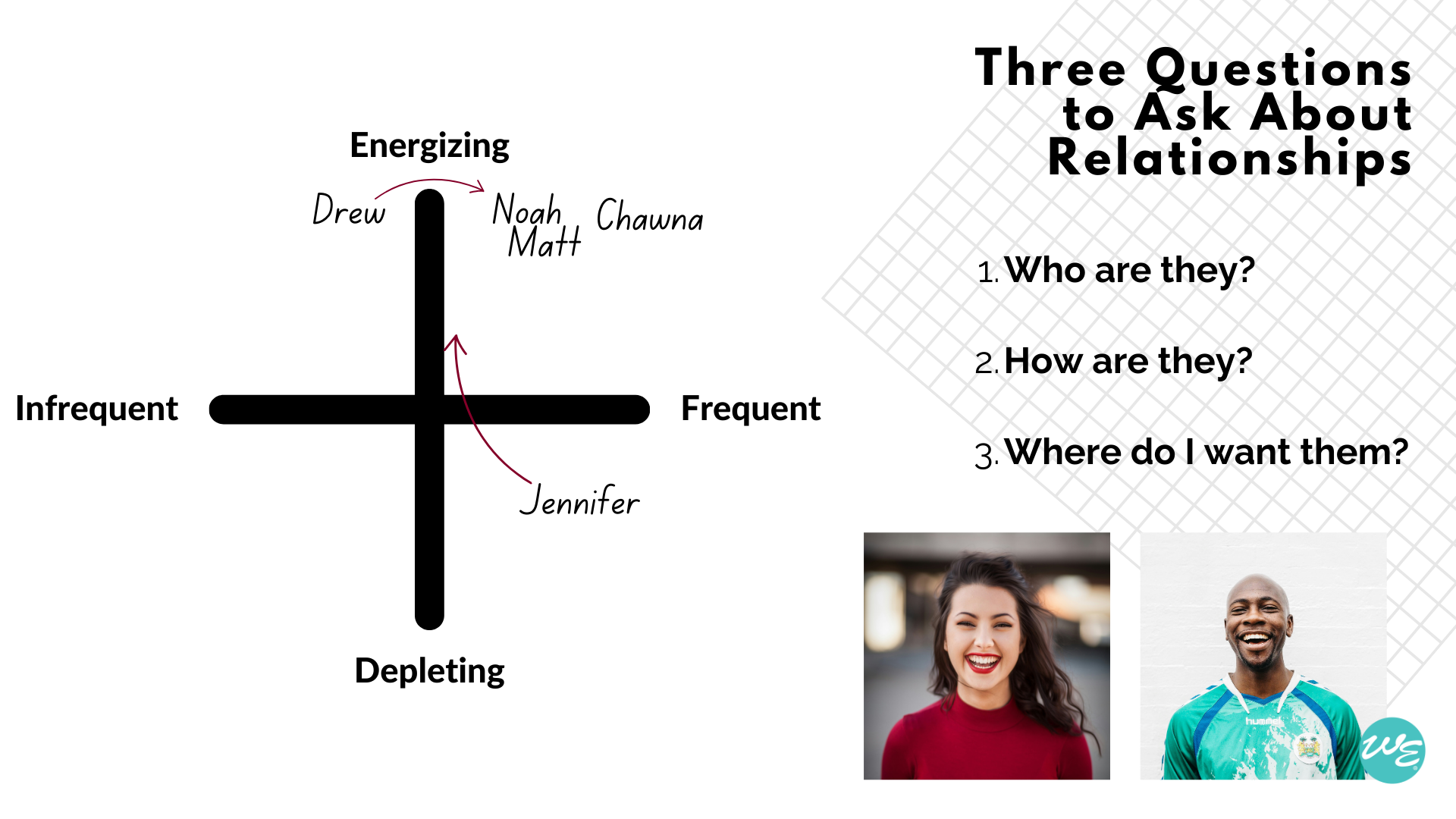
Knowing this and practicing it are two different things. But here are some simple questions to guide you:
- Who are the most important people in your life?
- How are your relationships with them?
- Where would you like them to be?
Some relationships need more attention, while others may need less.
3) We Are Worshiping Beings
Now, I know that when I say this, red flags may fly up—“Oh no, here comes the preacher!”—and you may be tempted to shut down. But did you know this isn’t just something religious folks talk about? It’s also a growing topic in the business world.
Business leaders have begun considering a concept called “Spiritual Quotient” (SQ). We’re used to hearing about IQ (Intelligence Quotient) and EQ (Emotional Quotient), but now SQ is being discussed as well. One business writer explained it this way:
“Spiritual Quotient encompasses qualities like self-awareness, compassion, empathy, integrity, and a sense of purpose. It focuses on connecting with one’s inner self and the broader universe. Integrating spirituality into the workplace can profoundly affect individual well-being and organizational success.”
He added that SQ fosters resilience, empathy, compassion, innovation, creativity, well-being, and a sense of meaning and purpose. Alongside IQ and EQ, businesses are now recognizing the importance of SQ.
You may be thinking, “But I’m not religious, and this doesn’t apply to me.” But if you think that, it’s because you misunderstand what worship is. Worship is simply about what you love, trust, and treasure above all else. It could be money, success, family, or status. Not all of us worship the same thing, but all of us worship something. At a commencement speech, atheist novelist David Foster Wallace explained it this way:
“In the day-to-day trenches of adult life, there is actually no such thing as atheism. There is no such thing as not worshipping. Everybody worships. The only choice we get is what to worship.
And an outstanding reason for choosing some sort of God or spiritual-type thing to worship — be it J.C. or Allah, be it Yahweh or the Wiccan mother-goddess or the Four Noble Truths or some infrangible set of ethical principles — is that pretty much anything else you worship will eat you alive.
If you worship money and things — if they are where you tap real meaning in life — then you will never have enough. Never feel you have enough. It’s the truth.
Worship your own body and beauty and sexual allure and you will always feel ugly, and when time and age start showing, you will die a million deaths before they finally plant you.
Worship power — you will feel weak and afraid, and you will need ever more power over others to keep the fear at bay.
Worship your intellect, being seen as smart — you will end up feeling stupid, a fraud, always on the verge of being found out. And so on.”[1]
So, the question isn’t, “Do you worship?” but “What?”
Once you identify what you worship, ask, “Does it live up to the hype?” If you’ve allowed something unworthy to take the top spot in your life, think about how silly that is. We make sure our kids’ babysitters are qualified, we expect our employees to be qualified, and we want our doctors to be qualified. Doesn’t it make sense to make sure that whatever or whoever we worship is qualified, too?
Here’s a simple job description of a good “god”:
- It should be real, not made-up.
- It should be permanent, not temporary.
- It should be unlimited, not limited.
- It should be powerful, not weak.
- It should help me in life—and more importantly, in death.
If you’ve found something or someone that meets all these qualifications, living for it makes sense. If you’re rightly connected to such a being, it’s hard to imagine living an unhappy life.
Now, I would like to take a risk and be authentic, transparent, and a little vulnerable with you. The reason I became a Christian was by asking those very questions and resolving to find not just what made me feel comfortable, but what I could confidently believe is true.
In high school, I realized I had three major problems: my badness, my stupidity, and the fear I had of the inevitability of my death. After reading about the life and teachings of Jesus Christ, I became convinced that He had the answers to all three.
- For my badness, Jesus said He paid for my sins against God on the cross, canceling my debt and offering me forgiveness—not because of my efforts, but through His grace.
- For my stupidity, Jesus spoke words of wisdom and life, offering guidance that transcends human understanding.
- For my fear of death, Jesus conquered death through his resurrection from the dead by his own power, just as He predicted, and he promised the same victory to those who trust in Him.
There, it became apparent that I needed to exchange my weak gods of pleasure and praise and instead worship Christ as Lord because, in my understanding, he alone was qualified for that sacred position of being God.
I understand that my story isn’t necessarily yours. I can’t make the choice for you about who or what you worship, but, remember, you can’t avoid making a choice. As Bob Dylan once sang, “You gotta serve somebody.” If the thing you’re living for doesn’t meet all the requirements—or if you’ve discovered something else that does—maybe it’s time to trade in your old god for one who’s genuinely worthy of the position.
Memento Mori: Remembering Death
You might think, “This isn’t for me; I came here for business insights, not to discuss morality, relationships, or God.” But may I offer an ancient piece of wisdom? Memento mori—remember death.
Reflecting on death can help us focus on what truly matters. It strips away the distractions of temporary, shiny pursuits and helps us prioritize the things that lead to lasting fulfillment.
At the end of life, what will matter most—your wealth and achievements or the person you were, the relationships you nurtured, and your connection to something greater? Many people regret neglecting their relationships or faith, but few wish they had worked more or gained more possessions.
Memento mori can help us live wisely, ensuring we invest our time and energy into what really matters.
A Picture of Turning Around
As we close, I would like to share a story of a man named Horst Schulze, the founder of the Ritz-Carlton. In the midst of his career success, he was diagnosed with a deadly form of colon cancer. His world exploded. He recalls:
“That evening, I looked at my dear wife, Sheri, and said, ‘This can’t be happening!’ Soon we were praying together, ‘God, please! Our children—they’re only nine, five, and 18 months—they won’t even know me as they grow up.’”
The diagnosis began to reorient his entire perspective on life:
“My high-flying career in the hotel world faded in importance. All the ambition, the strategic plans, the ego, the money, and the recognitions got stripped away. They weren’t relevant anymore.”
Thankfully, after surgery and care, his cancer went into remission. However, he emerged a forever changed man. He reflected:
“I was mostly a ‘Sunday Christian’ until cancer came. But this experience stripped away my business achievements—they no longer sheltered me from my screaming need for hope. I’m now thankful for cancer because it helped me see what truly matters.”
Did you hear those last words? “I am today thankful for the cancer.” Have you ever heard of anyone saying that? Why did he say it? His cancer gave him the opportunity to realize he’d been living for inadequate goods that couldn’t provide the contentment, joy, and hope he needed most and it turned him to pursue becoming a whole human again.
His cancer forced him to reevaluate his gooses, reorder his goods, and rewire the way he invested in his character, his relationships, and who he worshipped. The result was so life-changing – so enjoyable – that he was willing to thank God for the cancer that caused it.
May His Joy Be Yours
My friends, we all want to be happy. But don’t chase happiness—it’ll always elude you if you do. Instead, pursue the rightly ordered goods of being fully human. Lean into who you’ve been created to be: a moral, relational, and worshipping being. In doing so, you’ll experience not just fleeting happiness but a lifelong, ever-increasing joy.
As we end, allow me to leave you with a meaningful blessing from my tradition:
“The Lord bless you and keep you;
The Lord make his face to shine upon you and be gracious to you;
The Lord lift up his countenance upon you and give you peace and happiness.”
Thank you.























 A Pilgrim's Friend