What if this little cliche is actually the only way you can experience a truly, joyful Christian life? You may think, “How can this be? The gospel isn’t about earning, but grace!”
Well, not really.
Isn’t Grace Opposed to Effort?
Yes, the Bible is against the notion of earning one’s salvation. We are saved by grace in Christ through faith. It is glorious. It is true. But, that doesn’t mean it is against effort. Consider these passages:
Continue to work out your salvation with fear and trembling, for it is God who works in you to will and to act in order to fulfill his good purpose. Philippians 2:12-13
Have nothing to do with godless myths and old wives’ tales; rather, train yourself to be godly. For physical training is of some value, but godliness has value for all things, holding promise for both the present life and the life to come. 1 Timothy 4:7-8
Strive to enter through the narrow door. Luke 13:24
Strive… for the holiness without which no one will see the Lord. Hebrews 12:14
For this very reason, make every effort to supplement your faith with virtue. 2 Peter 1:5
Do you see it? Far from being against effort, Christians are commanded toward it.
How do we square this with the gospel? Easy. We are saved by grace unto a life of grace-fueled effort to become more like Jesus. Jesus has saved us fully from sin’s penalty and power by his work on the cross and in the tomb so we may progressively enjoy that beautiful salvation by Spirit-empowered, Scripture guided effort. After all, “We are his workmanship, created in Christ Jesus (fully justified from all sin) for good works” (Ephesians 2:10). Christians are not saved by good works – or godly effort – but for good works. Jesus has earned our salvation and gifts us the privilege to more deeply experience and enjoy it with increasing degree day by day by our grace-fueled effort. Grace is against earning, not effort.
Christ-Likeness Only Comes With Spirit-Empowered Effort
This brings us to our cliche. We can only become more like Jesus bypractice; intentionally choosing to act like Him in the power of the Spirit. Our practice is not to earn something nor is it by our own power. The Holy Spirit works to grow in like Christ through our efforts. As John Owen said:
The Holy Spirit so works in us that He works by us; His assistance is not a force upon us, but a help to us, whereby we are made able to will and to do that which is spiritually good. Without Him we can do nothing, but with Him we must do something.
God’s Holy Spirit works for us, in us, and through us, but never without us. Our effort is necessary if we want to grow up in the riches of God’s grace. Practice, therefore, is necessary to grow like Jesus. Our justification required Jesus’ gracious blood. Our sanctification requires our grace-fueled sweat.
How Are You Practicing to Become Perfect Like Jesus?
If you are a Christian, you want to become like Jesus. But, what are you doing to make that happen? You’ll never become a good athlete without training. You’ll never become a good cook without getting in the kitchen. You’ll never become a proficient artist without putting brush to canvas. In the same way, you will never become like Jesus without practice.
What kind of intentional efforts are you making to become the kind of person that looks like Jesus?
Let’s make it practical:
Do you want to grow in love? Serve others selflessly, even when it’s inconvenient. Be the dad that stays up late to talk through an emotional day with your child despite your exhaustion.
Do you want to grow in joy? Give thanks each time you enjoy some good, no matter how small. Be the employee starts the workday by listing three things you’re grateful for, even amid stress.
Do you want to grow in peace? See any feeling of anxiety as a call to pray and more deeply trust in God’s control. Be the husband prays about a financial setback instead of snapping at his spouse.
Do you want to grow in patience? Wait without complaining. Embrace delays or interruptions as a gift from God to grow. Be the church member who smiles and waits quietly and cheerfully when a service runs longer than expected.
Do you want to grow in kindness? Speak gentle words, especially to the difficult. Be the wife who offers a calm and controlled response to your spouse’s frustration instead retaliating.
Do you want to grow in goodness? Act with integrity in every small moment, choosing what’s right over what’s easy. Be the wife who admits a mistake to her rather than covering it up, justifying it, or recalling his shortcomings.
Do you want to grow in faithfulness? Keep promises, honoring God in small things. Be the Christian who consistently attends church on Sundays to be a blessing to your spiritual family, even when tired or other opportunities arise.
Do you want to grow in gentleness? Respond calmly, even under provocation. Be the mom who responds to your kids’ immaturity, chaos, and constant neediness with controlled tenderness instead of yelling, demeaning, and threatening.
Do you want to grow in self-control? Say no to small, unnecessary impulses each hour, seeking God’s strength to focus on what’s needed instead of what’s wanted. The more you do it in small ways, the stronger you’ll be to practice it in big ways. Be someone who chooses not opt for regularly door-dashing, eating out, or racking up credit card debt because it is immediately pleasurable. Instead be the person who makes the meal, goes to the grocery store yourself, and doesn’t binge watch the next season. Don’t be controlled by your impulses to make life easy, but control your impulses to make life Christ-like.
Beloved, no one drifts into holiness. It’s only obtained through intentionally swimming toward Christ in every day action. You will never act like Jesus in the important moments of your future if you don’t practice being like Jesus in the unimportant moments of your present.
If you’ve been saved by Christ, then act like Christ so become like Christ. Practice makes perfect. This is the way.
In Marcus Aurelius’ first chapter of Meditations, he makes a list of people in his life and the precious lessons they taught him. It is a chapter that is filled with warmth (he speaks of his mom, dad, grandpa, and dear friends) and wisdom. It’s delicious.
There is one piece of wisdom from it I think especially relevant for you and I, dear reader.
A Lesson Learned
In the first few sentences he mentions an important lesson he learned from his grandfather, Verus about how to approach his own education:
From my grandfather Verus I learned… not to have frequented public schools, and to have had good teachers at home, and to know that on such things a man should spend liberally.
Remember, Aurelius didn’t live in 21st century America (he lived in Rome from 121–180AD) so he’s not making a case for modern homeschooling, although his wisdom here is relevant. Public schools in ancient Rome, much like today, could be chaotic, crowded, and inconsistent in quality. By choosing to bring “good teachers” into the home, his grandfather emphasized an intentional and focused approach to learning. He taught Aurelius to surround himself with people who would cultivate his mind and character, rather than leaving it to chance in a broader, less controlled environment. Break up with the public schools, dear Aurelius, and marry yourself to those who know truth and live wisely.
The Scriptures are replete with the same wisdom. King Solomon said, “Keep your heart with all vigilance, for from it flow the springs of life” (Prov. 4:23). Jesus taught that the “pure of heart” are blessed and will see God (Matthew 5:8), not those with hearts muddied by foolish, worldly wisdom and values. Christians give their hearty amen to David’s prayer, “Create in me a pure heart, O God, and renew a steadfast spirit within me” (Psalm 51:10). Our mind, character, and affections (i.e. our heart) determines our whole life – our choices, words, deed, and delights. Its either trash in, trash out or treasure in, treasure out. So, we must, like a beefy, muscled bouncer, guard its door vigilantly and only let in those who will do it well. Beloved, be picky about your teachers.
A Lesson Applied
My mind has constantly come back to this wisdom because it is especially relevant today. Every day on Spotify, our video streaming services, and our social media feeds, teachers line up at our door to teach us their ways. They want to form our feelings, choices, words, thoughts, and sensibilities. They want our hearts and we have to make a decision: will I let them in?
To make it practical, I encourage you to start examining who you give your ears and eyes to and whether or not they’ll increase your love and devotion to God or eat away at it inch by inch. Consider asking these questions
What’s the intent behind this influence? Is this content or voice trying to inform, entertain, persuade, or manipulate me? Does it seek my good in Christ or just my attention?
Does this draw me closer to God or pull me away? Does listening to or watching this increase my love, peace, or devotion, or does it stir restlessness, cynicism, disbelief, or distraction?
What emotions does this stir in my heart? After engaging with this, do I feel more Christ-like and grounded emotions, or am I more anxious, angry, distrustful of loved ones, and divided?
What values is this teaching me? Are the messages—spoken or subtle—lining up with truth, goodness, and humility taught in Scripture, or pushing me toward self-interest, self-trust, materialism, or pride?
How much time am I giving this teacher? Am I letting this voice dominate my day, leaving little room for reflection, prayer, or better influences? How is your screen time compared to your Bible time?
Would I invite this into my home if it were a person? If this podcast, show, or feed were a real teacher knocking at my door, would I trust them with my heart and mind?
Would I want my children to think or act like this? Is this content merely entertainment for me now or is it an example for how I’d like my children to turn out?
Does this leave me better or worse than before? After consuming this, am I more equipped to love my neighbor and trust God or do I feel drained, confused, or cynical?
Am I choosing this or is it choosing me? Did I seek this out intentionally in order to grow more like Jesus or am I letting an algorithm or habit decide what shapes my thoughts? Who or what is in the driver seat here?
What’s the fruit of this in my life? Looking at my words, actions, or mood after engaging—am I bearing good fruit and becoming holier (Galatians 5:22-23) or am I becoming thornier?
Is this worth my heart’s real estate? Given that “everything you do flows from the heart” (Proverbs 4:23), is this influence worthy of the space it’s taking up inside me?
These questions are a hands-on tool to push you to intentionally pause and sift through the barrage of modern “teachers” clamoring for your heart. They’re a practical way for you to learn from Marcus’ wisdom to bring in only the good teachers and Jesus’ call to store up what’s pure. They’re a filter for today’s noise, helping decide who gets a seat at the table.
Remember, everyone is a disciple of something or someone. You’re either following teachers who are making you more like Jesus or more like something else.
‘How did Jesus do what he did?’ is a better question.
Ask yourself, ‘What kind of practices, values, thoughts, priorities, relationships, and habits did Jesus arrange his life around so that he was able to live the life that he lived. We cannot behave ‘on the spot’ as Jesus did and taught if in the rest of our time we live as everybody else does.’”
We will never live like Jesus in important times if we live like the rest of the world in normal times. Morrow illustrated the idea this way:
“If we ask, ‘What would Michael Phelps do in this race?’ we would immediately say, ‘Win.’ However, we know that we couldn’t do what he would do because we aren’t the same kind of athlete he was. Phelps could only do what he could do because of who he trained to be.” In the same way, we can only act as Jesus would if we train ourselves daily to be kind of Spirit-empowered man Jesus was.
Do we need to know what Jesus taught? Of course! However, Jesus teaches truth to our mind so we may live according to that truth in our life. We can memorize all his teachings, but we will only become like him by practicing those teachings in the daily grind of life. Skill starts with learning, but is completed only by action. For those who follow Jesus teacher, learning his teaching is not our graduation, but first day of training.
So what should we do? Let’s start with baby steps.
Four Teachings to Begin Practicing
Here are four teachings of Jesus to start practicing today in small, mundane ways that we may slowly become the kind of person Jesus was in order to live the kind of life Jesus lived.
“Love your neighbor as yourself” (Mark 12:31)
Do good for others justlike you do good for yourself. Think about it. Who’s most sensitive to your needs? When you’re hungry, who’s quickest to feed you? When you’re struggling to do well, who’s most understanding of your shortcoming? Who wants the best for you and works hard to obtain it? The answer to all these questions? You.
Jesus doesn’t teach us to stop loving ourselves, he (rightly) assumes we do. Here, he teaches us to use our own self-love as the standard to guide we love others.
Imagine how marriages would be affected if even one person in the relationship, let alone both, trained themself to be sensitive to the needs of their spouse and responded as quickly as they do their own? Would friendships fair better if we leaned in during tense times to heal the relationship rather than ghosting them? How about your workplace? Would your boss, colleagues, or employees be better or worse off if you cared for them like you care for yourself? Do you trust Jesus’ wisdom enough to train yourself to love others like you love yourself?
How funny we are. One of Jesus’ most well-known teachings is one we practice least. Yet, if we trained ourselves to live this way, to love this way, our lives would never be the same for the better.
But what do we do those we try to love hurt us?
“Forgive others” (Matthew 6:14-15)
Forgiveness is the act of cancelling someone’s relational debt incurred by them betraying your trust. When someone betrays us and repents, we’re faced with a choice: keep holding it against them or follow Jesus and forgive them?
The 2016 study by Toussaint tracked 332 participants over five weeks. They found that increased forgiveness reduced stress and lead to fewer mental health symptoms. If this is true of a five week period, how much more benefit would there be in a lifetime of following Jesus here? Living in this broken world will mean you will be hurt by the broken citizens within it. If you commit yourself to the hard and painful work of forgiving those who’ve hurt you rather than hurting them back or cutting them off then you will be more whole and human – that is, more Christ-like – because of it.
You probably know this, but, remember, the question is, “What kind of practices, values, thoughts, priorities, relationships, and habits do you need to adopt to actually live it?” If you don’t train to be a forgiving person in small ways every day, you’ll fail to forgive anyone when the opportunity arises. With your spouse, church members, pastors, co-workers, or kids, what small ways are you practicing the skill of genuine forgiveness?
This is genius wisdom that the Stoics hit hard and well. As an example, Seneca pointed out, “We suffer more often in imagination than in reality.” What he means is we agonize far more from worrying about things rather than the actual things we worry about. Think about the nights you couldn’t sleep because you were worried about a crisis that never ended up happening. Remember the times your stomach was in knots about a problem that didn’t actually exist? Often times, we never actually experience the stuff we painfully worry over.
It is important to point out that Jesus isn’t merely saying, “Think positively,” but instead, “Think truly.” His instruction not to worry isn’t detached idealism, but a dogged realism. If we sees things as they actually are instead of what we perceive them to be, we’d finally see worry as the foolishness it is and begin to free ourselves from its grip.
Jesus provides three realities that help us see why we must not worry. First,worry is stupid because it shifts our focus from the important things we can control from the unimportant things we can’t control (Matt. 6:25). Second, worry makes the mistake that we’re on our own. Jesus reminds his followers that God is our attentive Father who knows our every need (Matt. 6:32) and will provide for every one of them. Be real, he feeds and clothes even the birds and flowers, won’t he care for you, his beloved child (Matt. 6:26, 28-29)? Third, worry is pointless since it doesn’t accomplish anything but make you feel pain (v. 27). Worrying is a fool’s errand and happens only for those who detach themselves from reality.
But, again, if we don’t practice this kind of trust with the small problems, annoyances, questions, or concerns of daily life then we won’t be able to overcome the monster of worry when the big storms hit. We can’t be confident like Jesus in the big times if we don’t train to be worry-less like Jesus in the small times.
“Seek first the Kingdom of God” (Matthew 6:33)
How good can someone be at football if they don’t know their end zone? How good can a basketball player be if there is no hoop? Will an archer win gold if his target has no bullseye? No one can succeed in any endeavor unless they’re certain of what the goal is and aim for it. In the same way, you will never be able to succeed in life unless you know and seek the actual goal rather than the improvised one you’ve adopted along the way.
What is the goal? To know, love, honor, and enjoy God by reflecting him (1 Cor. 10:31). Or, in Jesus’ words, to seek God’s kingdom – to live according to his rule over all – and not your kingdom.
Now, ask yourself a real question and demand from yourself a real answer, not just the answer your Sunday school teacher would like: what is the controlling pursuit of your life? What is the one thing you seek above all other things. What colors or controls all the other things you do or don’t do? What do you sacrifice money, comfort, time, relationships, thoughts, or efforts for above all else? To boil it down, Jesus says you’ve two options: you can chase the temporary things of this world’s kingdom or the eternal thing of God’s Kingdom.
Of all the practical teachings to train yourself in, this one is the most practical because it doesn’t focus on what you do, but why you do it. Everything in your life flow from this and is directed to this one single teaching.
If you are like me, you’ll realize that each day brings competing goals that seek to reign over your heart so knowing that God’s kingdom ought to be our grand aim is only the first step. From there, we must ask, “What kind of practices, values, thoughts, priorities, relationships, and habits do I need to adopt to actually aim for it?” From there, we must begin our training.
To close up my musings, here is the bottom line: what you believe or know doesn’t mean jack if it doesn’t flow into what you do. You and I will never become like the Jesus we quote unless we, in 10,000 small acts, daily practice what he taught us.
Those who follow Jesus want to become like him. They want to think like him so they learn. They cultivate their affections to love what he loves and hate what he hates. Their hearts don’t direct their choices; they follow his commands. Jesus has come to save us from sins and slowly make us like himself – day by day, degree by degree – and Christians want nothing more.
“Make me like yourself, Lord” is our heart’s guiding prayer.
How does Jesus answer that prayer? Among the many ways, one is underestimated: become a member of a local church and stay put, especially when it hurts.
Spiritual formation occurs primarily in the context of community. People who remain connected with their brothers and sisters in the local church almost invariably grow in self-understanding, and they mature in their ability to relate in healthy ways to God and to their fellow human beings. This is especially the case for those courageous Christians who stick it out through the often messy process of interpersonal discord and conflict resolution. Long-term interpersonal relationships are the crucible of genuine progress in the Christian life. People who stay also grow.
People who leave do not grow. We all know people who are consumed with spiritual wanderlust. But we never get to know them very well because they cannot seem to stay put. They move along from church to church, ever searching for a congregation that will better satisfy their felt needs. Like trees repeatedly transplanted from soil to soil, these spiritual nomads fail to put down roots and seldom experience lasting and fruitful growth in their Christian lives.
It hits, doesn’t it? It reminds us that following Jesus is not a solitary endeavor but one deeply rooted in the soil of the church. Just as a tree needs the right soil to flourish, our faith requires the fertile ground of long-term relationships through thick and thin within the church.
Long-term church life grow us. Being sinned against is an opportunity to practice the difficult work of Christ-likeness forgiveness. Annoying people push us to grow skilled in patience. Not having our preferences met in music style, song choice, leadership decisions, or sermon length are reminders that the church doesn’t revolve around our tastes. Needy people offer us countless opportunities to love them like Jesus does. Jesus savesus into the church and sanctifies us through the church, the pleasing and painful parts. Becoming like Jesus is a church-shaped process.
Isn’t it ironic that in our quest to become like Jesus, we sometimes become like nomads. We uproot ourselves the moment church gets hard to search for something better, not realizing that our constant church-hopping or seasons of isolation stunts the very growth we seek. For sure, there are necessary times to leave a church, but when we leave a church because of solvable difficulties, we deny ourselves the chance to grow like Jesus. Perhaps it’s time to consider the wise and holy labor of staying put in your church, knowing the hardships that make you want to leave are the very reasons you should stay.
If you’re feeling the pull to wander, maybe this is your sign to pause, plant yourself more deeply, and pray the Lord will grow you where you’re planted. Doesn’t nature itself show us, the mightiest oak was once a little nut that simply stayed where it was.
The word philosophy means, “Love of wisdom.” That a good word for it because the more I read and discuss philosophy, the more I love it. It doesn’t just stimulate my thinking, but it helps me live happily.
The Value of Wisdom
My experience of wisdom’s benefit has proved true what God says again and again in Proverbs, the ultimate book of wisdom: “The beginning of wisdom is this: Get wisdom, and whatever you get, get insight” (Proverbs 4:7). But, why is wisdom (i.e. philosophy) so valuable? Seneca answers better than I could:
(Philosophy) is the art of living, and she teaches us not only how to bear poverty, but even how to enrich ourselves with it. She shows us how to rejoice in good fortune without becoming its slave, and how to bear bad fortune without being crushed by it. She teaches us how to act rightly in our relations with others, how to be free in any condition, how to despise death, how to be content with little, how to be happy with much, how to be prepared for any eventuality.
She does not promise to remove the obstacles from life, but to give us the strength to overcome them. She does not promise to take away the passions, but to regulate them, not to make us insensible to pain, but to show us how to conquer it. She does not promise to make us immune to fear, but to teach us how to face it with courage.
So, philosophy is not just a subject for debate in the lecture halls, but a guide for daily life. It is not merely to be learned, but to be lived. It teaches us to be self-sufficient, to find our contentment within ourselves, and to live in accordance with nature. This is its practical value; this is why it is not to be studied for the sake of mere knowledge but for the art of living.
What else can provide a life like that? What else could be more valuable? As Solomon said, “For wisdom is better than jewels, and all that you may desire cannot compare with her.” (Proverbs 8:11)
Wise Lessons That Help Me Live Happier
Here are some wise lessons I’ve learned and practiced from philosophy that have significantly helped me live happy in Jesus; that is, according to reality instead of illusion.
Practice Who You Want to Be
What’s funny about people is we all know who we want to be – honest, patient, kind, wise, faithful, etc. – but we rarely do actual things to become that. Epictetus challenged me in this area when he wrote, “First say to yourself what you would be; and then do what you have to do.” Ideals without actions are pipe-dreams. Actions toward ideals become reality. No one becomes a professional athlete by wish-casting, but practicing. Artists don’t simply desire to make beautiful things, they paint bad picture after bad picture and eventually they get good. Instead of impotently saying, “I sure wish I was more like Jesus,” this has made me aggressively ask, “What little things am I practicing today to become like Jesus?” and then spurred me to do those things. No one becomes like Jesus by accident.
I Am Responsible for My Emotions
I never realized I had unthinkingly adopted the axiom, “I can’t help how I feel.” If someone said something mean or a difficult situation was forced upon me or my kids ruined the couch, I would assume, “The negative emotions I am feeling are out of my control.” This belief is revealed when we say things like, “You made me angry” or “My kids are driving me nuts!” This kind of thinking is incredibly enslaving. It subtly teaches me I am not free, but a victim of my circumstances; I’m doomed to feel bad things when thrown into unpreferable situations.
Then I read this line by Epictetus, “If someone (or something) succeeds in provoking you, realize that your mind is complicit in the provocation.” In short, no one forces me to be upset, but I choose to be. This has been both freeing and challenging. Freeing because it helped me know that though I may not be in control of what happens to me, I am always in control of how I respond. I am not slave to people or circumstances. It is challenging because it puts me back into the seat of responsibility. Having read that, I can no longer blame my wife, kids, or circumstances for a cranky attitude. Those things may be the fuel, but I alone choose to strike the match. The emotional responses I allow to flame up and direct my responses are on on me.
Know the Things I Can & Can’t Control.
Most of life is completely outside of my control. I can’t control traffic, the weather, the economy, whether or not wars start or stop, health crises, my wife’s words, my children’s weaknesses, or much else. So what should we do?
Epictetus instructs us well: “It’s not what happens to you, but how you react to it that matters.” Though I cannot control what happens to me, I can always control how I think and react. The well-known “Serenity Prayer” (which is Stoic philosophy improved with Christian theology) demonstrates this wisdom in prayer form:
“God,
grant me the serenity to accept the things I cannot change,
Courage to change the things I can,
And wisdom to know the difference.”
In learning and practicing this, I’m better at accepting unpreferable situations not as a reason for anxiety, but a call to action. My impulse is less, “Why God?” and more “What God?” As a result, my anxiety over things I can’t control – external things – has decreased a lot (not perfectly) and my sense of agency over the things I can control – internal things – has increased. It’s lessened my complaints and increased my conduct.
Wisdom is the Greatest Treasure
We live in a culture that values silly trinkets like money, pleasure, reputation, health, drugs, and rock-and-roll. Most of those things aren’t bad things (probably good to avoid drugs), they’re just not the best things because they don’t help you live better as a human. Wisdom, on the other hand, is aimed only at that goal.
Socrates contrasts the world’s values to the value of wisdom this way:
“I do nothing else but go about persuading you all, old and young alike, not to take thought for your persons or your properties, but first and chiefly to care about the greatest improvement of the soul. I tell you that virtue is not given by money, but that from virtue come money and every other good of man, public as well as private.”
Someone can have wealth without wisdom and still be miserable. Others can have wisdom without wealth and still be happy. But, as Socrates points out, those who get wisdom usually come to obtain the worldly comforts others seek not because it was their aim, but as a happy by-product of living wisely. This caused me to ask, “Do I want to chase the fruit (health, wealth, happiness) or should I tend to the root (being a wise Christ-like image bearer)? The decision was an easy one. It has helped me walk the narrow road to the heavenly kingdom and not get detoured by the allure of sandcastles.
Freedom is Living as I’m Made to.
Normal thinking today thinks freedom is doing what I want. As Disney preaches, “Follow your heart.” However, this is as helpful advice as, “Drink the poison.” Why? Our heart wants deadly things and often seeks to get them in deadly ways. Freedom is not doing what you want, but living how you were made to live. Seneca wrote, “The happy life is to have a mind that is in harmony with the whole of nature.” Humans are most happy when they’re living according to their human nature. To illustrate, suppose a fish wanted to live outside of water. Would you counsel him to do so? No. Why? Because, no matter his desires, it won’t make his life better because a fish was made for water. He will be happiest not doing what he wants, but living how he’s been made to.
In the same way, I have been made to reflect the character and conduct of God. As a human, I am an image bearer. Therefore, I will experience true freedom not from doing what I want to, but living how I was made to: to know and act like God in character and conduct.
Difficulties Are Opportunities
It is easy to see difficulties or failures as an end. However, wisdom sees them as the beginning to another level of growth. Marcus Aurelius is famous for this line: “The impediment to action advances action. What stands in the way becomes the way.” What he means is difficulties are powerful opportunities to grow. They may be a red light for our former plans, but they can be a green light to future strength if we choose to tackle them with whatever resources we have at hand. Think about what happens when someone doesn’t quite when the going gets hard, but seeks to overcome it or make it better. They think hard, work hard, gather good counsel, and persevere through it. Even if the difficulty isn’t completely solved they have become a stronger, better person because of the process.
For believers, I hope this sounds familiar. James said it this way:
“Count it all joy, my brothers, when you meet trials of various kinds, 3 for you know that the testing of your faith produces steadfastness. And let steadfastness have its full effect, that you may be perfect and complete, lacking in nothing.” James 1:2-4
Christians can lean into Aurelius’ wisdom harder than anyone because we understand our trials and difficulties are accidents, but have come to us from our Father’s loving hand to make us more like Christ. For those guided by wisdom, difficulties are God’s sandpaper to make us more like him.
Use Your Resources When Things Get Hard
When bad things happen, we’ve generally two responses: complain or get to work. Though the first is easiest, it doesn’t alleviate the problem or help us grow in any way. The second accomplishes both. Epictetus pointed this out in a line I don’t think I will forget:
“Instead of meeting misfortune with groans and tears, I will call up the faculty especially provided to deal with it. ‘But my nose is running! What do you have hands for, idiot, if not to wipe it? ‘But how is it right that there be running noses in the first place?’ Instead of thinking up protests, wouldn’t it be easier just to wipe your nose?”
God has given us the resources to bear any burden he lays on us in life. Will I use them or will I sit and complain through the boogers?
In light of these things, hear afresh the gracious offer God holds out to us all. “The fear of the LORD is instruction in wisdom, and humility comes before honor” (Prov.15:33). Wisdom, dear friends, is nothing more than being serious about actually living like Christ is Lord.
Now, I’d like to share some great books to read with your teens to deepen your relationship with them, sharpen their thinking, and stir their affections for Christ.
A Word on Method
Before the list, allow me to say a word about method. Teenagers are in a stage of life where they’re getting used to their adult thinking and acting. The teenage years are notoriously difficult for parents because teens are in a transitional phase; they’re not quite little kids anymore, yet they’re not full fledged adults. Discipling them, therefore, isn’t merely sitting them down and telling them what to believe (like we do with children), but sitting down with them, modeling for and helping them learn how to think toward solid truth and wisdom.
The best way to accomplish this is to read books with them and provide opportunities to explore the text you read together. My suggestion is to:
(1) Buy yourself and your child copies of whichever book you choose
(2) Assign a digestible portion for your both to read
(3) Encourage them to write down questions they think are interesting and highlight points they think are important to talk through in their book (remember, real reading requires writing a little!)
(4) Take them out to a favorite restaurant, ice cream place, or coffee shop where you can enjoy a treat together and have unhurried time to explore the section.
I find this helpful with teens because the text (assuming its good) will give tons to learn from and consider. The discussion will allow them time to exercise their intake skills (reading, listening) and outtake skills (speaking) and deepen their bond with you. This will provide them opportunities to learn true things and practice good skills and help them mature as image bearers, feeling the freedom that comes with discovering truth, goodness, and beauty.
Also, this method is not preparation heavy. There’s no scope and sequence, no worksheets, no lectures to prepare, and no tests to take or grades to assign. There is no work to be done but read, reflect for yourself, and then discuss with your child to explore all its treasures together.
Good Questions to Consider
For the discussion, make sure your questions are open ended to help stir conversation instead of closing it. If you choose a more theological text, consider preparing questions like these:
What did you find most interesting or surprising? Why?
Are there any questions or things you don’t understand from this reading?
What do we learn about God’s character in this?
What did you learn about yourself in this?
How does what we’ve read compare to other things you’ve heard or read from other places?
What lessons could we apply to our own lives?
If you are reading a biography or novel, try these on for size:
How do you think the characters felt during this event?
If you were in [character’s name]’s place, what would you have done differently?
How does this story compare to others we’ve read, or stories you know from other places?
What do you think this story tells us about [God, goodness, forgiveness, love, etc.]?
Do you think this story would be different if told from another character’s perspective? Why?
What does this text teach us about virtue (that is, what being a good human means)?
How do you feel after reading this story?
How does this challenge you?
As you can see, discussing texts with teens goes far when you allow them to take part in what’s focused on together. Don’t come in with an agenda other than to talk about the things of God and the good life – the good, the true, and the beautiful – with your child. Each hour spent together will not only stir them and equip them, but it will provide you priceless time to deepen your bond with your child and give them a taste of the deliciousness of pursuing truth together.
Books to Consider
Here is a list of books I plan to read with my kids in their teenage years.
Biographies
The sermons that people’s lives preach are hard to ignore.
Here are some biographies that will supply you and your child loads to be challenged, inspired, and stirred up by.
The Hiding Place by Corrie ten Boom. Corrie ten Boom tells her story of helping Jews escape the Holocaust and her experience in a Nazi concentration camp during World War II. It’s a powerful story of faith, courage, and forgiveness.
Through Gates of Splendor by Elisabeth Elliot. This book tells the story of five missionaries, including Elliot’s husband Jim, who were killed in Ecuador while trying to reach the Waodani (Huaorani) tribe with the gospel. It’s a testament to missionary zeal and the impact one can have even in death.
God’s Smuggler by Brother Andrew with John and Elizabeth Sherrill. Brother Andrew, known for smuggling Bibles into communist countries, shares his adventures and how faith guided him through dangerous missions behind the Iron Curtain.
Amy Carmichael: Rescuer of Precious Gems by Janet and Geoff Benge (from the Christian Heroes: Then & Now series). Amy Carmichael’s life story of missionary work in India, where she established an orphanage and refuge for temple girls, is beautifully told in this book aimed at younger readers but still appealing to teens.
The Jesus Freaks Series by DC Talk and the Voice of the Martyrs. Although more biographical, these books tell the stories of young Christians who faced persecution for their faith, inspiring courage and conviction in readers.
Novels
Novels provide a unique opportunity to learn about reality through the window of fiction. Stories can do more than just entertain us, but form us.
Here are some good novels to start with.
The Chronicles of Narnia by C.S. Lewis. Although not explicitly Christian in narrative, these books are rich with Christian allegory. The series follows the adventures of children in the magical land of Narnia, where they encounter Aslan, a Christ-like lion.
The Wingfeather Saga by Andrew Peterson. This series includes “On the Edge of the Dark Sea of Darkness,” “North! Or Be Eaten,” “The Monster in the Hollows,” and “The Warden and the Wolf King.” It tells the story of the Igiby siblings in the world of Aerwiar, with themes of faith, courage, and redemption.
The Hobbit by J.R.R. Tolkien. This novel introduces us to Bilbo Baggins, a hobbit who embarks on an adventure with a wizard and thirteen dwarves. While not overtly Christian, Tolkien’s work is imbued with themes of good vs. evil, redemption, and the power of humility and courage, which resonate with Christian values.
The Lord of the Rings by J.R.R. Tolkien. A sequel to “The Hobbit,” this epic trilogy follows Frodo Baggins and the Fellowship of the Ring on a quest to destroy the One Ring. It’s filled with Christian symbolism, particularly in the themes of sacrifice, the battle against corruption, and the redemptive power of mercy and humility.
Theology
Tozer once said, “What comes into our minds when we think about God is the most important thing about us.” He was right. Therefore, helping your child think deeply about God is one of the most important tasks you have as a parent.
Here are some great books to help with that.
This Changes Everything: How the Gospel Transforms the Teen Years by Jaquelle Crowe. A theologically rich yet accessible book written by a teenager for teenagers. It explains how the gospel radically impacts every aspect of a teen’s life, from relationships to personal habits. This book is excellent for teens because it challenges them to live out their faith with purpose and conviction, offering practical insights into applying the gospel’s truths during their formative years. It encourages a deeper, more serious commitment to Christianity at a time when many might be swayed by cultural pressures.
The Big God Story by Vaughn Roberts. A comprehensive overview of the Bible’s narrative, focusing on the theme of the kingdom of God. It’s excellent for teens because it simplifies complex biblical stories into one cohesive storyline, helping them understand how each part of the Bible interconnects. This book equips young readers with tools to read and interpret Scripture with confidence, making it an invaluable resource for deepening their faith and biblical literacy.
Life’s Biggest Questions by Erik Thoennes. This book tackles fifteen of life’s biggest questions relating to God and His relationship to humanity, presenting biblical answers. It’s an excellent crash course on Christianity for believers and seekers alike.
10 Questions Every Teen Should Ask (and Answer) about Christianity by Rebecca McLaughlin. This book addresses ten common questions that teens might have about Christianity, from the reliability of the Bible to issues of faith and science, providing clear, biblically-based answers.
Do Hard Things: A Teenage Rebellion Against Low Expectations by Alex & Brett Harris. While not strictly a theology book, it challenges Christian teens to live out their faith through action, encouraging them to think deeply about their purpose and calling from a biblical perspective.
One Life by Rico Tice. A jargon-free introduction to Christianity, this book explores who Jesus is, why He came, and what it means to follow Him, using the Gospel of Mark. It’s ideal for anyone with little or no experience of Christianity, especially teens.
If I Could Ask God One Question by Barry Cooper.This book answers the 12 most frequently asked questions about God, providing thoughtful, compassionate answers from a Christian perspective. It’s designed to engage those curious about faith or those who have specific questions they’d like addressed.
The Case for Faith for Kids by Lee Strobel. An adaptation of Strobel’s adult book, this version tackles tough questions about faith, such as the problem of suffering, miracles, and the exclusivity of Christianity, all aimed at a younger audience. If your kids can handle it, go for the adult version.
A Student’s Guide to Culture by John Stonestreet and Brett Kunkle. This book equips teens to navigate contemporary culture through a biblical worldview, addressing topics like media, music, sex, and more, helping them discern and engage with culture critically.
A Rebel’s Manifesto: Choosing Truth, Real Justice, and Love amid the Noise of Today’s World. by Sean McDowell. A guide for young Christians seeking to navigate modern cultural challenges while adhering to their faith. It encourages a form of rebellion that is loving and just, addressing topics like bullying, social media, sex, and climate change from a biblical perspective. The book provides practical advice and promotes civil engagement, urging readers to speak truth in love, fostering a spirit of kindness, understanding, and respect in a world often at odds with Christian values.
(For Our Daughters) Lies Young Women Believe. And the Truth that Sets Them Free by Nancy DeMoss Wolgemuth and Dannah Gresh: This book targets teenage girls, debunking common myths and lies about identity, beauty, relationships, and faith, encouraging them to embrace truth and live according to biblical principles.
(For Our Sons) What He Must Be… If He Wants to Marry My Daughter by Voddie Baucham Jr.. Although more directed at parents, this book discusses the biblical qualifications for a godly husband, which can be insightful for young men considering relationships, marriage, and family from a Christian perspective.
Philosophy
We won’t be able to live well unless we know how to think well. These books will help you and your child do just that.
Christian Philosophy as a Way of Life: An Invitation to Wonder by Ross D. Inman presents philosophy as an integral part of Christian living, emphasizing wonder as the catalyst for exploring life’s big questions through grace-empowered practices. It’s good for teens because it invites them to harmonize their faith with intellectual curiosity, providing practical tools for personal and spiritual growth while navigating modern challenges. This book encourages young readers to live philosophically in a way that aligns with Christian values, making philosophy accessible and relevant to their daily lives.
Five Dialogues by Plato. This collection includes essential works like “Euthyphro,” “Apology,” “Crito,” “Meno,” and “Phaedo,” where Socrates grapples with questions of ethics, justice, and knowledge. It’s an invaluable read for teens as it introduces them to the art of critical thinking, moral philosophy, and the Socratic method, encouraging a deeper exploration of personal and societal values.
Meditations by Marcus Aurelius. Written by a Roman Emperor, this book is a personal reflection on Stoic philosophy, emphasizing self-discipline, humility, and acceptance of life’s challenges. It’s a great resource for teenagers learning to manage their emotional and personal growth, offering insights into leadership, resilience, and maintaining inner peace in the face of external turmoil.
Letters from a Stoic by Seneca. This compilation of letters provides Seneca’s guidance on living a virtuous life through Stoic philosophy, touching on themes like friendship, anger management, and facing mortality. It’s particularly useful for teens because it teaches emotional regulation, the pursuit of wisdom, and how to navigate life’s highs and lows with grace.
Enchiridion by Epictetus. A succinct guide to Stoicism, this book offers practical advice on controlling one’s desires and focusing on what is within one’s power. Its directness and practicality make it an excellent choice for teenagers seeking quick, actionable wisdom to lead a life of virtue, especially under the pressures of modern life.
Love Your God with All Your Mind: The Role of Reason in the Life of the Soul by J.P. Moreland. Moreland argues for the integration of faith and intellect, encouraging Christians to engage with philosophy and science. It’s an inspirational call to use their minds for God’s glory, showing how intellectual pursuit can deepen faith.
I think most of us would like to help the youths of our day grow in wisdom, but sometimes our little nuggets of advice aren’t actually helpful. Occasionally, our sagely counsel, though thoroughly well-intentioned, ends up hamstringing them.
In my limited experience as a teacher, professor, and pastor, here are five things I’d advise us to stop advising.
Sin dishonors God, even teenage sin. It enslaves and corrupts those who practice or nourish it. The more our kids sin the easier and more regular it becomes. Encouraging, permitting, waving off, or chuckling at teenage folly — sexual immorality, drunkenness, violence, or other high school debaucheries — will only establish those cravings, desires, and behaviors deep in their heart so they bear fruit well into their future.
Their teen years are entrusted them by God to love him and others. Do we really want to be telling our kids to foolishly steward the resources of their king in a way that dishonors him? Imagine if there was a fourth guy in the parable of the talents (Matthew 25:14-30) who didn’t bury his talent, but spent it on bud light, porn, and vape pens. I shudder to think.
Let’s make this wisdom great again, “Remember also your Creator in the days of your youth” (Eccesiastes 12:1).
“Get good grades”
Don’t encourage your kids to get good grades. Encourage them to cultivate their ability to think (reason), their ability to live according to truth (wisdom), and the kind of person they are (character). Stop asking, “How are your grades?” and start asking, “How are you growing?” Stop caring about report cards that won’t matter a lick to you or them ten years from now. Care about the character and wisdom that will matter every day of their gosh darn life.
Training your kid to focus on grades will help them be compliant slaves ready and able to obey whatever master comes their way. They’ll live only to get the promised treat or avoid the threatened consequence, which is a life that’s far removed from wisdom. Instead, if you focus on growing mental and moral virtues, they’ll flourish as free people wherever they’re planted (likely getting good grades to boot) and continue growing well into the future. The aim of education for the Christian is not a good GPA, but becoming human fully alive to better reflect and live like the God whose image they bear.
“Don’t get married too young”
We tell them, “Take time to travel,” “find yourself,” be independent,” or “just have some fun.” There are two implications behind this counsel: marriage is a bummer and you can always get married later. Both of those are wrong.
First, God makes clear in Scripture and in the world that marriage is a gift to be honored, prepared for, and sought out as early as one’s maturity and circumstance qualifies them. In fact, marriage is one of God’s most powerful ways that he matures us! It isn’t a bummer, but a blessing. Second, the more one waits for marriage the less likely it becomes. The options are fewer and the social groups they’re a part of become smaller. If anything, waiting only increases the pressure for folks to settle for a spouse that is less than desirable. Supply and demand doesn’t just work in economics, but relationships as well.
Instead, we should teach our each kids what God says: marriage is a blessing that enriches and matures them and they should wisely seek a spouse as early as circumstances permit. It’s a gift to be enjoyed, not a curse to endure or push off.
“Wait for kids”
Same logic as above. It is folly to train our kids to see God’s gifts as anything else but that. Kids are blessings (Psalm 127:3-5). God loves when we have babies (Genesis 1:28). Jesus loved kids (Matthew 19:14). Practically, having kids early gives your children the gift of younger, stronger, more energetic parents well into their adulthood. Does this mean that having kids later in life is wrong? Not at all! It means having kids is good and we should celebrate when young married folk are excited to increase their tribe as early as possible.
“But,” one may say, “having kids will keep you from doing things for yourself like traveling, having more money, making progress in your career.” Yea, there will be sacrifices to make to have children. But, isn’t that, like, love? Someone (Jesus) once said, “It is better to give than receive.” If he was right (he was), maybe the good life we seek won’t be found in focusing on our wants, but the true good of others?
Maybe, good gifts are just that: good. It’s wise to teach our kids to chase after good things.
“You have to go college”
If they have a goal college will help them accomplish like becoming a doctor, lawyer, professor, etc., then, for sure. But, if your child is aimless or their work aspirations don’t call for it (e.g. they’d like to do a trade instead or become a homemaker), don’t tell them to go to college, it’s a waste of their time and resources.
Consider how many young adults have gone through college only to end up in jobs that don’t necessitate that degree (art majors working as secretaries, business majors working construction, communications majors working for insurance) or to become homemakers burdened with debt. The pursuit of higher education in such cases gives the illusion of progress but results in accruing debt and wasting time during crucial years.
Instead, encourage your kids to grow in virtue and knowledge (it can be done without college or formal schooling, and sometimes even better). If they don’t have a plan, guide them to start working in some area they’re interested for experience, knowledge, and a better idea of where they want to be in the future. Teach them to fulfill their responsibilities, to love God, family, and church, and to invest their time and money in something that’s truly meaningful for their lives now and well into the future. College is good for those who need it, not so much if they’ve no idea or plan on how to use it.
Becoming a Christian isn’t only learning the new, sweet things of Jesus, but unlearning the old things of the world. Like our clothes, we need to daily put on his wisdom and put off the world’s stupidity. It’s crucial that we don’t just nod along to the popular beliefs of our day but, instead, drag every single one of our old, crusty ideas into the sanitizing light of God’s truth. If we do this right, the kids we’re guiding will be grateful we didn’t leave them wallowing in the same old muck we grew up with.
Last week I shared some illustrated children’s books my kids have loved and learned key gospel truths from as we’ve read them together.
After writing that, I thought to share a few excellent biblical and theological resources to help parents find an easy, yet comprehensive plan to teach and train their kids in the Lord (Ephesians 6:4). See these as a train track that offer you an overarching framework to build for your kids so they can fill it in as they learn more about Scripture from you, their own reading, and your church’s ministry.
3 Discipleship Resources for Kids
1) Truth & Grace Booklets
The Truth and Grace Memory Books (TAG books) are designed to help parents, churches and children’s workers as they commend Christ and His gospel to the coming generation. Three primary ingredients are found in each book: Scripture memory verses, catechism questions and answers, and classic hymns. The student who completes all three books will memorize (along with the catechism and classic Christian hymns) the Ten Commandments, the Beatitudes, the Lord’s prayer, 1 Corinthians 13, various Psalms (including 119!), plus the list of all the books of the Bible.
2) The New City Catechism
The New City Catechism is a modern catechism (here is an explanation of a catechism and why they’re important) developed to teach the basic tenets of the Christian faith in a structured format, aimed at both children and adults. It follows a question-and-answer format, with 52 questions covering foundational Christian beliefs, designed to be used weekly. It is also accompanied by an app, music, and other resources like videos to engage different learning styles.
3) Tiny Theologians Systematic Theology Workbook
Systematic theology is studying what the whole Bible teaches about a specific topic. Every time you ask, “What does the Bible teach about _______?” You are asking a systematic theology question. This workbook is structured like a systematic theology book, but made especially for your child! Just like systematic theology textbooks, this workbook tackles one theological topic at a time.
Here is the table of contents:
Section One: Introduction
What is theology?
What is systematic theology?
The Biblical story
Section Two: Doctrine of God
God’s Attributes
The Trinity
God the Father
God the Son
God the Spirit
Section Three: The Gospel
The Fall
Doctrine of Mankind
Death & Resurrection
Salvation
Section Four: God’s Word and World
Final Things
God’s Word
Sanctification
The Church
Not only does it cover these essential topics, it does so in a way that breaks down into accessible concepts and including fun activities that engage your child every step of the way. They’ve loads of other excellent resources here.
There are more resources out there. These are great ones to start with.
Disciple Your Kids
Parents, hear this: if you are not discipling your kids, someone else is. Even more, if you don’t have a plan for discipleship, you won’t.
Grab a resource. Talk to your pastor and get help. Just start doing something. You may change how you do it along the way, but don’t not doing it.
If you’d like some ideas on how to actually do this at home, check this out.
I wrote this 10 years ago when I didn’t have any kids, but it’s actually good because it isn’t born out of my very limited experience, but by what Scripture says. Though I have changed much in ten years, these truths haven’t
—————————————-
Full disclosure: I don’t have any kids.
From my experience, I know I don’t have any place in telling parents how to do their parent thing. I have no kids and therefore no parenting experience and therefore nothing to say about parenting from experience. I know this. I accept this.
But, God has given us wisdom even if our years haven’t earned it.
Not What I’ve Done, But What I’ve Observed
But (you knew that was coming didn’t you?), As a youth pastor, I’ve enjoyed two great blessings: to study God and study God’s people. Both have given me a special privilege of stumbling upon wisdom my experience couldn’t yet offer me. God’s Word has taught me his wisdom regarding parenting and God’s people (good parents specifically) have shown me his wisdom in parenting. By reading and watching, I’ve learned some things that experience hasn’t yet taught me, but that I hope to practice in the future and I hope help you in the present.
So, hear ye! Lend me thine ears, ye children shepherds. Heed the parenting advice of a fellow who has no offspring of his own (at least not yet!).
Six Things That Will Bless Your Child
Here are six of the best things I’ve seen parents do as they pastor their children toward a vibrant love for Jesus.
1) Go to Corporate Worship With Your Children
Worship with your children! Let them hear dad sing to Jesus. Let them see mom bow her head in prayer. Let them observe you listen to God’s Word be preached and catch you underlining your Bible and writing down notes. Do not push your child off to youth group while you are in corporate worship with the adults. If you have to choose one or the other, always, always choose the option that has your children with you in Sunday gathering. Worshiping together provides opportunities for discussion throughout the week and lets your child witness your participation with other Christians. This prepares them well for when they are adults. Also, this will help them to not see themselves as a part of the youth group only, but the whole church at large.
2) Pursue Personal Holiness
The best way to shepherd your child toward Jesus is by making sure you are being shepherded by Him first. Yes, they will listen to what you say. Of course, they are going to learn what you teach. But most importantly, your children will be most affected by what affects you most. They will look to who you are looking to. They will pay attention to what captures your attention.
Parents who are actively pursing their own growth in Christ demonstrate to their children Christ’s worth by the way they live their life. If you want godly children, make sure you are working out your own salvation with fear and trembling (Philippians 2:12). Your growth in knowledge, character, obedience, and faithfulness to Jesus is the greatest gift you can give them.
Second, submitting to the local church puts your parenting under the loving eye of your pastors (1 Peter 5:1-4) and the accountability of other Christians. Having others point out our blind spots or blunders can save our children from much harm.
Third, a local church will supply you with constant encouragement to parent your children well from pastors and other Christian brothers and sisters (Hebrews 10:25). One of my favorite things to do is encourage weary parents, who is encouraging you?
Fourth, becoming a member of a local church will surround you with other parents you may be able to learn from. And maybe they can learn from you!
Fifth, commitment to a local church will provide your children with numerous other people who are pursuing Jesus faithfully and will love and instruct them too alongside you (see Titus 2:1-10). This way mom and dad aren’t the only Jesus freaks they know.
Don’t fall into the trap of thinking you need to save face before your children; that pretended perfection will earn and maintain their respect. They know you’re not perfect. Pretending you are will only frustrate them. But, they do need to know Jesus is perfect and you’re a sinner in need of His grace and theirs. When you fail them or sin against them, repent by acknowledging it, apologizing for it, and asking their forgiveness. Let them see daddy and mommy aren’t perfect. Let them hear from mommy and daddy about how Jesus came to save sinners just like them. Let your failures become moments to prove your love for them and point them to Jesus’ gospel.
5) Talk About, Pray to, & Cherish Jesus at Home
Never, never, never let Jesus be an unspoken assumption at your home. Don’t turn on the Christianity only when you are at church. Kids dislike duplicity; two-faced people are untrustworthy. They’ll quickly begin to suspect your faith in Jesus only exists at church and, therefore, Jesus isn’t really valuable.
Do whatever you can to make sure Jesus is spoken about frequently and plainly at home. Share with your kids what you are reading in the Bible. Offer your reflections of the pastor’s sermon from Sunday morning. Read them books about the Bible or theology and discuss them. Buy this cd (or this one or this one or this one or this one for little kids) and listen and talk about them. At every meal, give thanks to God for feeding your family and making food delicious. Sing hymns and spiritual songs together. Pray together. Do family worship. Work hard to make your child very comfortable in talking about Jesus with you. This will show them Jesus is important enough to be the center of our family’s life, not just a weekend gig. Let your home be a little church.
6) Give Consistent, Individual Attention to Each of Your Kids
This is especially important if God has given you multiple kids. Don’t let any of your children get lost in the crowd. Each child needs to know they are known and loved by you specifically. I’ve watched my pastor/mentor/friend/co-laborer-in-the-gospel, Dave Keehn, do this well with his children. Ever since I’ve known him, he has worked hard to give specific, consistent, and intentional face time to each of his kids. He takes his son to special soccer games to watch their favorite team. He takes his daughter to Starbucks to talk about anything on her mind. He takes his youngest son to the park to play. Each child gets time with dad doing something they love.
As you do this, make sure it’s not only reactively. That is, you only spend individual time with them onlywhen they are doing really well or screwing up badly. Make it a consistent practice no matter how “well” they’re doing. Don’t merely punish them by taking away their time with you or reward them by giving them time. Your love and attention is their right to be honored, not a privilege to be taken away.
Spend individual time with each of your kids. Take them out for donuts or fun coffee drinks. Play catch or go fishing. Go for a walk around the block. Find out what your child likes to do and do it with them.
So, there you have it, parenting advice from a fella with no kids of his own. Over the years of youth pastoring, I’ve seen these six things as common factors in the lives of the healthiest and happiest and holy-est kids I’ve known. They are in no way the answer, but they’re good answers for those who want to shepherd their children toward Jesus Christ.
Discipling your children in the Christian faith is the most important responsibility of parents (Deut. 6:1-4). By all means, give your kids necessary goods like food, clothes, and shelter. Lavish on them good gifts of toys, vacations, and entertainment. Guide them toward character building gifts like experiences, sports, or hobbies. But, never abdicate or abandon the necessary gift of helping them know Christ and make him known.
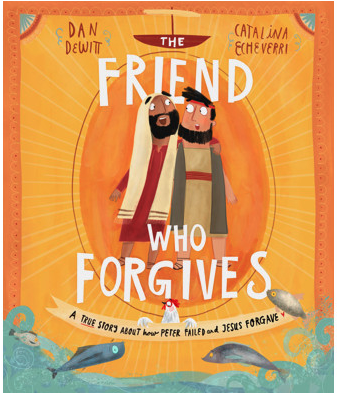
To help you do that, I’ve compiled a list of books my kids have enjoyed that provide excellent biblical teaching, beautifully illustrated stories, and age-appropriate lessons.
These illustrated storybooks are designed to engage children with the big truths of the Bible. The storytelling is captivating and the artwork is beautiful. Each book shows the relevance of God’s Word to their life and offers practical lessons grounded in Scripture.
I haven’t read this without crying. It takes kiddos on a delightful trip through Psalm 23 from the point of view of a sheep named Sammy. It’s, as the kids say nowadays, a banger.
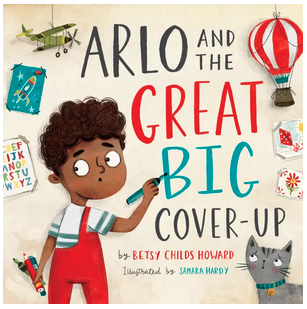
During naptime, Arlo colors on his bedroom wall and then tries desperately to hide his disobedience from his mother. His efforts fail, but he discovers relief that comes when he finally confesses his sin. In the end, children will learn along with Arlo that although we cannot hide sin from God, confession opens the door to mercy and reconciliation.
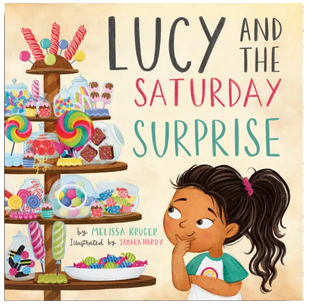
Everyone struggles with wanting what others have, and kids are no exception. Lucy and the Saturday Surprise helps children understand the dangers of letting desire fester into envy. Through colorful illustrations and engaging text, this picture book encourages contentment while offering practical solutions to help kids when temptation is too great, reminding us all that Jesus offers freedom from both the penalty and power of sin.
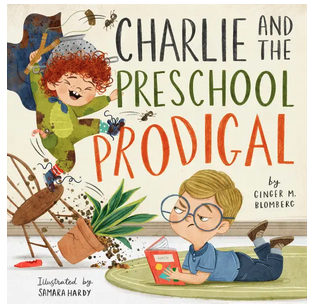
Ginger M. Blomberg retells the story of the prodigal son (Luke 15) through the eyes of wild-child Eddie and his rule-following brother Charlie. Eddie decides to run away from home, taking his brother Charlie’s candy and his father’s new tie with him on his journey. When Eddie returns home feeling scared and guilty about his choice, his father is waiting for him with open arms. But Charlie, who is confused by his father’s immediately welcoming reaction, is hesitant to join in the celebration.
This beautiful hardback Bible storybook for 3-6 year olds takes children on a journey from the Garden of Eden to God’s perfect new creation. It is a gospel presentation that focuses on the significance of the temple curtain. God said “because of your sin you can’t come in”, but the moment the curtain tore in two, everything changed.
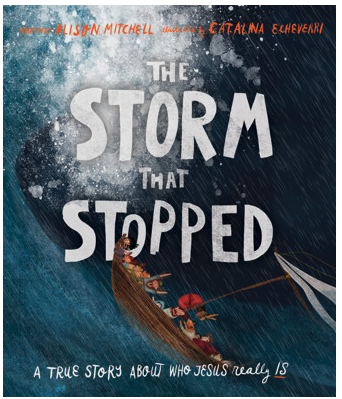
This beautiful hardback for young children is based on the account of Jesus calming the storm from Mark chapter 4. It will help children to understand who Jesus really is and how they can really trust him.
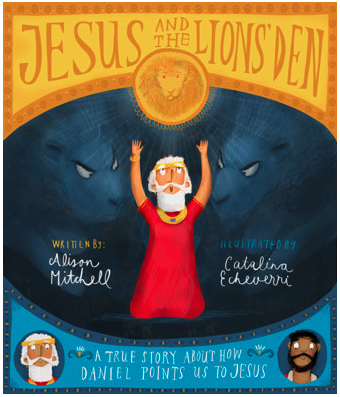
“The story of Daniel and the Lions’ Den teaches children many things… It teaches them about praying; it teaches them about Daniel’s faithfulness to God, and God’s faithfulness to Daniel; and it teaches them that God is the real king of everyone everywhere. But if you peel back another layer, you’ll see that like the rest of the Old Testament, it also points to Jesus.”
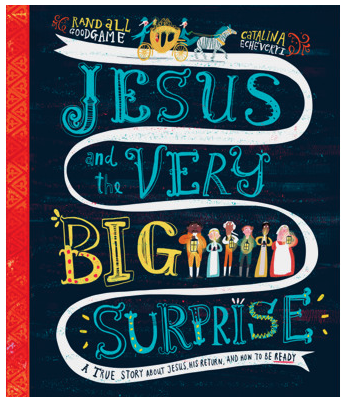
Based on the parable in Luke 12:35-38, this book teaches children that Jesus will return, and when he does, there will be an amazing party where… SURPRISE!… he will serve his faithful servants!
This helpful guide starts from the fundamental truth that God created everything and applies that truth—the doctrine of creation—to kids and their bodies. With the help of God Made All of Me, parents and caregivers can begin conversations with boys and girls about their bodies, helping kids understand the difference between the appropriate and inappropriate touch of others.
This book retells two extraordinary events in history when the God of the Bible proved himself to be the one true God. First it takes children back to Elijah’s time and the gripping “God contest” between the God of the Bible, Yahweh, and the false god Baal. Then it fast-forwards to a different mountain and another “God contest” at an empty tomb.
Shows how God made all people equal in value but different. Even more, it helps kids see how we can be part of God’s family through the saving work of Christ.
These books are more than just stories; they are tools that parents can use to instill biblical truth in their children’s hearts and minds. Whether you are looking for ways to introduce your children to key biblical doctrines, explain the gospel, or build a strong foundation of faith, these resources are invaluable. By regularly incorporating these stories into your family’s life, you will help your children grow in their love for Christ and understanding of His Word.
But Wait, There’s More!
There are loads more, check out great lists on the following websites:
The Good Book Company Children’s Books. My little ones especially like the “Seek and Find” (Old Testament and New Testament are great starts, but there are loads on the website) children’s books where they have a little story, a big picture, and a lot of little “Easter Eggs” to find in the picture (like “Where’s Waldo”).



















 A Pilgrim's Friend