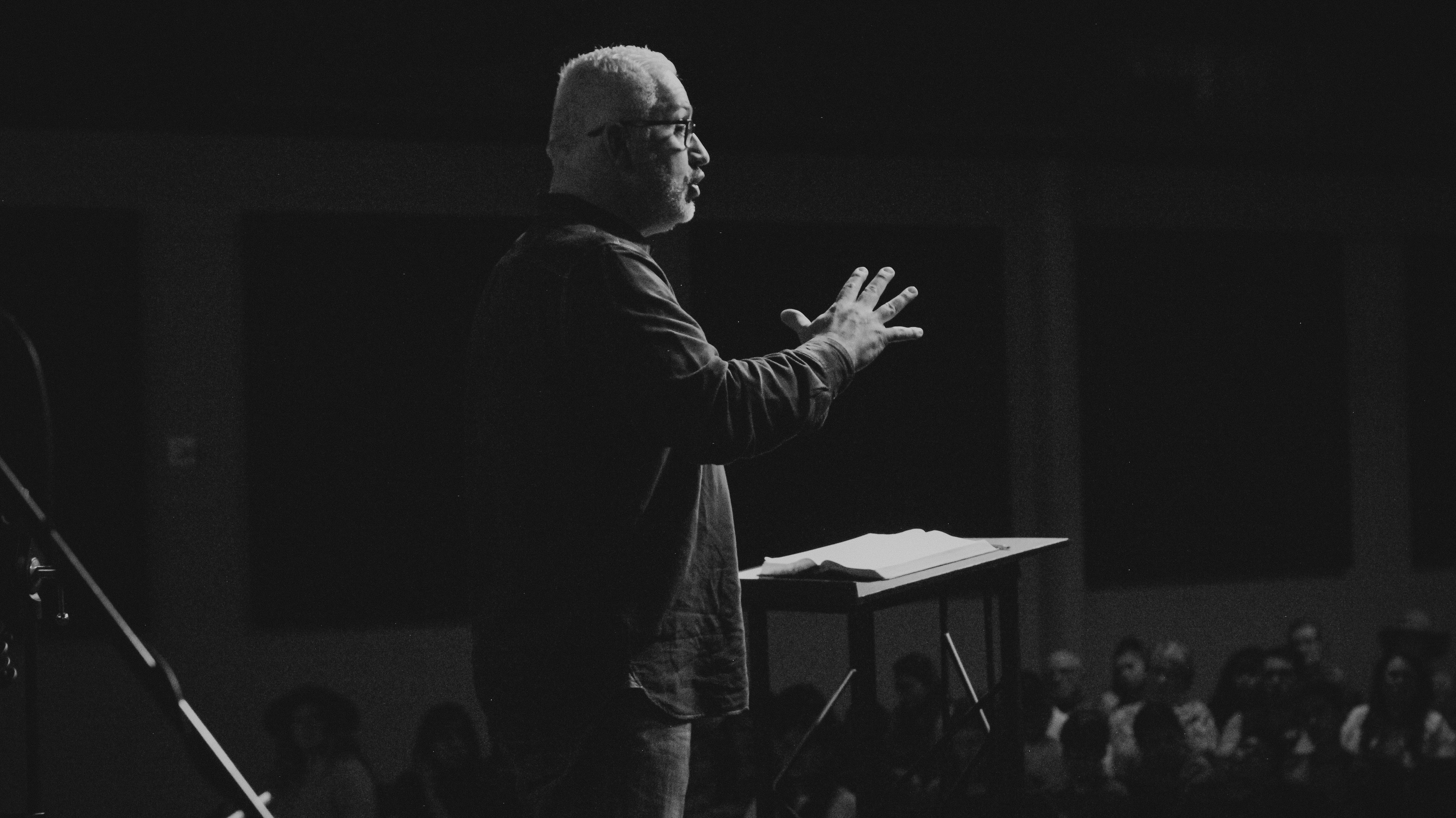
How Should Christians Think About War?

Rockets fired at Israeli citizens.

As violence continues in the Israel-Hamas conflict, it provides an opportunity to ask, “How should Christians think about war?” and look for our answers not from emotions, opinions, convenience, or culture, but Scripture. When thinking about life’s biggest questions, God should be the final arbiter whom we seek and submit to.

As I understand it, here are five key principles from Scripture that ought to guide our thinking in this present conflict and future ones to come.

Five Biblical Principles Concerning Warfare

(1) Governments Are Established by God & Have Authority to Enact Violence Against Evil Doers

A government or ruling authority, as a divinely instituted institution, has the right and responsibility to protect its people from external threats (Romans 13:4). This authority justifies actions taken to neutralize such threats. Individual Christians are commanded to not personally retaliate when offended, belittled, or inconvenienced (Matt. 5:38-40). Governments are commanded to protect the innocent life of its citizens and to wield the sword (act in violence) when necessary to do so.

(2) Any Act of Governmental Violence Must Have Just Cause

A nation has the moral right and responsibility to defend itself and its citizenry when under attack (Nehemiah 4:4), especially when innocent civilians are targeted unjustly. Self-defense is a legitimate response to protect valuable and innocent life and prevent further harm.

(3) Governmental Violence Must Have Right Intention & Aim

The purpose of any defensive or military action must be to restore or preserve peace and security of innocents as far as able (Romans 12:18), not to seek territorial expansion, revenge, or to positively seek the harm civilians. The focus must be to eliminate the threat, stop the wrong doers, and ensure safety of innocents. The driving motivation must not be hatred of enemy in front of them, but love of innocent neighbor and family behind them (Matt. 22:39).

(4) Governmental Violence Must Have a Proportional Response

Any military or defensive action must be proportional to the threat posed (Exodus 21:23-25). It would be wrong to nuke a country because they didn’t fulfill a contract. An effort and aim to avoid or minimize harm to civilians are necessary, even if enemy forces use civilians as shields. The response should match the scale of the threat.

(5) It Must Be Done as Last Resort

Force should only be used when all other peaceful or diplomatic efforts to preserve peace and protect have failed (Romans 12:18). Self-defense becomes necessary after the exhaustion of non-violent measures to address significant threats to life or security.

As you can see, these principals are not based on a certain view of Israel’s status as a special people of God or because of their special history. They’re basic principals derived from Scripture that hold true of any nation regardless their politics, policies, or pedigree.

Applying These Principals to Israel’s Campaign Against Hamas & Hezbollah

Taking these principals, here is how I think they apply to the current military campaign of Israel against the terrorist organizations of Hamas and Hezbollah (both of which are officially designated by the American government as Foreign Terrorist Organizations).

(1) Israel’s Legitimate Authority

Israel has the right to defend itself from hostile attacks, especially when civilian populations are targeted (Nehemiah 4:14). The rocket strikes and acts of terrorism by Hamas and Hezbollah are unjust, and Israel is compelled to respond in self-defense.

(2) Israel’s Just Cause

The Israeli government, as a divinely instituted authority, has the responsibility to protect its citizens from the external and existential threats of Hamas and Hezbollah (Romans 13:4). Their efforts to neutralize the ongoing threat and eradicate these organizations are rooted in this authority.

(3) Israel’s Right Intention

Israel’s goal is to restore peace and security, not to expand territory or seek revenge (Romans 12:18). The nation’s aims to neutralize militant groups like Hamas and Hezbollah, which are committed to ongoing violence and the destruction of Israel and its citizens.

Now, here, one may ask, “But isn’t Israel’s combative measures resulting in massive civilian casualties?” Yes. That reality is a horrendous tragedy. However, the tragic and massive civilian casualties have occurred are unintentional on Israel’s part. They aren’t intending to kill civilians, but terrorists, and are making great (and militarily inefficient) efforts to make the civilian deaths as small as possible. This is a difficult task since both organizations intentionally use their citizens as shields, hide their military operations under and amidst civilian structures (e.g. schools, neighborhood, hospitals), and financially incentivize citizens to hide and store military resources in their homes. Contrarily, Hamas and Hezbollah are seeking to intentionally destroy Israeli citizens (e.g. massacring only citizens on October 7, shooting thousands of rockets at civilians over the years). Said shortly, Israel intends to destroy Hamas and Hezbollah with minimal civilian casualties. Hamas and Hezbollah intend to destroy citizens in the largest number they can. The aims are completely different.

Although the tragic loss of civilian life is a somber reality in this conflict, Hamas’ use of civilians as human shields is what has created the situation. Israel’s military strikes are aimed at military targets alone. They’ve no interest in killing civilians. It doesn’t help them militarily nor would it help them garner the support they need worldwide. But, the terrorists embed themselves within civilian areas on purpose, making it difficult to avoid casualties no matter how hard they try. If someone has taken fifteen hostages and uses them as shields to fire upon a crowd of one-thousand, we wouldn’t blame the police officer who fires at the shooter even though it endangers and maybe even kills the hostages. We’d understand he is not responsible for the innocents’ deaths; that would fall at the feet of the shooter who used humans as a shield so he can carry out his plan to kill the thousand others. It would be sad, but the police officer would not be the responsible party.

(4) Israel’s Proportional Response

To my knowledge, Israel’s military response has been measured and focused on eliminating military threats while minimizing civilian casualties, even though groups like Hamas use human shields (Exodus 21:23-25). Israel’s actions, tragic as they are, are proportional to the threat.

(5) Israel’s Last Resort

After decades of failed diplomatic efforts, Israel has turned to military force as a last resort (Romans 12:18) to put this ongoing pattern of Hamas and Hezbollah’s attacks to an end. Non-violent measures have been exhausted, and self-defense is now necessary to counter existential threats.

In light of these biblical principles, it is clear that Israel’s current military action against Hamas and Hezbollah is justified. Terrorist groups like Hamas and Hezbollah aim not only to terrorize Israeli civilians but to destabilize the region and perpetuate violence. Israel, out of love of neighbor, must enact governmental violence against terrorists intent on their demise.

What About a Ceasefire Instead?

Some ask, “Wouldn’t a ceasefire be better than conflict?” It is a good question asked – I trust -with the best intentions. The call for a ceasefire, while appealing for the reason of immediate relief, presents significant challenges. A ceasefire at this point legitimizes these terrorist groups and their activities It allows them to regroup and continue their attacks in the future. Also, it delays a lasting solution to the violence which is to dismantle the terrorist organizations in full. If a doctor were to stop chemotherapy because it makes the patient sick, harms some healthy parts of the body, and seeks to eradicate the cancer we’d say the doctor is performing malpractice. In the same way, halting Israel’s military response would fail to address the root issue—the existence of groups who are devoted to the destruction of innocent life. Like cancer, the best way to deal with terrorists is swift and just death.

Finally, this perspective is not based on an uncritical belief that modern Israel holds a special place in God’s plan, as promised in the Old Testament. Rather, it is rooted in the universal principles of justice, peace, and the protection of life, which are extended to all believers in Christ.

Conclusion

As Christians, it is crucial to understand that defending innocent lives is not only morally permissible but a God-given responsibility for governments. In the case of Israel, their actions against Hamas and Hezbollah are driven by a just cause, legitimate authority, right intention, and a proportional response, and has been pursued as a last resort. While a ceasefire may seem like a compassionate solution, it risks exacerbating the conflict by allowing terrorists to regroup and strike again. Instead, the focus must remain on restoring peace and stability through the eradication of the forces committed to violence.

Posted in Uncategorized | Tagged , , , , | Leave a comment

What Is the “Good Life”?

I gave this commencement address to the Independent Learning Academy’s graduating class of 2022.

I want to begin by reminding you of what you’ve done to get here today.

  • 2,340 days of school.
  • Roughly 14,000 hours of instructional time.
  • 700 hours of homework.

That is a lot of sacrifice, a lot hard work, and a lot of tears. School isn’t easy. Learning, when done right, takes work. So allow me to say to you: well done. We are here to honor you and acknowledge the work that got you here.

Moms, dads, family, and friends, let’s again applaud our graduates.

But Why?

Those days, hours, and hard work – that is the what of these last nine years, but now is an excellent time to introduce you to another, and even more important, question: why? What is the point for all this hard work in your past and all the hard work coming in the next four years?

There are a lot of bad answers to that question – “I have no idea why I go to school!” or  “I am forced to go to school.” However, there is one answer that I think worthwhile. “I go to school because I want to live ‘the good life.’”

Now, I think that is a good answer, but I don’t think everyone means the same thing when they say, “The good life,” do they? Some may think, “playing video games 15 hours a day” or “becoming a famous singer or influencer or actor or athlete” or “making loads of sweet cash.” There are a lot of ideas of what “the good life” looks like.

So, what is the good life?

What is “The Good Life?”

I don’t think answering this question is only matter of personal preference that depends on someone’s interests or dreams. Instead, I think the good life is something that can be enjoyed or missed out on no matter what your interests are.

Let me show you by asking you four questions.

1) Would “the Good Life” be good or bad?

This one is easy because it’s literally in the phrase, “the good life.” So, the good life will be filled with good things like truth, happiness, peace, love, contentment, and beauty and not filled with bad things like lies, misery, anxiety, dissatisfaction, or ugliness. The good life will be good, not bad. Fair?

2) Would “the Good Life” be permanently good or sometimes good?

I think all of us would agree that it is much better to have permanent good life and not an occasionally good life. Whenever we have something truly good – truth, peace, happiness – we want it permanently. We don’t want to rent goodness. We want to own it. The best version of the good life doesn’t have an expiration date.

3) Would “the Good Life” be unlimited in goodness or limited in goodness?

Should the good life be like a box of donuts or the whole donut shop? Should it be like a bottle of water or a mountain stream? Obviously, the best kind of good life would never run out of goodness. After you’ve eaten all the goodness you can, there is still a feast of goodness left to enjoy. The best kind of good life would never be emptied or dried out or finished off.

4) Would “the Good Life” be good that’s inside you or outside you?

Is it better for the good life to come from inside of you or outside? Should it be based on what’s happening around you or what’s inside of you?

This one takes a second, but becomes clear with examples. Should the good life only be experienced when your circumstances are good – when you’re body is healthy, your bank account is full, your circumstances are enjoyable? Now, although you should all hope for good circumstances, you shouldn’t depend on them for the good life, because your circumstances won’t always be good. Life will be brutal to you at times. You or your loved ones will become serious sick. You won’t always enjoy a lot of money in the bank. Sometimes you or people you love get fired, sick, hurt, betrayed, or worse. If your idea of the good life depends on good circumstances, you aren’t signing up for a good life, but a terrible one.

However, if you’ve gotten the good life on the inside, then no matter how bad things get around you, you’ll be ok. If your soul is fat and happy then even if your body isn’t, you’ll still enjoy the good life. If you heart is enjoying peace, then even when your circumstances are pure chaos and disorder, you won’t be crushed. If you have goodness inside of you, then no matter the badness outside of you, you’ll still be able to carry on with true joy. The good life isn’t found in luckily having happy circumstances, but having a healthy soul.

So, the truly good life, if we’re all on the same page, is good, permanent, unlimited, and is located inside of us instead of our circumstances.

Kicking the Tires

Soon, you will get your license and eventually get a car. When you get a car, you and your parents will want to make sure the car is a good one, yea? You’ll check the car facts to see if the car has been in accidents, you’ll take it to the mechanic to have it looked over, or you’ll kick the tires because apparently that’s a thing you’re supposed to do.

So, if we take time to make sure a big purchase like a car is quality, shouldn’t we also take a moment to make sure the good life we’re pursuing is good? After all, your life a bit more important than your first car? So, let’s look at three of the most popular versions of the good life and “kick the tires” by seeing if they hold up according to our idea of what the good life must be like.

“The Good Life is Getting Into a Good College.”

College is so emphasized today it is easy to think, once I get into the college of my dreams, I’ll have arrived. Everything will be downhill from there!

College is a great thing and, if it makes sense for you, I recommend it. However, even if you get into the college of your dreams, it won’t give you permanent joy. In fact, the Mayo clinic says 44% of college students show signs of depression and suicide is the second leading cause of death amongst college students. Even more, college isn’t unlimited; it’s only four years. Though college is a gift with lots of goodness, it falls short of securing you the good life.

“The Good Life is Making a Lot of Money.”

I had a brave student once say in a class discussion, “I know everyone says, Money doesn’t buy happiness,’ but if I had a billion dollars, I think I’d be fairly happy.”

One scientific, peer-reviewed journal, after studying the emotional well-being of thousands of people from low and high incomes, concluded: “Beyond household income of $75,000 a year, money does nothing for happiness, enjoyment, sadness or stress.”[1] Having money in the bank does not guarantee happiness in your heart. More money may buy you more toys, but it doesn’t get you more joy. In reality, chasing money makes life miserable because you’ll never feel you have enough. One billionaire was asked almost a century ago, “You’re the richest man in the world, how much money is enough?” He replied, “Just a little bit more.” Chasing money for happiness is like drinking salt water to quench your thirst. The more you drink, the thirstier you become.

“The Good Life is Having a Good Career.”

We think, “Once I get my “dream job,” then I will be satisfied.

There is nothing wrong with a good career. It is a really good thing. It just does not guarantee the good life. Careers are not permanent or unlimited. If your whole life is poured into your career, what happens to you happiness if you get demoted, laid off, or fired? Or what will happen to your joy when you retire? What about when you come to finally face death? I have never seen or heard of anyone on their death bed say, “If only I spent more time in the office.”  Good careers are good, but they are incredibly temporary, limited, and ever changing; they’re good to have in life, but they’re not the good life!

There are more janky versions of the good life out there and interrogate them like we did with these three today. But, at this point, here is what I would like to recommend to you: don’t buy these. Choose today to get rid of versions of the good life that are not permanent, unlimited, and planted inside of you. If you’ve already bought into them, grab your receipt and return them. They’re over-hyped and don’t deliver what they promise.

The Actual Good Life

So, what is the actual good life? The one that is permanent, unlimited, and planted inside of us? It is the life that comes from knowing, loving, and adoring God through Jesus Christ.

Now, I am a Bible teacher, theology professor, and pastor, so that answer probably doesn’t surprise you. However, don’t dismiss the idea just yet. Why is this the good life?

It’s Logical

If God has made everything, doesn’t that mean that He’s better than everything he’s made? When God made the world he said, “It is good.” But the goodness of his creation is limited, he is unlimited. God’s creation is always changing, but He is unchanging; permanently perfect in every way. God’s creation can only be enjoyed when it’s around you, but the life God offers in Jesus comes is something He works out inside of you – forgives of your sins, a new heart, a resurrected soul! The gospel of Jesus brings you into friendship with the God who is permanent and unlimited in His goodness and promises you new life not in your circumstances, but your heart! We don’t even have to crack open a Bible to understand, if God exists, then the best kind of life is to look over creation to the one who created it all!

It’s Biblical

The message of the Bible is this: true joy comes only from God.

Consider King David was a man who had it all. He was praised as a manly man; the guy who started his career killing Goliath with a slingshot when he was a Jr. Higher. He was a famous poet and musician writing over 73 of the psalms in the Bible. He was a powerful and successful man, known as the godliest and most faithful king Israel ever had. You think that this guy had it all! But what was the one thing he really sought after? The one thing he asked for?

One thing have I asked of the Lord, that will I seek after: that I may dwell in the house of the Lord all the days of my life, to gaze upon the beauty of the Lord. Psalm 27:4

Or consider Paul. On multiple occasions Paul was beaten and imprisoned for preaching Jesus. One such time, he wrote a letter to the Philippian church while in chains. At this moment, by earthly standards, Paul had every reason to be miserable: he unjustly lost his freedom, lost his possessions, lost his comfort, and was expecting to soon lose his life. But what do we read from him? “For me, to live is Christ and to die is gain” (Phil 1:21). Or, from the same prison, he wrote these commands to the Philippians, “Rejoice in the Lord always; again I will say, rejoice” (Phil 4:4). At this moment, he wasn’t enjoying college, his career got him imprisoned, and he had no money. But do you know what he did have? A permanent, unlimited joy in his heart that came from knowing Jesus Christ. They could take Paul’s earthly life, but they couldn’t touch his good life.

Consider Matthew Henry. When Matthew Henry was returning home from teaching at church, some men jumped him and robbed him. Henry reflected on his experience and wrote this in his journal: “I have great reason to thank God, that having traveled so much, yet I was never robbed before now.”[2] At a time where we’d expect to hear complaints, curses, and misery, Matthew Henry’s soul was brought to a place of genuine thankfulness and worship! The robbers could take his money, but they couldn’t steal his good life!

It’s Real

It’s not just a thing you only read in the Bible or history books. The joy of knowing God through Jesus is something you can actually witness in the lives of genuine Christians around you. For me, I think of my grandpa. My grandfather was born into a family where alcoholism and anger were in abundance. Jesus found him in college and saved him. From there, he broke the chain of alcoholism and anger and followed Jesus into a life that was characterized by self-control, love, and joy. A few years ago, grandpa’s heart steadily began to die inside him. He went to the hospital and I watched his once muscled, strong, vibrant body waste away. Over about two months, his conditioned worsened, his pain increased, and his days left were obviously few. Eventually they moved him back into his home so he could die in peace.

My brother and I were at his home along with a few longtime friends from church. He was sleeping but all of a sudden we heard him try to speak. I looked over at him and his eyes were wide open, his frail arms were weakly moving in front of him, and his faint voice was whispering something. We drew closer and realized: he was singing Amazing Grace. Not only that, but his arms were moving like an old choir director. He wasn’t just singing, he was wanting to lead us in song.

So, for the next twenty minutes or so, on his deathbed, with weakened voice and body and failing heart, my grandpa led us all in songs of worship to King Jesus. In my grandpa’s greatest time of pain and weakness and frailty, he proved to me that there was no one as comforting, powerful, and strong as Jesus Christ. He proved to me that the good life, the one that’s permanent, unlimited, and given within, can only be found in knowing Jesus Christ as Lord, Savior, and Friend.

Will your college diploma cause you to sing your way into death? Will your bank accounts be of any comfort for you there? Will your career prepare you for that day? I want you to hear me clearly today, graduates. I challenge you to find anything or anyone else who can give you that kind of love, peace, and joy on your deathbed. In this world, there is no one and no thing that offers a better life than Jesus Christ.

Jesus said it clearly: “The thief comes only to steal and kill and destroy. I came that they may have life and have it abundantly” (John 10:10). At the end of the day, every version of the good life the world offers you – the money, the colleges, the pleasures, and the fame – will only kill you, steal from you, and destroy you. But, the good life offered to you by the crucified and risen Savior will fill your heart all the way home.

Don’t Settle For Less

Many people think becoming a Christian means you settle for less – less fun, less luxury, less joy. However, the reality is this: Christ has come so we stop settling for less. In calling you to himself, Jesus, the Living God, says trade your sometimes good for always good, your temporary for permanent, your limited trinkets for unlimited treasure. Stop chasing after creation and turn back to the Creator. Stop settling for less and in Jesus find the good life that’s better than you could ever imagine.

Graduates, you’ve worked hard to get to this day and you’ll work all the harder to get to high school graduation and even harder for every chapter after that. Don’t waste all your hard work to obtain cheap, counterfeit, and worthless versions of “the good life.” In all you do from here forward – in your schooling, your working, in all your life – work for the genuinely good life that is permanent, unlimited, and planted within you by the grace of God in Jesus Christ.

Don’t work for the good life of the world, but the good life that can only be found in the One who made the world. That is a life worth living. That is the good life.


[1] https://www.nytimes.com/2010/09/12/jobs/12search.html

[2] Taken from Matthew Henry: His Life & Influence by Allan Harman

Posted in Uncategorized | Tagged , , , , | 1 Comment

How Can I Be Happy?

I recently shared this message titled, “A Wild Goose Chase: The Pursuit of Happiness” at the “Women in ElectronicsAnnual Leadership Development Summit in the Balboa Bay Resort in Newport Beach, California.

——-

I’d like to begin by telling you about three very different people. 

John is middle management in a large corporation. Having gone through the rookie phase of his career, he’s now a seasoned employee. He’s got aspirations for promotion where he’d enjoy all the benefits—better pay, more power, a corner office, and the respect of one who’s made it. He likes where he’s at now, but he’s excited to do the hard work required for the goal ahead. 

Mackenzie is an artist. She works at a local coffee shop and has a side gig doing deliveries for Amazon. But, after paying rent, she’s basically broke. However, she’s okay with it. Sure, she’d love to have more financial stability and maybe a five-year plan, but not if it gets in the way of her art. As it is, being broke and aimless is fine as long as she has the freedom to paint. 

Joe is a common criminal. Pickpocketing is his specialty. It pays his bills quite well. But he isn’t against more serious crimes if they make sense for him. Right now, he’s working on a team that’s ready to scam someone out of their life savings. He’s nervous, but he’s taking the risk for the reward. 

Three very different people—John, Mackenzie, Joe—living very different lives—businessman, artist, thief—doing very different things—sacrificing, scrounging, stealing. But they have one thing in common: they all want to be happy. 

 Our Common Pursuit 

These stories remind me of something Aristotle wrote in a book called *Nicomachean Ethics*. It’s one of the oldest—and best—self-help books ever written. On the first line, he makes a profound claim: 

“Every… action and pursuit… (aims) at some good.” 

What he means is that everything we do and pursue is always aiming at some good. In all we do, we act and advance always and only toward some big goal. What’s that goal? He says it’s to be happy. 

“Now such a thing is happiness, above all else… for (we always choose happiness) for self and never for the sake of something else.” 

Why does the businessman work? For happiness. Why does the student study? Happiness. Why does the father raise his kids? Happiness. Why does the thief steal or the murderer murder? Because, even though their actions are wrong, they think doing them will bring them some kind of happiness. His point is simple: everyone, everywhere—including everyone in this room—is always seeking and working for happiness. 

Now, if you agree with that, it’d be good to look around and ask, “How are we doing on the happiness front?” At first, this seems like it will go in a positive direction for us today. After all, we live in one of the most developed countries in the world. Relatively speaking, our economy, affluence, and freedom are better than most. Even more, we live in a day when there has never been better technology, better medical treatment, better access to knowledge, better living conditions, or better luxuries. What used to be extravagances only the rich could enjoy are now the basic conveniences of the poorest among us. If we measure by life expectancy, wealth, and decreasing poverty, the 21st century is objectively the best time to be alive. 

However, that hasn’t affected levels of happiness. Studies seem to show that our grasp on happiness is slipping and only getting worse: 

“The percentage of U.S. adults who report having been diagnosed with depression at some point in their lifetime has reached 29.0%, nearly 10 percentage points higher than in 2015. The percentage of Americans who currently have or are being treated for depression has also increased, to 17.8%, up about seven points over the same period. Both rates are the highest recorded by Gallup since it began measuring depression.” 

Even more relevant for this group: 

“Over one-third of women (36.7%) now report having been diagnosed with depression at some point in their lifetime.” 

My question is this: “If now is objectively the best time to be alive, why are people so miserable?” How can we have so much stuff but be so unhappy? It’s a good question that deserves careful thought. 

To help, I would like to offer you three things to consider to help you think and discuss it with others. The first consideration is this: what are we chasing to make us happy? Because, if we’re honest, they don’t seem to be working. We all seem to be on a wild goose chase without an actual goose. So, what are the things people commonly chase to make them happy? What are our favorite “gooses”? 

Our Gooses: What We Think Will Make Us Happy 

In our common pursuit of happiness, we all seem to have copied the same person’s homework because we all use the same equation: “If I just have ______, then I’ll be happy.” What we put in the blank may differ, but our formula is the same. 

To think about it, let’s list the four most popular “gooses” people chase for happiness and let’s “kick the tires”—test them out—to see if they deliver the happiness they promise. 

1) If I Just Have More Money, Then I’ll Be Happy 

I once had a brave student say in a class discussion, “I know what everyone says, money doesn’t buy happiness, but, to be honest, if I had a billion dollars, I think I’d be fairly happy.” 

Now, money is necessary to provide for your basic needs like food, clothes, and shelter, but research indicates that once those things have been taken care of, more money does not bring more happiness. One peer-reviewed study done by the University of Virginia, after studying the emotional well-being of thousands of people from low and high incomes, concluded this: “Beyond household income of $75,000 a year, money does nothing for happiness, enjoyment, sadness, or stress.” Assuming basic needs are met, more money in the bank does not bring more happiness in your heart. More money gets you more toys, but it doesn’t get you more joy. In fact, chasing money tends to make life more miserable because you’ll never feel you have enough, and the more you have, the more you worry about. As the great theologian P-Diddy once said, “Mo money, mo problems.” 

What’s the second goose? Experiences. 

2) If I Just Have Better Experiences, Then I’ll Be Happy 

But we say, what if I “Eat, Pray, and Love?” What if I choose to pursue meaningful experiences like traveling, vacationing, or doing exciting things? What if, as they say, it’s not about the destination but the journey? 

The thing about experiences is that they all quickly come to an end, normal life returns, and we’re left unable to live in the normal and painfully yearning for the next experience. A vacation is nice until you’re back at work Monday morning. Even worse, work on Monday is even more miserable when happiness doesn’t exist in the normal experience now, but the extraordinary experience later. At best, experiences leave us fond memories of the past, but they don’t help us better enjoy the present or live in the future. Good memories don’t make a good life. 

Here’s the third. 

3) If I Just Have Greater Success, Then I’ll Be Happy 

We think, “Once I get my ‘dream job,’ then I’ll be satisfied.” 

Now, know that there is nothing wrong with a good career. It is a good thing. It just does not guarantee the good life. Careers are not permanent or unlimited. If your whole life is poured into your career, what happens to your happiness if you get demoted, laid off, or fired? Or what happens to your joy when you retire? One paper by the Economic Institute of America stated that “Retirement increases the probability of suffering from clinical depression by about 40%.” Good careers are good, but they are temporary, limited, and ever-changing. They’re good to have in life, but they’re not the good life! 

Our last popular goose of happiness is legacy. We say… 

4) If I Just Have a Lasting Legacy, Then I’ll Be Happy 

This is the most honorable-seeming of them all. It isn’t about superficial things like paychecks or promotions, but about prestige; being remembered well. 

When we think of legacy, we often remember the few in recent memory who did great things—Martin Luther King Jr., Abraham Lincoln, or Winston Churchill—but they’re all once-in-a-generation kinds of people; unicorns. Most of us won’t measure up to that. 

What about the people who are much closer to you? Think about those who’ve made an impact on your family tree. Raise your hand if you know the name of your paternal Grandpa? Great-Grandfather? Great-Great-Grandfather? Likely, you’ve got about one or two generations’ worth of memory, but even those in your own family are easily forgotten—even by their own family! One ancient King of Israel said it this way, “For of the wise as of the fool there is no enduring remembrance, seeing that in the days to come all will have been long forgotten. How the wise dies just like the fool” (Ecclesiastes 2:16). How happy can leaving a legacy make us if our own families—let alone everyone else in the world—will forget our names, let alone everyone else in the world – will forget our names, let alone our lives and accomplishments? Is that happy-sustaining thought?

Listen to the Yelp Reviews

In case you think I am being a bit pessimistic here, consider the Yelp Reviews of those who’ve achieved not just one of these things, but all of them. Tom Brady, one of richest, most successful athletes who experienced seven Superbowl victories and will likely be remembered for a long time once said this in an interview with “60 Minutes:”

“Why do I have three Super Bowl rings, and still think there’s something greater out there for me? I mean, maybe a lot of people would say, “Hey man, this is what is.” I reached my goal, my dream, my life. Me, I think: God, it’s gotta be more than this. I mean this can’t be what it’s all cracked up to be. I mean I’ve done it. I’m 27. And what else is there for me?”

Or, consider another wildly rich and successful actor, Jim Carey: “I think everybody should get rich and famous and do everything they ever dreamed of so they can see that it’s not the answer.” After seeing all this I can’t help but hear the lines of that old Rolling Stones song:

I can’t get no satisfaction

I can’t get no satisfaction

‘Cause I try and I try and I try and I try

I can’t get no, I can’t get no.

There is an old line preachers love to use that goes like this, ‘The definition of insanity is doing the same thing over and over again, expecting different results.” I think it may apply here. It seems we’ve been sent on a goose chase with no goose.

So, is happiness unattainable? I don’t think so. I think the problem is we’re making one crucial error in our pursuit. That leads us to our second consideration: our goof. What are we doing wrong?

Our Goof: Missing the Mark

The problem isn’t that we want happiness. Wanting to be happy is smart—better yet, it’s good. What kind of person would want to be miserable or unhappy? The issue is that we’re misidentifying what happiness is.

Let me explain it this way.

In life, there are “first things” and “second things.” A first thing is something that, once you have it, produces second things. A second thing is what comes from having a first thing. A first thing is the cause, and a second thing is the effect. A first thing is a root; a second thing is the fruit. For example, if I have a job (a first thing), I will earn money (a second thing). If I have health, I will experience physical comfort. If I have an Android, no one will invite me to their group chat. When we have first things, second things follow. We pursue first things and enjoy second things.

Think of someone who is sick and has the chills. There are two ways to deal with the feeling of cold. The first is to grab a blanket, turn up the heater, or sit by a fire. The second is to deal with the sickness. Now, if they just grab a ton of blankets, they’ll feel warm as long as they’re wrapped up. But if they address the sickness, they’ll be warm even without the blankets. If they only want to be warm, they’ll end up cold—no health and no lasting warmth. But if they seek health, they’ll have both lasting health and lasting warmth.

The problem we have with happiness is that we identify it as a first thing. We chase happiness by trying to get stuff, have experiences, or achieve statuses that give us a temporary feeling. But once those things fade, the happiness fades too. In chasing happiness as a first thing, we end up pursuing things that, at best, only provide temporary happiness. One Cambridge philosopher, C.S. Lewis, put it well: “Put first things first, and we get second things thrown in; put second things first, and we lose both first and second things.” In chasing happiness, we not only miss out on the first thing—whatever causes happiness—but we miss out on happiness itself!

Now, before you dismiss this idea, know that it isn’t original to me. Wise folks throughout history have noted this phenomenon for thousands of years. For example:

“Don’t aim at success. The more you aim at it and make it a target, the more you are going to miss it. For success cannot be pursued; it must ensue, and it only does so as the unintended side-effect of one’s dedication to a cause greater than oneself.” — Viktor Frankl

Eleanor Roosevelt said it simply: “Happiness is not a goal…it’s a by-product of a life well-lived.”

And for my animal lovers: “Happiness is like a cat. If you try to coax it or call it, it will avoid you. It will never come. But if you pay no attention to it and go about your business, you’ll find it rubbing up against your legs and jumping into your lap.” — William Bennett

So, here’s where we are: we all want to be happy, but happiness can’t be found by directly seeking it. Got it? Good. Let’s pray. (Just kidding!)

We’ve established the emptiness of what we often pursue (our “Gooses”) and the mistake of thinking happiness is something to be obtained (our “Goof”). So, the final question is: what should we do?

Some of you might expect me to say you need to get rid of something you already have. Others might fear I’ll tell you to acquire something you don’t. But I’m not going to suggest either. The pursuit of happiness isn’t about giving up what we have or chasing after what we don’t. It’s about reordering what’s already in front of us.

Our Good: Acting Like a Human

Indulge me in a simple thought experiment. What kind of life would make a fish happiest? One in the water. How about a worm? A life in the mud. A bird? A life soaring through the skies. Why do we know this? Because that is what those creatures were made for. We understand that something can only be happy when it is living as it was designed to live. Stoic wisdom teaches that happiness comes when something lives according to its nature.

This idea is more relevant than ever because we live in a culture that equates freedom and happiness with doing whatever we want. If it sounds good, go for it. If it feels good, do it. But suppose a fish wanted to live outside of water. Would you encourage it? No. Why? Because, no matter what it wants, living out of water won’t make its life better. A fish was made for water. It will be happiest not by doing what it wants, but by living how it was made to.

This brings us to human happiness. If we want to live a truly happy life, we shouldn’t follow our stomachs, cultural fads, or our best guesses. Instead, we should learn to live skillfully as humans. We live in a society with more opportunities to fulfill every passing desire, yet we are not better off for it.

What if we stopped thinking that happiness comes from doing whatever we want and instead embraced the idea that happiness comes from living as we were made to live as humans? Is it possible that living as humans were designed to live is the key to uniquely human happiness?

This leads to the crucial question: what does it mean to live like a human? This question begs for long discussion and careful thought, but we can start by asking, “What is unique about humans?” If we can discover what makes us unique, we can begin to learn what living a happy human life looks like.

I suggest that humans are unique in three key ways:

  1. We Are Moral Beings – We understand right from wrong, good from bad, in ways that go beyond mere survival or practicality.
  2. We Are Relational Beings – We yearn for, seek, and depend on relationships in ways that extend beyond survival.
  3. We Are Worshiping Beings – We all have one ultimate thing we trust, love, and treasure above all others.

If I’m right, then human flourishing—human happiness—will be found when we focus on and grow in these areas. These are the ways we live like humans, and when we lean into them, we experience true, lasting human happiness.

Let’s look at them one by one.

1) We Are Moral Beings

Have you ever considered how unique humans are in the way we raise our kids? Like other creatures, we seek to feed, protect, and care for them. But we also do something no other species does: we try to make them moral. It pains us when they lie, steal, act greedily, or hurt others, and it deeply pleases us when they tell the truth, show courage, act justly, and selflessly care for others. We work hard not just to raise children who are alive but children who are good.

Why? Because humans are moral beings—we know there is a right and wrong. We know that good morality doesn’t just keep our kids out of trouble; it also leads to a truly happy life. We intuitively understand that happiness cannot be achieved by someone who is mal-formed or immoral.

I once heard a philosophy professor tell a story about his teenage daughter, who was upset when he said no to her request to attend a party. She asked, “Why don’t you want me to be happy?” His response was wise: “You are too young to be happy. You first need to learn to be good, and then you’ll be able to be happy.”

Think about that for a moment. Imagine someone who is honest, selfless, generous, kind, compassionate, just, patient, grateful, and loving. Now, make that person rich. Are they happy? Yes. Now make that same person poor. Are they still happy? Yes. In contrast, imagine someone who is greedy, impatient, selfish, cruel, and dishonest. It doesn’t matter if they’re wealthy or poor—no matter their circumstances, they won’t experience lasting happiness.

Why do we suspect this? Because being good is good for humans—it aligns with our nature. Developing good character produces internal health. Even in difficult circumstances, someone with good character is likely to be okay because their well-being doesn’t depend on external things like possessions, circumstances, or status.

Good character is not only key to personal happiness but also essential to thriving in work and family life. Consider how important trust is in relationships. Without trust, it’s nearly impossible to be successful in any area of life.

What kills trust? Being untrustworthy—lacking qualities like honesty, selflessness, kindness, patience, generosity, and love. Character is not just essential for happiness; it’s essential for thriving at work and home.

In our pursuit of happiness, we should ask ourselves: “Who am I?” Am I patient, kind, considerate, generous, loving, compassionate, and humble? Or am I cranky, cruel, critical, mean, selfish, and bitter? If you’re unsure, ask a trusted friend or family member, “How would you describe me?”

After reflecting on that, ask the next, better question: “Who should I become?” Recognizing where we are is the first step to deciding where we want to be. If we focus on areas where we’re morally weak or broken and seek to practice honesty, kindness, gentleness, patience, and selflessness, we will start to experience happiness at work and home as a by-product of becoming better people.

2) We Are Relational Beings

Aristotle famously said, “Humans are social creatures.” For us, relationships aren’t a luxury—they’re essential for flourishing. A lack of meaningful relationships harms us both mentally and physically. America’s Surgeon General recently identified loneliness as a national epidemic, stating:

“Loneliness is far more than just a bad feeling—it harms both individual and societal health. It is associated with a greater risk of cardiovascular disease, dementia, stroke, depression, anxiety, and premature death. The mortality impact of being socially disconnected is similar to that caused by smoking up to 15 cigarettes a day.”

On the flip side, research shows that strong relationships are a powerful source of happiness. Harvard University has conducted an 84-year-long study that spans across two generations. The study’s leaders concluded:

“For 84 years and counting, the Harvard study has tracked the same individuals, asking thousands of questions and taking hundreds of measurements to find out what really keeps people healthy and happy. One crucial factor consistently stands out: good relationships keep us healthier and happier. Period.”

Many things contribute to human happiness, but one that stands above the rest is the warmth and intimacy of our relationships.

Our experience confirms this, doesn’t it? Think about all the technology we have—what do we mostly use it for? To connect with others. And what’s one of the harshest punishments in prison? Solitary confinement. Even hardened criminals fear the punishment of being cut off from other humans. We’re hardwired for community, and we won’t be happy unless those relationships are healthy and warm.

Knowing this and practicing it are two different things. But here are some simple questions to guide you:

  1. Who are the most important people in your life?
  2. How are your relationships with them?
  3. Where would you like them to be?

Some relationships need more attention, while others may need less.

3) We Are Worshiping Beings

Now, I know that when I say this, red flags may fly up—“Oh no, here comes the preacher!”—and you may be tempted to shut down. But did you know this isn’t just something religious folks talk about? It’s also a growing topic in the business world.

Business leaders have begun considering a concept called “Spiritual Quotient” (SQ). We’re used to hearing about IQ (Intelligence Quotient) and EQ (Emotional Quotient), but now SQ is being discussed as well. One business writer explained it this way:

“Spiritual Quotient encompasses qualities like self-awareness, compassion, empathy, integrity, and a sense of purpose. It focuses on connecting with one’s inner self and the broader universe. Integrating spirituality into the workplace can profoundly affect individual well-being and organizational success.”

He added that SQ fosters resilience, empathy, compassion, innovation, creativity, well-being, and a sense of meaning and purpose. Alongside IQ and EQ, businesses are now recognizing the importance of SQ.

You may be thinking, “But I’m not religious, and this doesn’t apply to me.” But if you think that, it’s because you misunderstand what worship is. Worship is simply about what you love, trust, and treasure above all else. It could be money, success, family, or status. Not all of us worship the same thing, but all of us worship something. At a commencement speech, atheist novelist David Foster Wallace explained it this way:

“In the day-to-day trenches of adult life, there is actually no such thing as atheism. There is no such thing as not worshipping. Everybody worships. The only choice we get is what to worship.

And an outstanding reason for choosing some sort of God or spiritual-type thing to worship — be it J.C. or Allah, be it Yahweh or the Wiccan mother-goddess or the Four Noble Truths or some infrangible set of ethical principles — is that pretty much anything else you worship will eat you alive.

If you worship money and things — if they are where you tap real meaning in life — then you will never have enough. Never feel you have enough. It’s the truth.

Worship your own body and beauty and sexual allure and you will always feel ugly, and when time and age start showing, you will die a million deaths before they finally plant you.

Worship power — you will feel weak and afraid, and you will need ever more power over others to keep the fear at bay.

Worship your intellect, being seen as smart — you will end up feeling stupid, a fraud, always on the verge of being found out. And so on.”[1]

So, the question isn’t, “Do you worship?” but “What?”

Once you identify what you worship, ask, “Does it live up to the hype?” If you’ve allowed something unworthy to take the top spot in your life, think about how silly that is. We make sure our kids’ babysitters are qualified, we expect our employees to be qualified, and we want our doctors to be qualified. Doesn’t it make sense to make sure that whatever or whoever we worship is qualified, too?

Here’s a simple job description of a good “god”:

  • It should be real, not made-up.
  • It should be permanent, not temporary.
  • It should be unlimited, not limited.
  • It should be powerful, not weak.
  • It should help me in life—and more importantly, in death.

If you’ve found something or someone that meets all these qualifications, living for it makes sense. If you’re rightly connected to such a being, it’s hard to imagine living an unhappy life.

Now, I would like to take a risk and be authentic, transparent, and a little vulnerable with you. The reason I became a Christian was by asking those very questions and resolving to find not just what made me feel comfortable, but what I could confidently believe is true.

In high school, I realized I had three major problems: my badness, my stupidity, and the fear I had of the inevitability of my death. After reading about the life and teachings of Jesus Christ, I became convinced that He had the answers to all three.

  • For my badness, Jesus said He paid for my sins against God on the cross, canceling my debt and offering me forgiveness—not because of my efforts, but through His grace.
  • For my stupidity, Jesus spoke words of wisdom and life, offering guidance that transcends human understanding.
  • For my fear of death, Jesus conquered death through his resurrection from the dead by his own power, just as He predicted, and he promised the same victory to those who trust in Him.

There, it became apparent that I needed to exchange my weak gods of pleasure and praise and instead worship Christ as Lord because, in my understanding, he alone was qualified for that sacred position of being God.

I understand that my story isn’t necessarily yours. I can’t make the choice for you about who or what you worship, but, remember, you can’t avoid making a choice. As Bob Dylan once sang, “You gotta serve somebody.” If the thing you’re living for doesn’t meet all the requirements—or if you’ve discovered something else that does—maybe it’s time to trade in your old god for one who’s genuinely worthy of the position.

Memento Mori: Remembering Death

You might think, “This isn’t for me; I came here for business insights, not to discuss morality, relationships, or God.” But may I offer an ancient piece of wisdom? Memento mori—remember death.

Reflecting on death can help us focus on what truly matters. It strips away the distractions of temporary, shiny pursuits and helps us prioritize the things that lead to lasting fulfillment.

At the end of life, what will matter most—your wealth and achievements or the person you were, the relationships you nurtured, and your connection to something greater? Many people regret neglecting their relationships or faith, but few wish they had worked more or gained more possessions.

Memento mori can help us live wisely, ensuring we invest our time and energy into what really matters.

A Picture of Turning Around

As we close, I would like to share a story of a man named Horst Schulze, the founder of the Ritz-Carlton. In the midst of his career success, he was diagnosed with a deadly form of colon cancer. His world exploded. He recalls:

“That evening, I looked at my dear wife, Sheri, and said, ‘This can’t be happening!’ Soon we were praying together, ‘God, please! Our children—they’re only nine, five, and 18 months—they won’t even know me as they grow up.’”

The diagnosis began to reorient his entire perspective on life:

“My high-flying career in the hotel world faded in importance. All the ambition, the strategic plans, the ego, the money, and the recognitions got stripped away. They weren’t relevant anymore.”

Thankfully, after surgery and care, his cancer went into remission. However, he emerged a forever changed man. He reflected:

“I was mostly a ‘Sunday Christian’ until cancer came. But this experience stripped away my business achievements—they no longer sheltered me from my screaming need for hope. I’m now thankful for cancer because it helped me see what truly matters.”

Did you hear those last words? “I am today thankful for the cancer.” Have you ever heard of anyone saying that? Why did he say it? His cancer gave him the opportunity to realize he’d been living for inadequate goods that couldn’t provide the contentment, joy, and hope he needed most and it turned him to pursue becoming a whole human again.

His cancer forced him to reevaluate his gooses, reorder his goods, and rewire the way he invested in his character, his relationships, and who he worshipped. The result was so life-changing – so enjoyable – that he was willing to thank God for the cancer that caused it.

May His Joy Be Yours

My friends, we all want to be happy. But don’t chase happiness—it’ll always elude you if you do. Instead, pursue the rightly ordered goods of being fully human. Lean into who you’ve been created to be: a moral, relational, and worshipping being. In doing so, you’ll experience not just fleeting happiness but a lifelong, ever-increasing joy.

As we end, allow me to leave you with a meaningful blessing from my tradition:

“The Lord bless you and keep you;
The Lord make his face to shine upon you and be gracious to you;
The Lord lift up his countenance upon you and give you peace and happiness.”

Thank you.

Posted in Uncategorized | 1 Comment

Why I Worship Jesus (& You Should Too)

Christians are people unique from everyone else in this: we worship Jesus. Muslims say Jesus is merely a prophet. At best, Jews will credit him as merely a human teacher of the Law. Cults like Mormonism, Jehovah’s Witnesses, or Seventh Day Adventists say he’s a created being. But, we Christians, with humble and joyful confidence believe what he said about himself: he is the only true God (John 8:58; 10:30).

The reasons are given in the Old and New Testament and they are legion. For an incredibly helpful and memorable survey of all the ways the Bible teaches Jesus is God, I point you to a nifty acronym created by Robert M. Bowman Jr. and J. Ed Komoszewski that is well worth your time.

A Glorious Vision

But, for now, I wanted to answer the question, “Why worship Jesus?” by briefly looking at a vision the Apostle John gets in Revelation 1:12-16. It begins like this:

I turned to see the voice that was speaking to me, and on turning I saw seven golden lampstands, and in the midst of the lampstands one like a son of man. Revelation 1:12-13a

Here, John is blessed with a vision of Jesus as the one who walks in the midst of his churches (i.e. the lampstands; because they exist to shine light upon Jesus). From there, he describes his vision which is loaded with symbolism that help show why Jesus is worthy of the worship of all.

Christ Is the Glorious Priest King

“Clothed with a long robe and with a golden sash around his chest.” This is theology via wardrobe. Long robes are the clothes of priests (Ex. 25:7; 28:4) and powerful kings (Esther 6:8; Isaiah 6:1). Jesus came to reconcile us to God as our Priest and has since resurrected to rule over as our King. He’s no mere teacher or prophet, he’s the Priest King who demands our attention.

But what kind of Priest King is he?

From here, John gives us a list of all the facets he notices from this glorious Priest King. Each part helps us see, hopefully with the eyes of our hearts, why Christ is worthy not just of respect, but worship.

He Is the Perfectly Wise Priest King

“The hairs of his head were white, like white wool, like snow” (Revelation 1:14a) If gray hair is the crown of wisdom and righteous by experienced gained (Proverbs 16:31), then white hair like freshly shorned wool is a sign of perfect, unerring wisdom. Do you want wisdom to avoid being a sloppy fool? In Jesus “are hidden all the treasures of wisdom and knowledge” (Colossians 2:3). Worship King Jesus because he’s wise.

He Is the Perfectly Knowledgeable Priest King

“His eyes were like a flame of fire…” (Revelation 1:14b). Eyes are what we use to see and understand. To confirm if someone understands our point, we rightly ask, “Do you see?” No matter the subject matter, when we ask Jesus that, his answer is an eternal, “Yes.” There is not an iota of your world or your life that Jesus does not know about. Like fire, his eyes are unhindered by darkness and expose everything. He know the hairs on your head (Luke 12:7), the questions of your heart (Mark 2:8), and the number of days until your death (John 20:19). He knows his sheep (John 10:27) and their works (Rev. 2:2), their hardship (Rev. 2:9), and their love (Rev. 2:19). He knows, beloved. He knows. Worship King Jesus because he knows.

He Is the Perfectly Powerful Priest King

“His feet were like burnished bronze, refined in a furnace…” Shoes were important for soldiers lest their bloody and blistered feet end their fight. Jesus’ needed no shoes to protect because his very feet were bronze; never failing to keep him from his mission. Not only that, they were “burnished bronze, refined in a furnace” that is, pure, polished, and unstained by sin or corruption. Against the tide of darkness, Jesus has and will continue to march on unhindered and unhurt.

Not only that, “his voice was like the roar of many waters.” In John’s day, there were few things louder or more forceful than an enormous body of violent waters. Here, Jesus possesses nothing less than the voice of God. Psalm 29:3 says, “The voice of the Lord is over the waters; the God of glory thunders, the Lord, over many waters.” I can’t help but think, here, John remembered the day when Jesus’ mighty voice silenced the winds and waves that only moments earlier scared the living daylights out of him (Mark 13:35-41). Sitting in the resulting silence, John and the Apostles experienced an even greater fear: “They were filled with great fear and said to one another, ‘Who then is this, that even the wind and the sea obey him?'” (Mark 4:41). Who is this? God in human flesh worthy of worship. Worship King Jesus because he is unimaginably powerful.

He Is the Perfectly Attentive Priest King

“In his right hand he held seven stars…” Later in this passage (1:20), the stars are said to be the seven churches that are written to in chapters 2 and 3. Here, all that we need to know is this: Jesus has his church in his hand and no one can snatch them out of his hand (John 10:28-29). Jesus isn’t just the Helper of the church or the Example or the Teacher, but he is her Keeper, Protector, Lover, Friend, and Savior. He holds her tightly in his grip and will never let her go (Heb. 13:5). Like a compassionate father (Psalm 103:13) or a loving husband (Ephesians 5:25-29), Jesus holds his church in his strong hand and will never let her go. Worship King Jesus because he is strong, kind, and faithful.

He Is the Perfectly Just Priest King.

“From his mouth came a sharp two-edged sword…” We live in a world of horrible things that deserve the deepest and most profound judgment. Jesus will bring just that. The sword of Jesus’ justice is nothing less than his word (hence the weird, but so awesome, sword-mouth imagery). To enact perfect justice, nothing more is needed than perfect knowledge to understand the truth concerning evil (which the Fire-Eyed one has), perfect power to issue the punishment due (which the thundering voice, bronze footed one has), perfect wisdom to know exactly the punishment deserved (which the white-haired one has), and the perfect authority or position to deliver the condemning sentence (which the sword-mouthed judge has). If the evil of this world makes your heart ache with sorrow, may the Sword-Mouthed Priest King be a ready salve. Worship King Jesus because he will enact perfect justice.

He Is Perfect In All Ways

John ends his description of Jesus with this line: “and his face was like the sun shining in full strength” (1:16). That sums it up, doesn’t it? So good, so beautiful, so true, and so glorious is Jesus that to get even a glimpse of him overwhelms us as if we were looking directly at the sun, but only infinitely brighter.

This is why I am a Christian and why others are Christians. Not because our parents were or because it’s our culture’s preferred religion. Not because we like it or that it’s convenient. No, Christians worship Jesus because he is worthy of our worship. We worship Jesus because every other option is laughably, even sickeningly, inferior to him. We worship Jesus because, like he said, he is the true God.

Posted in Uncategorized | 1 Comment

Why Your Life is So Busy, Hurried, Chaotic, & Exhausting

(Not Blaise Pascal)

Blaise Pascal is famous for writing this line in his Pensees:

“I have often said that the sole cause of man’s unhappiness is that he does not know how to stay quietly in his room.”

Peter Kreeft explains what Pascal meant and why his 400 year old insight is just as timely for us today:

“We ought to have much more time, more leisure, than our ancestors did, because technology, which is the most obvious and radical difference between their lives and ours, is essentially a series of time-saving devices.

In ancient societies, if you were rich you had slaves to do the menial work so that you could be freed to enjoy your leisure time. Life was like a vacation for the rich because the poor slaves were their machines. . . .

[But] now that everyone has slave-substitutes (machines), why doesn’t everyone enjoy the leisurely, vacationy lifestyle of the ancient rich? Why have we killed time instead of saving it?

We want to complexify our lives. We don’t have to, we want to. We wanted to be harried and hassled and busy. Unconsciously, we want the very things we complain about. For if we had leisure, we would look at ourselves and listen to our hearts and see the great gaping hold in our hearts and be terrified, because that hole is so big that nothing but God can fill it.

So we run around like conscientious little bugs, scared rabbits, dancing attendance on our machines, our slaves, and making them our masters. We think we want peace and silence and freedom and leisure, but deep down we know that this would be unendurable to us, like a dark and empty room without distractions where we would be forced to confront ourselves. . .

If you are typically modern, your life is like a mansion with a terrifying hole right in the middle of the living-room floor. So you paper over the hole with a very busy wallpaper pattern to distract yourself. You find a rhinoceros in the middle of your house. The rhinoceros is wretchedness and death. How in the world can you hide a rhinoceros? Easy: cover it with a million mice. Multiple diversions.”

(Christianity for Modern Pagans, Pascal’s Pensees Edited, Outlined, and Explained; pp. 167-187)

At very least, it’s something to think about while you sit in a room quietly by yourself.

Posted in Uncategorized | Leave a comment

What If My Pastor’s Sermons Are Boring?

I have the incredible privilege of teaching in the Bible, Theology, & Ministry department at Biola University.

Last night, in my undergrad preaching class, while talking about communication skills that aid the clarity, memorability, and accuracy of our Bible teaching, a student asked, “What do I do if I am bored by my pastor’s preaching?” Though she respected her pastor’s character and trusted his leadership, she found it difficult to benefit from his preaching.

I love the question for a few reasons. It’s relevant. I don’t think she’s the only one with that experience. It’s practical. She wasn’t interested in complaining about her pastor, but wanted to know what she could do about it. Also, it’s important. God’s Word is what creates, nourishes, grows, and preserves our spiritual life. In addition to reading the Bible, singing the Bible, praying the Bible, and teaching the Bible, benefiting from the hearing the Bible preached each week by our God-ordained pastors is a crucial skill to hone for our joy, our church’s good, and God’s glory.

How would you answer?

Practical Counsels for Boring Sermons

After discussing this with my class and thinking about it more, here are a few counsels for listeners of boring sermons split into three categories: before, during, and after.

Before the Boring Sermon

Pray for your heart. Our heart determines what comes out of us (Proverbs 4:23) and what comes into us (Philippians 4:8). Before we focus upon the skill of our sower, we should tend prayerfully to the state of our soil (Matthew 13:1-23). Pray for hunger of God’s Word (1 Peter 2:1-3), spiritual eyes and ears that truly hear and see what God says (Matthew 13:16), and a posture like Mary whose consuming desire was to hear Christ’s word, whether thundered eloquently from a mountain or whispered conversationally from a living room chair (Luke 10:38-42).

Pray for your pastor. Paul asked the Ephesians to pray, “also for me, that words may be given to me in opening my mouth boldly to proclaim the mystery of the gospel” (Ephesians 6:19). If Paul needed prayer for preaching, your pastor would likely appreciate it too. Preaching is really hard and pastoring even harder. He’s battling and would benefit from the ministry of your prayer for his soul’s joy, family’s good, ministry’s faithfulness, and the preparation and execution of his Sunday sermon. Likely, praying for him may help you listen to him and benefit from him.

Examine your expectations. With the internet and podcasts, all of us have free access to the best preachers in the world. Do you think that may affect your expectations of Sunday’s sermon? Krish Kandiah counsels us well:

“We wouldn’t expect TV standard at our local comedy club, just as we don’t expect our parents to serve culinary masterpieces as good as Raymond Blanc or Albert Roux. But although their food may never come close to being awarded a Michelin Star, there is something remarkably precious about familiar home-cooked food and hospitality from people who love us.

This doesn’t mean to get rid of any expectations, but to adjust them from what’s preferred to what’s needed. Start with the expectation that your pastor reads the Bible, explains the Bible, and applies the Bible to the lives of his hearers. It isn’t a problem to identify how he could improve, but it’s helpful to remind yourself of what the main thing of preaching is: making God’s Word heard, understood, and obeyed. Anything less is spiritual malpractice and you shouldn’t be OK with it, But, anything more is gracious gravy.

Prepare your mind. Consider reading the passage ahead of time to familiarize yourself with the passage. Try to identify the main idea or the main points or crucial ways we ought to respond ahead of time. Familiarizing yourself with the passage may help you take all the more from Sunday’s sermon.

Prepare your body. Sunday worship begins Saturday night. Consider how your Saturday night activities may help or harm your Sunday morning receptivity. Boring sermons aren’t helped by sleepy bodies.

During the Sermon

Be worshipful. Remember that listening to God’s Word is primarily an act of worship. We honor God with our ears. I don’t think it’s a coincidence that the command to love God with all our heart is preceded by a command to, “Hear” (Deut. 6:4). We will not love the God of the Word unless we hear the Word of God. As the preacher ascends the pulpit, consider praying, “Lord, help me hear you in your Word this morning that I may love you. May my listening honor you.”

Be eager. God’s Word does not return void (Isaiah 55:11). God’s Word always does God’s work, especially in the hearts of those eagerly asking (Matthew 7:8). Food serves on poor quality plates still nourishes. We should eagerly expect God’s Word to nourish even if delivered by men of faltering lips.

Be active. Don’t lean back waiting for the sermon to grab you. Lean forward and use all of your mental faculties to grab the Word of God wherever you can see it. Have your Bible open, your pen ready, your mind attentive to follow the argument of the text, spot ways to respond in faith, consider points to pray over or discuss at lunch after church. It’s hard to catch something if you’re not ready, it’s hard to miss if you are.

Be humble. Peter said:

“You who are younger, be subject to the elders. Clothe yourselves, all of you, with humility toward one another, for ‘God opposes the proud but gives grace to the humble.’ Humble yourselves, therefore, under the mighty hand of God so that at the proper time he may exalt you.” 1 Peter 5:5-6

God has given you and your church your pastor(s) for your church’s corporate and your individual growth (Ephesians 4:11). You’ll benefit from his ministry all the more if you are cultivating a heart of humility toward him in obedience to God. Among all the accessories of your Sunday wardrobe, humility is the most important.

Be critical. Humility doesn’t mean gullibility. Nor does it mean training yourself to be OK with unbiblical or sub-biblical sermons. Good sermons are to be received with a lot of joy, boring sermons are to be received with a little more effort, but unfaithful sermons are not to be tolerated. We must imitate the Noble Bereans (Acts 17:11), check the sermon with the Scriptures and ask, “Did he say what God said?” As you listen to your preacher make statements about the text, ask yourself, “Where did he get that from?” If you can see how he got it from the passage, receive it. If you can’t, then reject it. If your pastor preaches boring, but faithful sermons, learn how to benefit better. If your pastor is preaching unfaithful sermons, leave.

Be thankful. Hearing God’s Word preached, even if falteringly, is a great gift. We’d find easy to be grateful for if we lived in a context where it wasn’t available with great danger or at all. I imagine that listening to boring sermons isn’t a problem for believers in areas where the church is a minority and persecuted for their faith in Jesus. For them, faithful sermons, even boring ones, would always be a reason for praise and worship. There’s perspective to consider.

After the Sermon

Discuss the Word. Ask other believers at your church what they gleaned from the passage. You may not have been blessed by the sermon, but you could definitely be blessed through others’ reflections on the sermon. Ask others’ what they thought the main idea was or what kind of applications they heard or considered. Maybe they saw or caught something you missed or have a perspective that would help you better understand or respond.

Do the Word. I’ve always loved Donald Whitney’s counsel and think it applicable for how we respond to boring sermons. After having listened to a difficult or boring sermon, say to yourself: I won’t stop thinking about the sermon until I can prayerfully think of at least one way to apply what I’ve heard.

So as you reflect on the text, do you perceive something God would have you…

Stop?

Start?

Believe?

Confess?

Pray about?

Thank Him for?

Communicate to someone?

We cannot expect the Bible (or boring sermons) to advance our transformation without meditation and application.

Remember, the boring-ness of a sermon doesn’t take away the authority of the text it proclaimed or our responsibility to respond with repentance and faith.

Consider Talking to Your Pastor(s). Talking to your pastor depends on many factors like how bad the sermons really are, how well you know him, how long you’ve been at the church, the leadership structure of the church, and more. However, if you’ve an opportunity to talk with your pastor or maybe even other pastors in your church, it’s worth considering both for your sake, the church’s sake, and his sake!

If you do talk with your pastor, instead of coming to him explaining how you think he’s falling short, consider sharing specific ways you’re struggling to listen or understand the sermons and ask for his advice or counsel. It makes the conversation turn from you pointing a finger at his inadequacy to asking for his help.

If you end up speaking with other pastors about the preaching ministry of another pastor, make sure you speak respectfully, but also honestly. Your pastors have a vested interest in you benefiting from the preached Word on Sunday and are likely eager to both help you and help one another preach better. Though you may not have the kind of relationship or ability to help your pastor’s preaching improve, sharing your struggles with other pastors may equip them with what they need to help their fellow pastor’s improve.

You should want your pastors to help you grow and also be eager to give them encouragement and feedback that will help them grow too!

What other counsels would you give to someone who’s struggling to benefit from Sunday morning?

Posted in Uncategorized | Leave a comment

She Was His Trophy: A Tribute to Barbara Dill

Barbara Joan Dill
May 21, 1934 to December 28, 2023

On December 28, 2024, my dear grandma, Barbara Dill, went home to the Lord. Our family and friends mourned our loss, celebrated her life, and gloried in her God together yesterday at her memorial. I was entrusted the privilege and responsibility of preaching the Word of God there for family and friends. I offer my sermon here in hopes it would honor grandma, possibly do you good, and ultimately bring God glory.

Having had some time together to consider the life of my grandma, Barbara Dill, I am sure you’d agree with me that she was a wonderful woman, worthy of many great titles and honors. But there are also many things that could never be said of her; many things she was never accused of being.

Punctual. There is vacation time, Hawaiian time, and grandma time.

An Early Riser. Compared to grandpa waking up at godless hours when it was still dark, grandma always made my high-school-self feel good to know I wasn’t the only one who liked to wake up in the wee hours of the early afternoon.

A Great Cook. Let it be said that she never lacked effort in the kitchen. She had unique culinary techniques like putting loads of sugar into spaghetti and calling it “German.” However, she made some mean cinnamon sugar toast, could pour an excellent bowl of cereal, and scooped ice cream like a demi-god.

What Barbara’s Family Called Her

Like I said, there are many things one can indeed say about Barbara. Her were some well-known and well-earned family descriptions of grandma.

We Called Her a Sweet Tooth. As a kid, I could always depend on grandma to have the goods and deliver the goods as long as she was willing to share her stash.

We Called Her a Collector. She wasn’t a collector of specific things, but all things. Ask her sons about her love affair with storage units, boxes, and holding onto priceless treasures like a 1976 issue of Better Homes and Gardens just in case her grand kids one day wanted to peruse the latest style of shag carpeting.

We Called Her Generous. A faithful, if not forgetful gift giver. No child or grandchild of hers ever went without a birthday card or gift, even if it was 8 months later.

We Called Her Selfless. With exaggeration, I can’t recall hearing, seeing, or sensing grandma putting her needs or desires above the needs or desires of others. Her preferences always took backseat whenever the opportunity to care for someone else arose. She forgot herself as she loved her people.

We found that many wonderful descriptions fit Barbara like a glove.

What Barbara’s God Called Her

But, we weren’t the only ones who could describe grandma. As she knew well, God had names or descriptions of her as well and she knew them well.

God Called Her “Saved.” To apply the words of Ephesians 2:8-9 to grandma: “(Barbara was saved by grace) through faith. And this not (her) own doing; it is the gift of God, not a result of works, so that (she could never) boast” (Eph. 2:8-9). Grandma lived on the other side of God’s rescue.

God Called Her “Beloved.” Again, later, Ephesians says of believers in Jesus: “Be imitators of God, as beloved…” (Eph. 5:1). Isn’t it amazing, in Christ we are not endured by God, put up with by God, or begrudgingly cared for by God, but we are loved by Him. Why was grandma so lovely? Because because she was loved by God and she knew it well.

God Called Her Daughter: The same verse adds one more glorious reality of a Christian’s identity: “Be imitators of God, as beloved children…” (Eph. 5:1). Barbara’s great claim wasn’t that she was made by God, saved by God, or used by God – as true as those are – but her greatest gift and the primary identity she knew personally and put on display throughout her life was this: Barbara was a daughter of God most high.

There are more names God gave Barbara, but not less.

How Did She Become Those Things?

You may be asking, “How could someone obtain such a place in God’s heart?” How can one be saved, beloved, and adopted by God? Thankfully, God answers that question all over the Bible. For an answer, let me read from Ephesians 2:5-7.

But God, being rich in mercy, because of the great love with which he loved us, even when we were dead in our trespasses, made us alive together with Christ—by grace you have been saved— and raised us up with him and seated us with him in the heavenly places in Christ Jesus. Ephesians 2:5-7

Did you see the good news? In this passage, there are three great truths that help us understand how someone is saved, beloved, and adopted by God.

(1) Our Problem

The first truth is we must recognize our problem, “We were dead in our trespasses.” This is the bad news that we must realize if we get anywhere near the good news we need. We’ve all turned from God and died because of it. We were made to live by know God, love God, and enjoy God, but we all decided to go our own way. Like a flower plucked from the ground or a laptop unplugged from the wall, once we detached ourselves from the source of our life, we died. Sin isn’t sickness. It’s death.

(2) God’s Solution

You may think, that’s terrible. It is. You may also think, then we’re hopeless: dead people can’t do anything about their deadness! And you’d be right, if we didn’t have the second truth here in Ephesians is God’s solution: God has come to rescue us through Jesus. Paul describes God’s rescuing work in three ways: through Jesus Christ he has made us alive (2:5), saved us (2:5, and raised us to life (2:6). By sending Jesus to take our place, pay our deserved penalty on the cross, and rise again to life, God offers the solution for all our greatest needs.

Sin has made us dead, Christ makes us alive.

Sin has brought just judgment upon us, Christ saves us from that penalty.

Sin has buried us, Christ alone digs us out and raises us. Christ did not come to make bad people good, but dead people alive.

Some people have told me Christianity is a crutch, but my response is, “No, I needed much more than a crutch, I needed CPR.” God has given us spiritual CPR in Christ. In Christ, God has done for us what we could not do for ourselves.

(3) God’s Motivation

What has motivated God to do such a thing? That’s the third truth. Verses five and six say that it was not our goodness that made him act, but God’s mercy, God’s love, and God’s grace. No one is saved because they’re lovely, but only because God is loving. The only thing we bring to the table of our salvation is the sin that needs to be forgiven. God, in his great love, grace, and mercy, has offered us exactly what we did not deserve.

What Goal Does God Have in Saving Sinners?

Notice, our text doesn’t end there. What is God’s goal in all of this? What is he seeking to accomplish? In verse seven we’re given one reason for why God did saves sinners through Jesus.

“So that in the coming ages he might show the immeasurable riches of his grace in kindness toward us in Christ Jesus.” Ephesians 2:7

God has saved us in Christ so “he might show the immeasurable riches of his grace in kindness toward us in Christ Jesus.” God saves us so he may show how rich his grace is through being kind to us in Jesus. God saves sinners to show the world something of himself.

Think of a trophy. A trophy is something that is earned by someone who is excellent at something. In my house somewhere there is a box of wrestling trophies that display the skill I once had as a wrestler. Those trophies show the athleticism I once had, “This is how good, strong, and skilled Dana was at wrestling.” Notice, trophies aren’t meant to be praised, but to bring praise to the one who earned them. Trophies show off something of the one who obtained them. In the same way, believers in Jesus are God’s trophies. Through their new life, believers say to the world:

“Look at how wise my God is, look at how kind my God is, look at how good my God is, look at how patient my God is in how he saved and how he cares for ME! After all I had done against him, look at what he has done for me!”

Like trophies, Christians point away from self to the One who earned them in hopes that other sinners like us would also turn from their rebellion, trust Christ to save them from sins, and be made new by his grace just as we’ve been. In sin, we say, “Look at me!” In Christ, we say, “Look at Him!”

A Trophy of Grace

That’s what leads me to point out the last name God had for grandma: she was his trophy; earned by Christ to show off his grace for all to see. Barbara’s life was not of her own making, but God’s work in her. The reason she was a blessing to us is because she was blessed by God in Jesus. Who she was was a result of whose she was. She was his “workmanship, created in Christ Jesus” (Eph. 2:10). His power created her. His grace recreated her. His death paid for her sin. His Spirit made her alive. His Word guided her beliefs and her behaviors. His love sent her to us that we may be warmed by her, cared for by her, and through all of that point us back to the One who won her. What this means is this: if you’re thankful for Barbara, you have Jesus Christ to thank. She was his trophy.

In her life, she showed off God’s grace. The same is true of her death. One of the times my girls and I visited her in hospice, she looked at them with loving, confident eyes and said. “Always remember: Jesus loves you more than grandma does and grandma loves you so much.” She loved being his trophy.

Her trophyness is perfectly captured in one of the last moments I shared with her. By the kindness of God and my wife, I was able to take a day and spend about six hours with her in hospice. With the medication she was in and out with sleep, but one time she woke up, saw me sitting there with my Bible, and said, “Dana, read me Scripture.”

“Which one, grandma?”

“Psalm 139”

I read it and after about three seconds of silence, she commanded, “Romans 8:28-30.” I flipped there and read aloud. A few moments after that she said, “Isaiah 41:10” and there I went. Then, when I finished, she ws quiet for a moment and then recited from memory: “Seek first the kingdom of God and his righteousness, and all these things will be added to you” (Matthew 6:33).

“Now you’re just showing off,” I smilingly thought to myself. I took the chance and read the whole section that verse was found in. After I finished, she recited another passage from memory, “Be anxious about nothing but in everything by prayer and supplication make your requests known to God…” And I, willing to engage in a little Scripture memory sparing session completed the text from memory, “and the peace of God which transcends all understanding will guard your hearts and minds in Christ Jesus.” Then silence. I thought to myself, “That is exactly what God is doing right now for her and I, guarding our hearts and minds by his peace even as death looms.

Finally, like a woman well-versed in conversation with God, grandma moved from hearing God’s Word in Scripture to offering her words in prayer, “Dana, pray for the family that they may have peace.” Even in the final days of her life, she could not help but point to the One who saved her, exalt in his grace, and love others from that overflow.

Barbara could be called many things by us, was called many things by God and among those names, may we all remember her as God’s Trophy. Her life and death was God’s eighty-nine yearlong sermon to us all where he proved time and time again how gracious he is to those who trust in Christ. As we remember this dear woman, let our gaze continue upward to look to the One who made her the woman she was. She was, after all, his trophy.

If you’d like to read my grandpa’s (Barbara’s beloved husband) memorial sermon, you can here.

Posted in Uncategorized | Leave a comment

A Prayer Toward Happiness

In my reading, I’ve been on a Stoic kick. Right now, I am sitting at Epictetus’ feet and getting worked over in the best of ways. It hurts so good.

Not Epictetus

In my reading today, as Epictetus is lovingly railing against his students for not practicing the things they say they believe, he calls them to the floor with an fatherly exhortation that I will not soon forget.

Before I share the quote, I’ve a qualifier. Since Epictetus was a kind of pantheist, I’ve made a few slight modifications (noted by parenthesis) that aren’t in the original because I want to better appropriate this wisdom for myself as a Christian and my brothers and sisters who may read this.

Epictetus:

“Listen, as the saying goes, ‘it’s crisis time’: make a last desperate effort to gain freedom and tranquillity – to be (Christian). Lift up your head, like a person finally released from slavery. Dare to face God and say,

‘From now on, use me as you like. I am of one mind with you. Whatever you decide, I will not shrink from it. You may put me where you like, in any role regardless: officer or citizen, rich man or pauper, here or overseas. They are all just so many opportunities to (show your goodness) to man by showing just how little circumstances amount to.’

Therefore, set our own house in order. Cast out of your mind – not (death) or (suffering) – but sorrow, fear, lust, envy, spite, greed, petulance, and over-indulgence. Getting rid of these requires looking to God for help, trusting him alone, and submitting to his direction. If you’re not willing to do this… you will serve someone physically more powerful than you and continue to look outside yourself for happiness, fated never to find it. And that is because you look for it in the wrong place, forgetting to look where it really lies.” (Discourses, 2:16:41, 45)

To say it another way, King Solomon wrote:

“The end of the matter; all has been heard. Fear God and keep his commandments, for this is the whole duty of man. For God will bring every deed into judgment, with every secret thing, whether good or evil.” Ecclesiastes 12:13-14

Happiness will never be found if we hitch ourselves to external things like people’s praise or blame, pleasurable circumstances, money, or whatever else. Happiness can only be found when we look to Christ and genuinely pray from our heart, “From now on, use me as you like. I am of one mind with you. Whatever you decide, I will not shrink from it.”

His way alone gives the permanent, stable, and true happiness we yearn for. Remember Jesus’ words, “These things I have spoken to you, that my joy may be in you, and that your joy may be full” (John 15:11).

Posted in Uncategorized | Leave a comment

Look Before You Preach

God grants life, both physical and spiritual, through His Word, which is gloriously recorded for us in Scripture. Christians, as a people devoted to The Book, prioritize teaching the truth, goodness, and beauty of God’s Incarnate Son as he is revealed in God’s inscripturated Word (Colossians 1:28-29). By explaining with words and validating by our deeds, our aim is to make known God’s life-giving Word for the good of His people and His glory. Despite the importance of preaching and teaching God’s Word, the task isn’t safe. Sin, Satan, and the World are incessantly working against those teaching God’s Word seeking to derail them at every step. Therefore, it’s essential for teachers and preachers to examine their own hearts during preparation for the legion of temptations, fears, disbelief, or sins that lurk in our study. As Paul said, saving ourselves and our hearers requires close scrutiny of both our doctrine and lives (2 Timothy 4:16).

To that end, my teaching friend, here is a short list of questions intended to guide your own self-examination in light of God’s Word.

Questions to Examine Your Heart Before Preaching

You’ll likely only read this list, and I hope it helps as you do, but I’d encourage you, if you find these questions helpful, to grab a piece of paper or your journal (free advice, you should definitely make a habit of journaling) and write the questions by hand and record your answers by hand directly under them. Take your time and don’t think you have to do this all at once. In fact, it may be good to take one question for each sitting and then take a break.

Examine Your Sermon: What Are You Preaching? Although our task is simple – read, explain, and apply God’s Word – our sermons can easily end up preaching something else such as our opinions, our hobby-horses, our favorite punching bags, our traditions, our experiences, our favorite cliches, culturally accepted slogans, vague theological niceties (e.g. God’s unconditional love, prayer changes things, bold faith). As you think about your sermon preparation thus far and look at what you have, are you confident that you are saying nothing more than what the text says or implies or is something else being preached in your sermon?

Examine Your Motives: Why Are You Preaching? Ministers of the gospel are to love God with a pure heart (Hebrews 10:22) and serve God’s people with a pure heart (1 Peter 1:22). Our preaching of God’s Word is to be motivated by God’s love (2 Cor. 5:14-15). However, there are often other hidden motives our heart nurtures as we prepare to preach such as pride, fear, guilt, covetousness of reputation, honor, money, or respect, making yourself feel righteous or fulfilled. Make a list of the various impure or sinful motives you think may be fueling your preparation.

Examine Your Goal(s): What Are You Seeking? The goal of every preacher should be to teach God’s Word faithfully, plainly, and practically (2 Tim. 4:1-5) so God’s people would fix their eyes on Jesus (Col. 1:28-29) and be transformed by the Spirit’s power (2 Cor. 3:18) that God may be trusted, obeyed, and honored above all else (1 Cor. 10:31). But, to our shame, other goals are often sought. What sinful goals are you tempted to achieve through your sermon. Are your goals Godward or Manward – to be praised, respected, liked, esteemed, accepted by people? Are you seeking to fulfill your responsibilities or achieve some earthly end like money, career opportunities, speaking invitations? Search your heart and expose whatever lurks there.

Examine Your Trust: What Are You Trusting? As Paul recalled his preaching ministry to the Corinthians as he sought to plant a church there, he said this:

“When I came to you, brothers, did not come proclaiming to you the testimony of God with lofty speech or wisdom. For I decided to know nothing among you except Jesus Christ and him crucified. And I was with you in weakness and in fear and much trembling, and my speech and my message were not in plausible words of wisdom, but in demonstration of the Spirit and of power…” 1 Corinthians 2:1-4

For Paul, his trust was in the power of the Spirit to transforms the hearts and minds of his hearers as he preached “Christ crucified,” a message he knew would be scoffed at and rejected by most of them (1 Cor. 1:21-25), but he trusted would save those who heard. Paul believed that the Word of God alone would accomplish the work of God and he didn’t trust in wisdom, eloquence, humor, emotional stories, plagiarized sections of his sermon taken from popular preachers, PowerPoints, musicians, or fog machines. As you prepare to preach God’s Son from God’s Word, do you find yourself trusting in something other than or in addition to God’s Spirit to do God’s Work? What else do you find yourself leaning on to make this sermon “work?” Where do you trust the power of your preaching will come from?

The heart is the well-spring of all we think, say, and do (Prov. 4:23). Therefore, it’s essential to guard it. But, we can only do that when we’ve successfully examined our heart with the help of God’s Spirit in the light of God’s Word.

Posted in Uncategorized | Leave a comment

Atheists Love to Worship

Praise is not something we have to do, but something we – that is, religious and irreligious, theists and atheists – want to do. It brings us joy to express our pleasure in good, true, and beautiful things.

C.S Lewis explains it well:

“But the most obvious fact about praise — whether of God or anything — strangely escaped me. I thought of it in terms of compliment, approval, or the giving of honour. I had never noticed that all enjoyment spontaneously overflows into praise unless . . . shyness or the fear of boring others is deliberately brought in to check it.

The world rings with praise — lovers praising their mistresses [Romeo praising Juliet and vice versa], readers their favourite poet, walkers praising the countryside, players praising their favourite game — praise of weather, wines, dishes, actors, motors, horses, colleges, countries, historical personages, children, flowers, mountains, rare stamps, rare beetles, even sometimes politicians or scholars. . . . Except where intolerably adverse circumstances interfere, praise almost seems to be inner health made audible. . . . I had not noticed either that just as men spontaneously praise whatever they value, so they spontaneously urge us to join them in praising it: “Isn’t she lovely? Wasn’t it glorious? Don’t you think that magnificent?” The Psalmists in telling everyone to praise God are doing what all men do when they speak of what they care about.

My whole, more general, difficulty about the praise of God depended on my absurdly denying to us, as regards the supremely Valuable, what we delight to do, what indeed we can’t help doing, about everything else we value.

C.S. Lewis (“A Word About Praising”, Reflections on the Psalms, p. 90–98, 1958 edition.)

So, dear reader, the question is not, will you praise, but what are you praising? Make sure to send that question higher up the ladder to ask, “What do I praise more than anything else?” Whatever sits upon that throne is your God. Like Peter Kreeft said, “The opposite of theism isn’t atheism, but idolatry.” We all share the activity of worship, but not the object.

Now, with your god of choice fixed in your mind, ask yourself this, “Does that thing deserve that place or am I settling for a lesser god?” Odds are, if Jesus doesn’t fill that peerless place in your heart, then you are, indeed, settling for infinitely less.

Christians are not different from other folks in that they worship and others don’t. No, the difference is in this: Christians stopped settling for pathetic and impotent gods so they can worship the True God who’s worthy of such adoration.

Posted in Uncategorized | Leave a comment