
He Was Just a Sheep: A Tribute to Grandpa Dill

Glenn Victor Dill | September 28, 1933 to August 29, 2019

If interested, my grandfather, whom this is about, wrote a short memoir of his life and God’s grace to him. You can access that here.

When George Washington died, the country mourned. Countless articles, stories, and eulogies were written in his honor. Many of them embellished Washington’s life and achievements so much he seemed less a man and more a god.

Seeing these embellishments, Abigal Adams, wife of second president John Adams, grew frustrated. Not because she disliked or disrespected Washington, but the contrary. She thought the fanciful stories that divinized Washington took away the true honor that he deserved. In that vein, she wrote these words, “Simple truth is his best, his greatest eulogy. She alone can render his fame immortal.” For her, honoring Washington was to tell the simple truth about him.

He Was An Extraordinary Man

Whether you knew my grandfather closely for 63 years, like my grandma, or only for the last few months of his life, I am confident you’d agree with me in saying, the same is true for him. The greatest way to honor Glenn Dill is to tell the simple truth about him. For he was an extraordinary man.

Glenn Dill Was a Humble Man

If you read Glenn’s short biography written on the back of your programs, you’ll quickly see he had many accomplishments to be proud of. Yet, though we all marvel at his accomplishments, he never seemed notice them at all. He was quick to genuinely praise his friends and family, but he never praised himself.

Glenn Dill Was Satisfied Man

Though he was successful in the military world, the business world, and the academic world, I have never heard anyone accuse my grandpa of being a ‘workaholic’ or being unable to stop and rest. Though he lived in affluent Southern California, he never cared to keep up with the Joneses – he just prayed for them. He knew what hard work was, but he also knew how to sit still and be at peace. Glenn Dill was the rarest of creatures: a truly content and satisfied man.

Glenn Dill Was Whole Man

As far back as I can remember, I have always known my grandfather to be a man of wholeness. There was nothing hollow in him. Lots of people seem like they’ve got everything together, but when they get knocked on, you hear the hollowness. But, grandpa, he was whole all the way down to his bones.

Glenn Dill Was a Man That Made Others Flourish

I wonder if you remember the old story of King Midas. Whatever he touched turned to gold. That’s a lot like my grandfather, yet those he touched weren’t made into gold. Instead, his touch made other people flourish. His wholeness brought wholeness to those around him. Glenn Dill made people – his wife, his family, his church, his coworkers, his students – flourish.

But, I would like to ask this question, and I would like you all to ask this question: “Why?” What was it that made Glenn the man he was?

Glenn Followed An Extraordinary Shepherd

The answer to this question is simple. Glenn was not the man he was because he was exceptionally gifted or smart or moral. No, Glenn was not the man he was because of who he was, but because of Whose he was. My grandfather was an extraordinary man because, since college, he faithfully followed an extraordinary God: Jesus Christ.

To use the language of Psalm 23, one of grandpa’s favorite Scriptures and our text this afternoon: Glenn was an amazing sheep only because He had an amazing Shepherd. So, to understand Glenn, you must understand Jesus. Once you see what Jesus is like as a Shepherd, you’ll quickly see why Glenn was the man he was.

In Psalm 23, we’re given three truths about what kind of Shepherd Jesus is.

1) Jesus is a Personal Shepherd

In verse one we read this profound statement: “The Lord is my Shepherd.” Please notice the intimately personal language used here. It does not say “we” or “us” or “our,” but “my Shepherd.” Knowing Jesus is not a “long distance relationship.” Those who know Jesus do not know him merely as a Shepherd or the Shepherd, but my Shepherd.

Why was my grandpa’s life so incredible? Because Jesus was his shepherd. Because Jesus personally shepherded him through His Word, the Bible.

  • Why did my grandfather bless those he worked for and worked with? Because Jesus told him, Glenn, “Whatever your hand finds to do, do it with your might” (Ecc. 9:10).
  • Why did my grandpa have such a rich marriage? Because Jesus told him, “Glenn, love your wife, as Christ loved the church and gave himself up for her” (Ephesians 5:25).
  • Why did my grandpa have such astounding and rare wisdom? Because he followed Jesus who proclaimed, ““I am the light of the world. Whoever follows me will not walk in darkness, but will have the light of life” (John 8:12).

Friends, I am so glad you marvel at the love, wisdom, and life of my grandfather, but please understand this; Glenn was just a follower, a follower of Jesus. And that’s his glory! That’s also one of the reasons he was so humble! He understood that any good thing that came from him was only because his Shepherd led him. Glenn was a giant in the eyes of men, because he saw himself as a sheep in the arms of his Shepherd. He knew his good life was the result of following his Good Shepherd. How could take credit! Does a sheep boast? He joyfully proclaimed, “The Lord is my shepherd.”

2) Jesus is a Providing Shepherd

In the second part of verse one, we read about what Jesus does for those who follow Him: “The Lord is my Shepherd; I shall not want.” We live in a world of want! Something more, something bigger, something better. But, when we get the bigger house or the better job or the higher paycheck, we find ourselves just as empty and dissatisfied as before. We’re thirsty and all we drink is salt water!

So these words should shock us! “The Lord is my Shepherd; I shall not want.” How can the Psalmist say that? We find the answer in verse 2: “He makes me lie down in green pastures. He leads me beside still waters.” All his wants are provided for. When his belly grumbles, green grass! When his mouth dries up, still and pure water. The world’s shepherds have only crab grass and salt water to offer. But Jesus is a Shepherd who provides for His sheep.

The contentment that marked every decade of my grandfather’s life did not come because he stoically accepted whatever circumstance he found himself in. His satisfaction was not because he trained himself to not have high expectations or strong desires. He was satisfied because Jesus filled his hunger and quenched his thirst every day. In seasons of abundance, grandpa thanked his Shepherd for his kindness. In times of little, grandpa enjoyed Jesus Himself as his treasure and, like Mary, was content to simply be at his feet. He was content not because of what Jesus gave, but because of who Jesus was. Glenn was content because in Jesus his every need and every want was provided for.

Jesus is personal Shepherd and a Providing Shepherd. Last, let us see…

3) Jesus is a Restoring Shepherd

Read verse 3 with me: “He restores my soul.” (3a). Glenn was a whole man because he was a restored man. Jesus restored his soul. Every one of us is born with a huge crack in our soul. We’re broken and we know it. Some try to fix the crack with morality or religious activities, but the glue never holds. Others just ignore the crack and try to fill themselves with the pleasure or praise or paychecks as often as they can. But since we’re cracked, those small joys leak out of us even faster than they came. So, we continue cracked and empty. So, Jesus has to “restore our souls.” He alone has the glue to fix us and the life-giving water to fill us up.

Some of you may be thinking to yourself, “Young man, you’re overselling!” And to you, I say this: Look at the eight decades of my grandpa’s life; that is not a cracked and leaking man. That is not a drain, but a fountain! That is a man whose soul has been restored.

But what does that mean? To be restored? Is it just a frame of mind? A new subjective experience? How did Jesus restore my grandpa? Though much could be said, here are the most foundational ways Christ restored the soul of grandpa.

  • In college, Jesus showed grandpa his sin. The healthy never call a doctor. If we aren’t convinced that we’re sinful, we will never seek a Savior. In love, God made it plain to grandpa that he was sick with sin, that he was broken, and that he was not right with God. He showed grandpa he was a rebel against God.
  • Jesus then showed the remedy for my grandpa’s sin. He made the truth of 1 Peter 2:24 plain to him, “(Jesus) himself bore our sins in his body on that cross.” He pounded into his heart, “Christ died for our sins (and) he was raised on the third day” (1 Cor. 15:3). When the world offered grandpa only painkillers to dull his sickness, Jesus, through the cross and resurrection, showed him the cure for his sin.
  • Jesus led my grandpa to receive his remedy through faith. Jesus led my grandpa to turn away from his sin and trust in His work on the cross to save Him. As Romans 10:9 says, “if you confess with your mouth that Jesus is Lord and believe in your heart that God raised him from the dead, you will be saved.”
  • From that point forward, Jesus led him faithfully as his Shepherd all the way home. He gave my grandpa promises to trust, truths to hold fast to, and commands to be live by. He guided him all the way home.

In the last few weeks of grandpa’s life my grandpa was in hospice care in Coronado. I was visiting him and grandma along with Drew, the Prince’s, and the Burt’s. He was so weak he could barely speak a whisper. The final stages of heart failure we’re setting in and the end was near. As he lay in bed with all of us gathered around, he began to stir. It looked like he was trying to speak. But, after we quieted down, we realized he wasn’t speaking, but he was singing a hymn. As he started he lifted his fingers to invite us to sing with him. As his body was dying and his heart was failing, his soul was overflowing in praise to God. As he walked toward death, he led us in worship. That is a restored soul.

As we look at the Shepherd whom Glenn followed, I hope now it’s obvious that Glenn was who he was because of Whose he was. He was a great man because every day he followed The Great Shepherd. To use the words of one of his favorite songs, “No one ever cared for (him) like Jesus.”

Why Does Jesus Do This?

As we come to a close, I would like to ask one more question: Why does Jesus do this? The last part of verse 3 tells us: “He leads me in paths of righteousness for His name’s sake.” Jesus Shepherded my grandpa so he and all the world would see how good He – Jesus – actually is. His care for grandpa was not ultimately about grandpa or us. He cared for grandpa so through grandpa’s life we could all see that there is no one like Jesus.

Jesus wanted grandpa to be a window and not a wall. If a wall is boring and dreary, we can paint it or put pictures or artwork on it to make it beautiful. When a wall is beautiful, everyone marvels at the wall and praises the wall it for its beauty. However, if there is a greater beauty that is just outside the wall – an ocean view, a mountain, a beautiful garden – we don’t paint it or hang pictures on it, but we install a window so the greater beauty outside could be marveled at and enjoyed. Friend, Jesus shepherded my grandfather to be a window; not so we could look at him and his life and marvel, but so we can look through his life and marvel at the God he loved and worshiped. Jesus lead Glenn Dill in the path’s of righteousness “for His Name’s sake.” He shepherded Glenn so, through Glenn, we all could see Jesus – the Greater Beauty.

If Grandpa Visited His Own Funeral

If Grandpa was here today, there are some things I’m sure he’d do. First, he’d hug and kiss my grandmother and convince her he’s better than ever. Second, he’d cry a lot. Like a lot a lot.

Once he finally finished crying, he’d go on to thank us, somewhat embarrassed, for honoring him and then quickly and joyfully plead for us to look through him to Jesus. He would tell us to look to Jesus’ person, to believe Jesus’ words, to trust Jesus’ promises, and to follow Jesus’ lead. He would tell us that Jesus has been his Good Shepherd and that He will be your Shepherd to if you give your life to Him.

Friends, an honorable man hopes you will look at his life and say, “What a great man he was!” But a Christian man hopes you will look at his life and say, “What a great God he served!” My grandpa would not want this memorial to be an exercise of wall gazing. He would tell us to look through the window of his life and see the Shepherd of His soul and follow Him as he did so you can experience the joy, the wholeness, and the restoration he knew.

What a man he was.

What a Shepherd he followed.

Posted in Uncategorized | Tagged , , , | 1 Comment

Three Questions I Evaluate Sermons By

I have heard a lot of preaching. As a Youth Pastor, I trained multiple interns to teach the Bible and listened carefully to all their messages. As a Professor, I teach a course on teaching the Bible where I evaluate dozens of students’ teachings each semester. As a Christian, I listen intently every week to my pastor open and expound the Scriptures. If sermons were cake, I’d be fat.

Not only have I heard a lot of preaching, I have heard a lot about what people think about preaching. In the youth room, the classroom, the church, or out in public, many people have shared with me what they thought about certain sermons or preachers. By listening to these sermon evaluations, I’ve come to realize that many people have very different standards for sermons than I do.

To stimulate faithful thinking, I thought I’d share the most common ways people evaluate sermons and then share my own.

The Most Common Ways People Evaluate Sermons

Without giving too much comment, here are the most common ways I have heard people evaluate sermons they’ve heard.

“Was It Funny?”

Lots of folks want their preachers to be comedians. They aren’t looking for sermons to be edifying as much as they are entertaining. If it makes them laugh then it was worth the time.

“Was It Uplifting?”

Did I walk away with a positive outlook on myself or my life? Did I feel like I was given new vigor chase my dreams or fulfill my duties? Or, did the sermon make me feel negative or bad? The better I feel about my self and my life or the more Tweetable quotes I’m given, the better the sermon.

“Was It Engaging?”

In this mindset, no sermon should ever take any effort to listen to. I’ve heard many celebrate a sermon because the speaker was passionate (i.e. he yelled a lot) or attention-grabbing (i.e. he flailed around a lot) or earnest (i.e. he walked around a lot) or reletable (i.e. he told interesting stories) regardless of what he taught or how he handled the Bible.

“Was It Emotional?”

Recently, I heard a student evaluate a camp speaker by saying, “He was OK, but he didn’t make me cry.” She had nothing to say about what he taught from the Bible or even how he taught it. She just wanted to feel emotions. Since he didn’t lead her to #thefeels, #hefailed.

“Was It Short?”

People are almost personally offended when someone preaches more than 30 minutes. Apparently, many folks have much more important things to spend time on than hearing God speak (that was snark, but I make no apologies).

“Was It New?”

Just like I hate watching the same movie twice, many people can’t stand to hear a truth said more than once. They think the preacher’s responsibility is to bring some brand new idea they never heard before each time. The true is upstaged by the new.

I think it is helpful to note that, though I don’t think these are the best ways to evaluate a sermon, none of these are intrinsically evil. I appreciate a good sense of humor or even someone that knows how to say a lot with few words. However, I think there are better ways to evaluate sermons that have more to do with the nature of preaching and the responsibilities of a preacher.

Three Ways I Evaluate Sermons

There can be much more said here, but in light of what I know about preaching and the preacher’s responsibility, here are my three main questions I ask of any sermon I hear.

“Was It United?”

I ask this question for two reasons: helpfulness and faithfulness. First, scattered sermons are just plain unhelpful. Even when a preacher unpacks true, biblical ideas, if the sermon isn’t united under one controlling thesis, no one will remember it. If they don’t remember it, they won’t be changed by it. As Spurgeon once quipped, preachers must give their people a loaf of bread to carry home, not a field of wheat to leave behind.

Second, sermons that are united by one controlling idea are faithful to the Bible. God is not a scatter-brain and his Word is not scattered. Therefore, sermons that are disjointed, scattered, or littered with disconnected rabbit-trails are standing in the way of the united and coherent Word of God. They’re hurting, not helping. In order for a sermon to be faithful, it needs to highlight the one controlling idea of a passage and not obscure it.

“Was It Faithful?”

Did the pastor actually say what God said in the Bible? Often times I have witnessed pastors open a text, read a text, and preach some other idea that is decidedly not in the text. It’s like being spiritually Rick Rolled. Or, for those not saavy to internet-humor, it’s a bait & switch. We’re told that we’re going to get one thing and then given something different. Even worse than this are the preachers that only ornament their sermons with random texts, indifferent to their contexts, so they’ll fit what they want to say.

When I sit to hear a sermon, my one demand of is this: tell me what God has said. Other things are fine as long as they don’t obscure or upstage the Living Word of God. Why do I demand this? I can answer with Peter’s words to Jesus, “Who else has the words of eternal life” (John 6:68)? Jokes can make me laugh, but that can’t make me live (1 Peter 1:23). Emotional stories can cause me to have feelings, but not faith (Romans 10:9). Engaging tricks keep my attention, but they don’t change my heart (Ezekiel 36:26-27). Only God’s Word can do those things. Time is too precious and life is too short to have sermons filled with Man’s words rather than God’s Word.

“Was It Christian?”

Jesus taught that the entire Bible points to Him. He alone fulfills all the Law of Moses, the prophets, and the writings (Luke 24:44). All the Scriptures testify about Him (John 5:39). Therefore, any sermon is not organically connected to the person and work of Jesus as foundation or focus or finale of our faith is not a Christian sermon, let alone a good sermon.

My pastor offers a good example of this done well. Currently, our church is working through the book of Proverbs and each week is focusing on a theme that is substantially unpacked therein. In the second week, he preached on the topic of the heart. He showed how Proverbs teaches the heart is the source from which all our words, feelings, desires, and actions come from and then he showed how Proverbs continually says our hearts are broken and rebellious in nature. Then, as he helpfully worked through those points, he finally led our church to the incredible truth that we cannot change our hearts but Jesus can through the gospel. It helped all of us understand the nature of our hearts and the hope given us in Jesus. It was faithful both to the book of Proverbs and the gospel of Jesus. My church family was both instructed for earthly life and encouraged by eternal life.

This last point can be summarized fairly easily in this: if your sermon could be well-received in a synagogue, then it missed the mark. A Christ-less sermon is an unChristian sermon and therefore a bad sermon. We must grow to demand our preachers to preach Christ or go home.

There are definitely more evaluations to be considered in sermons, but I would argue that there cannot be less. In order for a sermon to be truly good it must be united in thought, faithful to the Bible, and centered on the Person and Work of Jesus Christ.

Posted in Uncategorized | Tagged | 2 Comments

7 Schedule-Friendly Ways to Serve Your Church

Most of us are busy. Between our responsibilities at home and at work, we’re at maximum capacity. So, the idea of serving at church can easily be overwhelming and quickly dismissed with the thought, “I wish I could, but I just don’t have time.”



But, that doesn’t need to be.

There are numerous ways we can significantly serve our churches without carving out loads of extra hours each week. To help, here are 7 simple and schedule friendly ways you can serve your church family.

7 Ways to Serve Your Church

1) Show Up 15 Minutes Early

Instead of showing up to church 15 minutes late or even right on time, love your church by showing up 15 minutes early. Be available to catch up with church members. Be present to warmly greet new visitors. Honor your pastors and leaders preparation for service by being there to receive it all, from the very beginning. Instead of rushing to church in anxious haste, show up early.

2) Own the Greeting Time

As an introvert, I am predestined to see greeting time as a time of misery, but as a Christian, I am trained to see it as a time of ministry. Instead of greeting people you’re already comfortable with or hiding in the bathroom, use greeting time to prove to visitors that you’re happy they’re there.

There is a wonderful sister at our church who seeks out new comers like a heat-seeking missile. One time, I even saw her walk across the room to say hello to a young, single Marine who was at church by himself for the first time. After introducing herself and seeing he was alone, she invited him to come and sit with her and her family. After service ended, he stuck around talking with her family and others. Now, he is in the process of becoming a church member and is being discipled by other men. Don’t underestimate the ministry opportunities at greeting time. The harvest is plentiful, but the greeters few.

3) Stay 15 Minutes Late

Instead of racing to your car after the final “Amen,” stick around for a hot second to bless and be blessed. Ask Suzy how she is holding up with her sickness. Hear the latest about Billy’s last football game. See how John’s new job is going. Take a moment to follow up with the new person you met at greeting time. Make them feel wanted and welcome. It’s almost too basic to say, but show your love for your church family (1 John 4:20) by actually offering them your time. Lunch will wait.

4) Sing With Gusto

The Scriptures command us to sing with one another and to one another (Ephesians 5:19; Col. 3:16). Nick Aufenkamp helpfully applies Colossians 3:16 verse when he says, “By singing of your sin and salvation, you are instructing your church, spouse, children, friends, and neighbors in gospel truth.” When you sing, “You are good! You are good!” you encourage the heartbroken. The guilt-ridden are strengthened when they hear, “Jesus paid it all!” Children are instructed about Christian joy when they watch you happily sing, “In Christ alone my hope is found!” Your church may never hear you preach from the pulpit, but they definitely can hear you sing from the pew.

5) Give Generously

In thinking about ways to serve your church, don’t be so spiritual that you forget about the mundanely practical. Don’t just think about parking, coffee, and conversations, think also about stuff like equipment or even money. Does kids ministry need new toys? Is the hospitality ministry well supported? Is your church’s budget adequately supplied? Are your pastors compensated generously for their continual, crucial, and sacrificial work? Your church’s ability to serve its members and community will be greatly affected by the generosity of its people. God loves a cheerful giver and so do churches.

6) Ask, “Where Can I Help?”

If your church is like most, the odds are that the existing needs outweigh existing volunteers. Seeking needed places to serve and actually serving there will powerfully encourage your church’s leadership and bless your church family. Don’t wait to serve only in an area of interest or for a voice from the Lord. Serve wherever your church’s needs match your ability and you will be a blessing.

7) Open Your Home

Warmly welcoming people into your home is a powerful way to minister to their hearts. Invite people over for dinner. Host a board game night. Collect a group to enjoy a movie and snacks together. Doing something at your home with church folks provides opportunities for God to do something in their hearts. The strength of your church is increased by the strength of its people’s relationships with one another and those relationships will grow as hospitality is practiced.

There are many more ways to serve your church, but hopefully these simple ways help you get started without having to add to your weekly calendars.

Posted in Uncategorized | 1 Comment

What Our Marriage is Built Upon

221662_535882167449_1779997_n

Ole Hanson Beach Club | August 21, 2010

Today, my wife and I celebrate our nine-year wedding anniversary. This marks 17 years knowing each other, 15 years dating, and 9 years marriage.

Each year with her is a gift of which I am increasingly thankful for. Proverbs 18:22 has proven true with each anniversary, “He who finds a wife finds a good thing, and obtains favor from the Lord.” Chawna is my good thing, a token of God’s favor toward me.

In our marriage, we have made a habit of reading through our wedding vows with each passing anniversary. Our vows are very special to us not only because they are the promises our marriage stands on, but also because they encapsulate our best understanding of what God calls us to be for one another. In creating our vows, Chawna and I did our best to search the Scriptures for what God calls husbands to be and do for their wives and vice verse. Rereading our vows refreshes us in what God calls each of us to be.

So, this year, upon Chawna’s permission, I thought it would be fun to share our vows with whomever would like to read them. We hope they bless you as they do us.

My Vows to Chawna 

I, Dana take you, Chawna, to be my beautiful wedded wife and I promise before God, His Holy Church and all His Creation that…

I will make every effort to be used by God to make you more like His Great Son Jesus Christ, Our Savior and Lord.

I will labor to bring you happiness all the days of my life.

I will strive to lead our family to the heart of the Holy Trinity where there is unity undivided, peace undisturbed and love unsearchable.

I will sacrifice to put your needs before my own, honoring you as a daughter of the King.

I will protect you with all my might and power.

I will fight to provide all that you need even if it means I go without

I will love you with Christ as my example. As He has given Himself for you, so will I. As He has sought your growth in holiness, so will I. As He fights to protect you, so will I. As He cherishes and loves you, so will I.

Chawna’s Vows to Me

I, Chawna take you, Dana, to be my wedded husband and I promise before God, His Holy Church and all His Creation that…

I will be faithful to you all the days of my life.

I will respect you and keep an attitude of submission in everything as you submit to Christ.

I will strive to be the helper God has created me to be as I support, encourage, and serve you so you may be the man God has created you to be.

I will labor to bring you good and never harm as I walk beside you.

I will freely give of myself for your benefit all the days of my life.

I will labor to make our house a home; where peace is known, love is given, and Christ is honored.

I will love you with Christ as my example. As He has given Himself for you, so will I. As He has sought your growth in holiness, so will I. As He cherishes and loves you, so will I.

Nine years ago we promised these things to each other. Nine years later, they still guide, instruct, encourage, and correct us. These are the promises that fuel our love, guide our lives, and anchor our marriage. These are the vows our marriage is built upon. By the grace of God in Jesus Christ, these are the vows that will steer us in the years to come.

Posted in Uncategorized | Leave a comment

Best Quotes from The Tattooist of Auschwitz

I recently enjoyed The Tattooist of Auschwitz by Heather Morris.

Here are some of my favorite quotes. Please note, I don’t necessarily agree with all the below quotes, but find them helpful, intriguing, or illustrative of certain ideas or points of view.

“The tattooing has taken only seconds . . . He grasped his arm staring at the number. ‘How can someone do this to another human being?'”

“His breath catches in his throat. He presses his back against the building as the officers pass him . . . As they disappear into the darkness, Lale make a vow to himself, “I will live to leave this place. I will walk out a free man. If there is a hell, I will see these murderers burn in it.”

“”Do you have a sister?’ asked Lale. ‘Yea. Two.’ answered Baretzky. ‘Is how you treat a girl the way you want other men to treat your sister?’ ‘If anyone does that to my kid sisters, I’d kill them.’ Baretsky pulls his pistol from his holster and fires several shots into the air. ‘I’d kill them!'”

“Lale’s mother sat down and he took a seat across from her. ‘You must first learn to listen to her, even if you’re tired. Never be too tired to listen to what she has to say. Learn what she likes and more importantly what she doesn’t like. When you can, give her little treats: flowers, chocolates. Women like these things.”

Posted in Uncategorized | Tagged | Leave a comment

Best Quotes from The Silent Patient

I recently enjoyed The Silent Patient by Alex Michaelides.

Here are some of my favorite quotes. Please note, I don’t necessarily agree with all the below quotes, but find them helpful, intriguing, or illustrative of certain ideas or points of view.

“When we have sex, I always feel an insatiable hunger for him. For a kind of union between us. Something that’s bigger than me, bigger than us. Beyond words. For something that’s holy.”

“We’ve talked about this before, haven’t we? About fireworks. About love. About how we often mistake love for fireworks? For drama and dysfunction? But real love is very quiet. Very still. It’s boring if seen  from the perspective of high drama. Love is deep and calm and constant.”

“Remember, love that doesn’t include honesty doesn’t deserve to be called love.”

Posted in Uncategorized | Tagged | Leave a comment

Best Quotes From Natchez Burning

I recently enjoyed Greg Iles novel, Natchez Burning.

Here are some of my favorite quotes. Please note, I don’t necessarily agree with all the below quotes, but find them helpful, intriguing, or illustrative of certain ideas or points of view.

“If a man is forced to choose between the truth and his father, only a fool chooses the truth. A great writer said that and for a long time I agreed with him . . . But, put into practice, this adage could cloak almost any sin . . . Perhaps we expect too much of our fathers. Nothing frightens me more than the faith in my daughter’s eyes. How many men deserve that kind of trust. One by one, the mentors I’ve most admired eventually revealed chinks in their armor, cracks in their facades, and tired feet of clay or worse.”

“He didn’t blame Peggy for their rather perfunctory sex life. He blamed her parents and the long line of ancestors who had blindly embraced repressive strains of Christianity with their puritanical separation of body and spirit. The equation of pleasure with shame and the near deification of guilt. All that had led to generations of frustrated, lying men and guilt-ridden women.”

“The faith of children is an awesome thing to behold. If only we could all be worthy of it.”

“Pen would learn the most painful of laws in his own time. If a man lived long enough, his past would always overtake him. No matter how fast he ran or how morally he tried to live subsequently. And how men dealt with that law ultimately revealed their true natures.”

“Men are men and gods are for story books. And if you read your Edith Hamilton or Jane Harrison or the Old Testament for that matter, you’d know that gods acted like men most of the time or worse.”

“Forgiving somebody doesn’t mean they shouldn’t pay a price for what they’d done. That’s God’s business. Hating somebody just poisons you, not them.”

Posted in Uncategorized | Tagged | Leave a comment

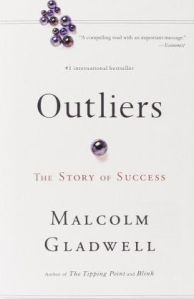
Best Quotes From Outliers

I recently read the much appreciated and discussed book, The Outliers: The Story of Success by Malcolm Gladwell.

Here are some of my favorite quotes and ideas. Please note, I don’t necessarily agree with all the below quotes, but find them helpful, intriguing, or illustrative of certain ideas or points of view.

“Living a long life, the conventional wisdom said at the time, depended to a great extent on who we were — that is, our genes. It depended on the decisions people made — on what they chose to eat, and how much they chose to exercise, and how effectively they were treated by the medical system. No one was used to thinking about health in terms of community.

Wolf and Bruhn had to convince the medical establishment to think about health . . . in an entirely new way: they had to get them to realize that you couldn’t understand why someone was healthy if all you did was think about their individual choices or actions in isolation. You had to look beyond the individual. You had to understand what culture they were a part of, and who their friends and families were, and what town . . . their family came from. You had to appreciate the idea that community — the values of the world we inhabit and the people we surround ourselves with — has a profound effect on who we are.”

“People don’t rise from nothing. We do owe something to parentage and patronage. The people who stand before kings may look like they did it all by themselves. But in fact they are invariable the beneficiaries of hidden advantages and extraordinary opportunities and cultural legacies that allow them to learn and work hard and make sense of the world in ways others cannot.”

“Practice isn’t the thing you do once you’re good It’s the thing you do that makes you good.”

“Superstar lawyers and math whizzes and software entrepreneurs appear at first blush to lie outside ordinary experience. But they don’t. They are products of history and community, of opportunity and legacy. Their success is not exceptional or mysterious. It is grounded in a web of advantages and inheritances, some deserved, some not, some earned, some just plain lucky – but all critical to making them who they are. The outlier, in the end, is not an outlier at all.”

“Successful people don’t do alone. Where they come from matters. they are products of particular places and environments.”

“The values of the world we inhabit and the people we surround ourselves with have a profound effect on who we are.”


Posted in Uncategorized | Tagged | Leave a comment

Hello, I Am Your Idol

It’s easy for the word idol to seem irrelevant; a bygone concept belonging only to pagan people of history. Idols and idolatry don’t have anything to do with modern folks like us. We’re past that. We’re secular. We’re enlightened. We don’t live our lives centered on silly little gods who are destined to fail us.

Now, all that’s easy to believe, only if you completely misunderstand the concept of an idol.

A Letter From Your Idol

To help clear that up, Nicholas McDonald wrote a letter to you from the perspective of your very own, personal idol.

Do yourself a favor and make sure you read all the way to the very last line.

Hello. I am an idol.

Don’t be afraid, it’s just me. I notice you’re turned off by my name: “Idol.”

It’s okay. I get that a lot.

Allow me to rename myself.

I’m your family.

Your bank account.

Your sex life.

The people who accept you.

Your career.

Your self-image.

Your ideal spouse.

Your law-keeping.

I’m whatever you want me to be.

I’m what you think about while you drive on the freeway.

I’m your anxiety when you lay your head on the pillow.

I’m where you turn when you need comfort.

I’m what your future cannot live without.

When you lose me, you’re nothing.

When you have me, you’re the center of existence.

You look up to those who have me.

You look down on those who don’t.

You’re controlled by those who offer me.

You’re furious at those who keep you from me.

When I make a suggestion to you, you’re compelled.

When you cannot gratify me, I consume you.

No—I cannot see you, or hear you, or speak back to you.

But that’s what you like about me.

No—I am never quite what you think I am.

But that’s why you keep coming back.

And no—I don’t love you.

But I’m there for you, whenever you need me.

What am I?

I think you know by now.

You tell me.

For more about idolatry, see Tim Keller’s incredible message below or pick up his book, Counterfeit Gods.

Posted in Uncategorized | Tagged , | Leave a comment

6 Reasons Why Reading the Whole Bible Should Excite You

In thinking about 2019, I have a hope for you, my beloved reader. I hope you read the whole Bible in 2019.



Before you let feelings of guilt and anxiety arise, know this this isn’t a whip crack to duty, but an invitation to delight. Reading the whole Bible is not burden, but blessing. Here are six reasons why.

1) It Will Make You Read More Often

Having a Bible reading plan of some kind (see here for loads of plans) will help you read the Bible more regularly than you would if you didn’t have a plan. I have seen it with students and I have seen it in myself. I am far more motivated when I know what I am to read that day than if I just intend to flip around randomly until something catches my eye. Reading the day’s section of Scripture is much more exciting than playing another round of Bible roulette. Having some kind of plan should excite you because it most likely will mean more frequent and consistent receiving God’s Word.

2) It Will Introduce You to Undiscovered Sections of Scripture

For many Christians, there are still major sections of the Bible they haven’t yet been introduced to. In a sense, these sections of Scripture are unopened letters from their King. They’re unexamined treasures! They’re unheard words with unheard messages. These unread passages should excite you like unexplored terrain would an adventurer. Make a plan to read all the words of Your King. Don’t let 2019 be another year where major sections of God’s life-giving Word are still left locked away between unopened, crinkly pages.

3) It Will Surprise You

I don’t care if you have read the Bible a hundred times through already, it always surprises. Each time I begin reading through the Bible I find myself frequently taken back by freshly realizing some truth I had yet to uncover in God’s Word or, as more often happens, I am freshly convicted or comforted by some truth I had already known, but held loosely. Regardless if it is new truths found or old truths reapplied, reading through the Bible will bring surprise after surprise to the Godward heart.

4) It Will Change You

The Apostle Paul once exhorted the Colossian church,

Since…you have been raised with Christ, set your hearts on things above, where Christ is, seated at the right hand of God. Set your minds on things above, not on earthly things.” Colossians 3:1-2

You see, we Christians are supposed to live looking down, but up. Our spiritual necks are designed to be cranked upward. For the Christian, the most significant realities are not the ones we see, but the ones we don’t (see 2 Cor. 4:18). However, this is near impossible if we are not coming to God’s Word and having our reality informed by Him. If we are never in God’s Word then we are never exposed to the unseen realities of the gospel. If we are never pouring through the thin, tissue-like pages of our Bibles then we will not have our hearts or eyes in heaven. God’s Word alone gets our eyes looking up. A Bible reading plan will help you live 2019 like a citizen of the heaven and not of the earth.

5) It Will Nourish You

Romans 10:17 says, “So faith comes from hearing, and hearing through the word of Christ.” In commenting on this passage, Steve Fuller illustrates,

“Many mornings I’m tempted not to seek God because my faith feels weak. But that’s like not going to the doctor because my body feels sick. Just like doctors heal sick bodies, so God strengthens weak faith, as we hear his word. Weak faith is like a weak battery. But God’s word is a battery charger. So when your faith is weak, open his word, and plug in your weak faith. God promises that as you do that, he will recharge you.”

God’s Word is your spiritual refrigerator filled with endless, soul nourishing food. Open, take, and feast.

6) It Just Makes Sense

God has spoken to us fully and finally through His Son Jesus Christ (Hebrews 1:1-3) and has recorded all His beautiful revelation in the Bible through the Spirit’s ministry (2 Timothy 3:16) so that His people would be fully prepared to do all His holy will in all their holy lives (2 Timothy 3:17). God has spoken through Jesus and has, through the Holy Spirit, written it all down for us to receive, live by, and entrust ourselves to. A Bible reading plan is simply a proper response to such a wonderful gift.

I hope you will seriously consider engaging a Bible reading plan for 2019. Only joy awaits.

Posted in Uncategorized | 2 Comments