
Adoption: Our Highest Blessing (In Honor of Baby Eli)

Eli Shaw | February 19, 2014

Eli Shaw | February 19, 2014

My wife and I are blessed with, what it seems, the best kind of friends God has to offer. I could speak for days about the gratefulness I have for the friends Christ has gifted to my wife and I.

Two of those friends are Steven and Lauren Shaw. They lead the singing for almost every age group at our church (check out their music here). I have known both of them for almost ten years. They are the salt of the earth kinda people. Great in generosity, committed to God’s people, saturated in kindness, centered on Christ, and overflowing in love & laughter. And the exciting news is, God blessed them yesterday with their first son, Eli King Shaw.

Even in the first day of his newly-birthed life, Eli has already caused me to rejoice in Christ’s amazing grace and love. You see, God has given Lauren and Steven Eli via adoption. You can read their whole story here on their most wonderful blog. Upon his birth, there are 10,000 things I have thought about – God’s generosity, kindness, care, love, provision, sovereign control, etc, – but, more than anything else, on the occasion of Baby Eli’s birth, I was reminded of the high blessing of adoption we have in Christ…

“Adoption is…the highest privilege that the gospel offers: higher even than justification… That justification – by which we mean God’s forgiveness of the past together with His acceptance for the future – is the primary and fundamental blessing of the gospel is not in question. Justification is the primary blessing, because it meets our primary spiritual need. We all stand by nature under God’s judgment; His law condemns us; guilt gnaws at us, making us restless, miserable, and in our lucid moments afraid; we have no peace in ourselves, because we have not peace with our Maker. So we need the forgiveness of our sins, and assurance of a restored relationship with God, more than we need anything else in the world; and this the gospel offers us before it offers us anything else…And as justification is the primary blessing, so it is the fundamental blessing, in the sense that everything else in our salvation assumes it, and rests on it – adoption included.

But this is not to say that justification is the highest blessing of the gospel. Adoption is higher, because of the richer relationship with God that it involves… Justification is a forensic idea, conceived in terms of law, and viewing God as judge…Adoption is a family idea, conceived in terms of love, and viewing God as father. In adoption, God takes us into His family and fellowship, and establishes us as His children and heirs. Closeness, affection and generosity are at the heart of the relationship. To be right with God the judge is a great thing, but to be loved and cared for by God the father is a greater. (J.I. Packer, Knowing God, pp. 186-188).

God has given us adoption, like that of Beautiful Baby Eli’s, to rejoice in. It is a gift from his hand. However, in addition to being a gift, it also comes as a picture. God has given us adoption to teach us of the adoption He offers to all in Jesus Christ. In grace He sent His Only Son to, by grace, make many sinners His sons. For, “When the set time had fully come, God sent his Son, born of a woman, born under the law, to redeem those under the law, that we might receive adoption to sonship. Because you are his sons, God sent the Spirit of his Son into our hearts, the Spirit who calls out, “Abba, Father.” So you are no longer a slave, but God’s child… (Galatians 4:4-6). The purpose of Christ’s cross was the sinner’s adoption.

As I rejoice in Baby Eli and his wonderful parents, I am reminded of my own adoption and the wonderful Father who has made me His own.

Posted in Uncategorized | Tagged , , , , , | 1 Comment

My Wife’s Favorite Rap Song

shai_51You may not know this, but my wife loves rap music. Not the superficial, materialistic, and vain rap music, but rap that makes God’s Word come alive and communicates it with power. Her favorite rapper is Shai Linne. Every time I turn on one of his tracks – even if she is in the other room – I can hear her say, “Ahhhh Yea!” and then watch her subsequently get jiggy wit it. Her favorite Shai Linne song is aptly titled, Expositional Preaching. I love that she loves this song and I think you will too.

Every time I listen to this I think to myself, “Who would have guessed that such a strong call to preach the Word of God would come from a rapper?” But that seems to be the way God likes to do things; through the most unexpected type of people.

Click the YouTube video below to hear the song and follow along with the lyrics below.

Expositional Preaching Lyrics | Shai Linne

Soli deo Gloria – yeah, once again, it’s the church man, called and collected

there’s alotta confusion about what makes up a healthy church
so we gonna look at the first mark
cos without this one you’re in bad shape, let’s do it

Verse 1
With our raps we adore our Master and Lord
Jesus Christ who deserves all our claps and applause
For the wrath that he bore
At the cross for our blasphemous thoughts and the classless acts of a whore!
He gave up His life with a passionate roar
Was raised up to heights where He sat at before
After this all he gave Pastors the call to ministry found in Second Timothy chapter 4
Verse 1 and 2, what I first wanna do is come to you the church to reverse a funny view
So let me ask a question: What’s most essential, what is it that gives a local church its potential?
Some would say, ‘Music’, some would say, ‘Deacons’
Other say, ‘Reaching the lost and soul seeking’
But if we wanna give God the glory in our meetin’s
The most important thing is: Expository Preaching!

Chorus 1
Where are the Whitfields? Where are the Spurgeons?
To preach the word, to preach the word
We sound theology to deal with reality
Preach the word, so preach the word
We’ve got enough rappers we need more pastors
To preach the word, to preach the word
We need explanation and deep application
Preach the word, so preach the word

This verse right here is for the congregation
It’s whatcy’all need to be listening for

Verse 2
Let me explain what I mean, it’s not too complex
It’s preaching God’s Word in its proper context
As you listen be discerning, what you have to determine: Was the point of the passage the point of the sermon?
If not this problem must be confronted today ‘cos he just used the bible to say what he wanted to say (what?!)
And even if it’s delivered with fire and intelligence that’s basically making what God has inspired irrelevant
Instead of applying the Word’s realities a lot of Pastors are relying on personality
But gifts of communication can never be a true replacement for the Holy Spirit’s illumination
Without exposition you’ll lack major profit, all you’ll get is tradition and your Pastor’s favourite topics
And that can be a slippery slope, the Word should be giving you hope, this dude is just giving you jokes
That won’t help you love Christ, it won’t help your obedience
We need more expositors, not more comedians (that’s right!)
Expect for true labour in the text then faithfully connecting to the Saviour, then wait for its effects
God gives the increase: holiness, love, unity. The Word faithfully preached builds up the whole community
If not, your Sunday meal will not last and you’ll have to supplement it with the Podcast

Chorus 2
Don’t entertain us, that won’t sustain us
Preach the Word, so preach the Word
Careful instruction, not a big production
Preach the Word, so preach the Word
We don’t need theatrics or man centred tactics
Preach the Word, so preach the Word
We’re on the brink of eternity, so please speak earnestly
Preach the Word, so preach the Word

This verse here is for the Pastors, I just wanna encourage y’all

Verse 3
Y’all should be mindful of this devout thesis: all of the Bible is about Jesus!
The Old Testament: Jesus Christ concealed
The New Testament: Jesus Christ revealed!
This truth of the Lord Christ boldly conveyed this in Luke 24 on the road to Emmaus
The Law, the Prophets and the teachings of Apostles: all of these point back to Jesus and the Gospel
So if the words of Christ is what the Word is about ultimately that should be what the sermon’s about (true!)
Forget applause you gotta let the Cross rock ya
All roads in the Bible lead to Golgotha
Whatever the text faithfulness demands that we should hear the echo of nails hitting His hands
Don’t try to be original, say the old story
And watch your people change as they behold glory

Chorus 3
The glory of Jesus we need to see this
Preach the Word, so preach the Word
Make Christ the centre so new life can enter
Preach the Word, so preach the Word
Give us the whole counsel along with the Gospel
Preach the Word, so preach the Word
This is your duty: to show us God’s beauty
Preach the Word, so preach the Word!

So that’s it man, that’s the charge in Second Timothy chapter 4
Paul tells Timothy, he charges him, to preach the Word
And yo, there’s a lot of good resources out there
Spirit Empowered Preaching, by my man Arturo Azurdia
Christ-Centred Preaching, by Bryan Chapell
The Supremacy of God in Preaching by John Piper
Get these resources
More than anything: dig into the Word of God, meditate on it and give it to your people.
Grace and Peace.

Posted in Uncategorized | Tagged , , | Leave a comment

We Lepers…

Lepers,_Tahiti_(1898)“So the Word became human and made his home among us. He was full of unfailing love and faithfulness. And we have seen his glory, the glory of the Father’s one and only Son.” John 1:14

John Ortberg:

Father Damien was a priest who became famous for his willingness to serve lepers. He moved to Kalawao – a village on the island of Molokai, in Hawaii, that had been quarantined to serve as a leper colony.

For 16 years, he lived in their midst. He learned to speak their language. He bandaged their wounds, embraced the bodies no one else would touch, preached to hearts that would otherwise have been left alone. He organized schools, bands, and choirs. He built homes so that the lepers could have shelter. He built 2,000 coffins by hand so that, when they died, they could be buried with dignity.

Slowly, it was said, Kalawao became a place to live rather than a place to die, for Father Damien offered hope.

Father Damien was not careful about keeping his distance. He did nothing to separate himself from his people. He dipped his fingers in the poi bowl along with the patients. He shared his pipe. He did not always wash his hands after bandaging open sores. He got close. For this, the people loved him.

Then one day he stood up and began his sermon with two words: “We lepers….”

Now he wasn’t just helping them. Now he was one of them. From this day forward, he wasn’t just on their island; he was in their skin. First he had chosen to live as they lived; now he would die as they died. Now they were in it together.

One day God came to Earth and began his message: “We lepers….” Now he wasn’t just helping us. Now he was one of us. Now he was in our skin. Now we were in it together. (HT: Trevin Wax).

What wondrous love is this?

Posted in Uncategorized | Tagged , , , , , , | Leave a comment

The Saturday Post(s)

urlLove is Not Open-Mindedness. A needed reminder. “As it’s been said, the opposite of love is not hate.  It is indifference. Love gets angry when the good of it’s beloved is threatened.”

Perfect Love Requires Perfect Hate. “My last resistance to the idea of God’s wrath was a casualty of the war in the former Yugoslavia, the region from which I come. According to some estimates, 200,000 people were killed and over 3,000,000 were displaced. My villages and cities were destroyed, my people shelled day in and day out, some of them brutalized beyond imagination, and I could not imagine God not being angry…”

Showered. “I had always imagined what (my baby shower) would be like. It looked very much like what I imagined except I always pictured myself at my shower with a big pregnant belly, and it was not there. I was wrestling with the attention being on me because this was far from being just about me. I felt silly because up to this point, aside from paperwork, emails, phone calls, check writing, and support I haven’t had much of a role in the life of this baby.  But I will. And that is what I had to keep reminding myself all that day.”

What the Gospel Does to Folks Who Eat People. I linked to this last week, but here it is again for those who missed it.

Husbands, Love Your Wives By Being the Bad Guy. Husbands and dads, read and heed.

Festering Wounds. I am convinced we need to be reminded of this every Sunday. “Are you angry with a brother? Offended at a sister? Are you avoiding her? We can be tempted to think that if we ignore anger, it will just go away. But it won’t. Like an untreated wound, it gets more infected if we fail to deal with it.”

The Inventor of the Jump Shot. This is the man who invented the jump shot, had a fruitful marriage lasting over 60 years, but what does he cherish most? Watch till the end and be encouraged.

Posted in Uncategorized | Tagged , , , , , , , , , , | Leave a comment

When to Die on a Hill & When to Take a Walk

Ever have trouble thinking through how important certain theological truths are in relation to others? As Christian, we understand that all truth is important, but not all truth is equally important. For example, believing Jesus is God is far more important than believing the earth is young or old. How are we supposed to evaluate the significance of truths we hear or believe?

The idea of medical triage is helpful here. Medical triage is what doctors do to determine the significance of a patient’s ailments to know what needs to be treated first and what can be treated later. This helps doctors decide that the guy with the broken toe can wait and the fella with the gunshot wound to the chest needs immediate attention. It isn’t enough for doctors to know about sicknesses, but also how to determine their seriousness and urgency. Like doctors, Christians need to be skilled in theological triage. We need to know what doctrines are vital and need to be carefully thought about and courageously defended and we need to know what we can be flexible on without disavowing someone’s Christianity. We need to know when to fight and when to chill.

Three Levels of Truths

To give help you evaluate various theological truths, I find it A similar chart taken from the ESV Study Bible's article on Biblical Doctrine.helpful to ask, “Is this a first, second, or third level issue? Categorizing truths like this will help us know how seriously we should take certain beliefs.

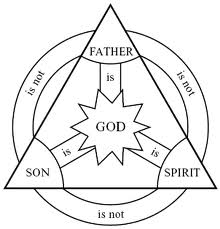
First Level Issues. These are doctrines that have to do with things that are central and inextricable from apostolic, Christian faith. In other words, these are things that make or break your Christianity. Non-negotiable absolutes. Some examples of these doctrines would be things such as the Trinity, justification by grace through faith in Christ, the incarnation, etc. To think about it simply, these are truths one must believe in order to be a meaningful Christian as defined by Scripture and demonstrated in Christian history. They’re the vitals organs of the faith.

Second Level Issues. These are doctrines that genuine Christians can believe while still faithfully following Christ, yet they often divide Christians into different local churches. In many cases, these truths determine what kind of church you choose to belong to. For example, if you believe baptism should only be administered to those who have repented of their sin and trusted in Christ as Savior (i.e. Credobaptism), you’ll likely attend a church that shares that conviction. You would probably feel uncomfortable in a church that baptizes infants (i.e. Paedobaptism). It would be difficult to remain in a church where the pastors encourage you to baptize your babies while you continually decline. Other second-level doctrines include views on communion and possibly gender roles within the church. Disagreeing on these matters doesn’t remove someone from the Kingdom of God, but it can make life in a local church challenging to navigate while maintaining a clear conscience.

Third Level Issues. These are doctrines that true Christians can believe and, if they disagree with one another, can still fellowship in the same local church. Some examples of third level doctrines are views over the millennium or the age of the earth. Each church is filled with people who disagree on various third level doctrines without it affecting their unity or ability to fellowship.

How Do I Tell Which Level a Truth Is?

Some of you may ask, how can I know it a belief is a first, second, or third level issue? To answer that, I commend following seven questions (with a little help from my friend) to help you decide on the importance of any particular doctrine.

  1. How clear is the Bible on this subject?
  2. Is this closely connected to the character of God?
  3. Is this closely connected to the essence of the gospel?
  4. How often does the Bible speak about this doctrine?
  5. What significance or weight does the Bible put onto it?
  6. What is the effect this may have on other doctrines?
  7. What has the church thought about this doctrine historically and what do faithful church leaders think today?
  8. What effect does this have on personal and church life. 

None of these question is an end all, but taken together they serve as helpful criteria to judge the level of any given doctrine. 

Why Is This Important?

This process of theological triage matters for two key reasons.

First, we don’t want to treat smaller issues as if they’re bigger ones. The unity of the church matters deeply to Jesus—and it should matter to us (John 17:20–23; Ephesians 4:3). It’s unfruitful, unhelpful, and dishonoring to God to break fellowship over issues where faithful Christians can genuinely agree to disagree. Arguing over third-level issues as if they’re ultimate truths is like doctors fighting over the order of the waiting room chairs while a patient bleeds out in the ER, our priorities are tragically misplaced.

Second, we don’t want to treat bigger issues as if they’re smaller ones. Christians are called to guard the gospel (2 Timothy 1:13–14), expose false teaching (Titus 1:9; Romans 16:17), and contend for the faith (Jude 3). Compromising the core truths of Christianity in the name of being “nice” or “loving” isn’t kind, it’s deadly like a doctor refusing to tell a patient they have cancer because he doesn’t want to upset them. What seems gentle in the moment ultimately destroys.

If we want to remain faithful to the gospel and preserve true Christian unity, we must not only know and live according to sound doctrine, we must also know how to weigh it. Not all doctrines are created equal, some are life-or-death and others are stubbed toes. Make sure you learn how to tell the difference.

Posted in Uncategorized | Leave a comment

The Quackery

hackenbushRecently, I came across something in Charles Hodge’s biography that made me stop and think:

At the christening of Andover Seminary in 1808, Timothy Dwight spoke of how Americans, “insisted that their property…be managed by skillful agents, their judicial causes directed by learned advocates, and their children, when sick, attended by able physicians,” yet were “satisfied to place their Religion, their souls, and their salvation, under the guidance of quackery.” (Paul Gutjahr, Charles Hodge: Guardian of American Othodoxy, p. 95)

Fast forward 200 years later and it seems like things haven’t changed too much in this area:

Quite simply, no one believes in our day that an inadequately trained priest might damage their salvation; but people do believe an inadequately trained doctor can hurt them. Thus people are much more concerned about who their doctor may be than who is their priest. That such is the case, of course, indicates that no matter how seriously we may think of ourselves as Christians we may well be living lives that betray our conviction that God matters. (Stanley Hauerwas, The State of the University: Academic Knowledges and the Knowledge of God, p. 45, HT: Edward Klink)

We rightly demand men are trained and equipped to do important work we entrust to them. Our doctors need to be qualified to diagnose and remedy our sicknesses. Our lawyers need years of schooling to rightly handle our assets and defend our rights. But do we have the same standards for our pastors? The men we entrust with the care of our own and our family’s souls? Do we see it important for our pastors to be as qualified, trained, and able to do their work as a doctor is for his?

The men who wield the scalpel for your body are important and the men who wield the sword of God’s Word for your soul (Hebrews 4:12-13) are too. Demand credentials. Quacks are dangerous.

Posted in Uncategorized | Tagged , , , , , | Leave a comment

A Baptismal Pledge

disco-baptism-2Matthew Henry is one of my heroes. He lived a faithful life as a pastor who wanted nothing more than for his people to be overjoyed by what they had in Christ and he worked tirelessly to shepherd them in faithfulness. Henry is most well known for his commentary on the whole bible. If you haven’t read any of it, I highly encourage you to do so. You can access the whole thing for free online here or you can buy the huge, one-volume print of it here.

But, this post is not about Matthew Henry, but something his father, Philip Henry, did. Philip was also a faithful father and pastor. In Matthew Henry’s biography, I came across a baptismal covenant his father (Philip) wrote for his church members upon their baptism. The following is what he would have the baptized say before they went into the water:

I take God the Father to be my chief end and highest good.

I take God the Son to be my Prince and Savior.

I take God the Holy Spirit to be my sanctifier, teacher, guide, and comforter.

I take the Word of God to be my rule in all my actions and the people of God to be my people under all conditions.

I do hereby dedicate and devote to the Lord all I am, all I have, and all I can do.

And this I do deliberately, freely, and forever.

As I explain baptism to our students and as I prepare them for the waters, I make sure we read and talk through these words and it has brought great blessing to me and the students. May all our baptisms be given with such intent and understanding. May our Christian lives be guided by such resolve.

Posted in Uncategorized | Tagged , , , , | Leave a comment

God is Happy Without You

imagesTake 10 seconds and think about how you would answer this question if a middle schooler asked you, “Is God happy without me?”

Although there are a plethora of bumper stickers that would answer with an emphatic, “Absolutely not! God would be miserable without you!” I believe the Biblical answer is, “Yes. God is perfectly happy without you and that is great news.”

I will have Fred Sanders show you how the doctrine of the Trinity makes that so and why it’s fantastic…

The doctrine of the Trinity expels a host of unworthy ideas about God’s love. The tri-personal love of God is not a love that needs any completion. Consequently, we should avoid presenting the gospel in a way that suggests God is begging us to come back home so He can finally be happy again, as if our redemption repairs a breach that ruptures the (happiness) of God. It is unworthy of the glorious gospel of the blessed God to give the impression that we are begging for people to please be reconciled to God so His life won’t be ruined by sadness. It is an alienation of affections to think that the love at the heart of the universe is a romantic love in which the creature yearns for the Creator or in which God yearns for the souls of the lost. (The Deep Things of God: How the Trinity Changes Everything, p. 95-96).

Do you see that? The good news is not that God is miserable without you so He sent Jesus to bring you back and restore his joy. No. The good news is that God is happy without you; perfectly and abundantly happy. BUT, in His abundant happiness and in love for you He sent the One He loves so you may love Him more than anyone.

The good news is God is happy without you, but that, in Christ, He offers you to join Him in His eternal happiness. God does not beg and plead for us to restore His joy, He calls for us to receive His joy. Loving not out of need, but abundance. God is not looking to gain happiness from you. He is looking to give you His own happiness.

We come to Him in our sorrow and He comes to us in His happiness…

Posted in Uncategorized | Tagged , , , , , , , | Leave a comment

The Saturday Post(s)

newsiesSome of my favorite readings from the week for your weekend reading.

Learn to Say Yes to Your Children Too. I’ll save this one for any kiddos the Lord may bless me with. “Parents often need to say “no” to requests kids make that aren’t good for them, and that kids need to hear parents say “no” to bad behaviors. But he observed that much of what parents say “no” to are opportunities to play, read or just talk to their kids. “Look for opportunities to say ‘yes’ while you still can,” he said, “before they stop asking.”

Lessons from a 95-Year-Old Warrior. Don’t pass this up. “My 95-year old dad, JJ, who landed on the beaches of Normandy 30 days after D-Day, spent a good amount of time in France in the War. He said when a soldier was wounded or they couldn’t get supplies, or they had to sleep in muddy trenches, they’d simply shrug their shoulders and say, “C’est la guerre.” Hey, it’s the war, what do you expect? My Dad is in the hospital now.”

Three Lessons from Ken Ham’s Debate with Bill Nye (the Science Guy). “I was one of the thousands whose internet browsers were humming on February 4 with the video feed coming from the Creation Museum in Northern Kentucky…I found the debate to be instructive, and would like to highlight three points that I thought were of interest.”

The Old Testament in 10 Minutes + The New Testament in 10 Minutes. Two videos with two (very articulate) men explaining the Old and New Testaments in 10 minutes each. Well worth the time.

What One Youth Pastor Did to the Man Who Killed His Wife & Unborn Child. “Erik Fitzgerald was a youth pastor in Georgia when he awoke one day to the terrible news that his wife and son had been killed in a car accident. The video above is the story of what happened after he met the man driving the other car.”

My Favorite Response to Donald Miller. Donald Miller recently wrote a piece where he explained that he no longer goes to church because he doesn’t connect with God through it. There were lots of very good responses, but this one was my favorite. “I don’t know how we can say we love and belong to the church without loving and belonging to church. Or saying we want to connect with God, but we won’t listen to God’s Word for only 45 minutes out of all the minutes in a week…Our love and unity with the church should manifest itself in a church. Our listening to God means listening to his Word—spoken and sung.” I also recommend Denny Burk’s response as a very close second.

What Does It Look Like When Christians Open their Own Bible for the First Time? Like this. Amazing. May we never take the printed Word for granted.

Never the Same. “The Sawi were headhunters and cannibals when Don and Carol Richardson arrived in their Indonesian village carrying their seven-month-old boy, Steve—and a message that would change the tribe forever…”

Never the Same from Pioneers-USA on Vimeo.

Posted in Uncategorized | Tagged , , , , , , , , , , , , | Leave a comment

Love the Sin & Hate the Sinner?

Clarus-CarsonDon Carson:

One evangelical cliché has it that God hates the sin but loves the sinner.

There is a small element of truth in these words: God has nothing but hate for the sin, but this cannot be said with respect to how God sees the sinner.

Nevertheless the cliché is false on the face of it, and should be abandoned. Fourteen times in the first fifty psalms alone, the psalmists state that God hates the sinner, that His wrath is on the liar, and so forth. In the Bible the wrath of God rests on both the sin (Rom. 1:18–23) and the sinner (1:24–32; 2:5; John 3:36).

Our problem in part is that in human experience wrath and love normally abide in mutually exclusive compartments. Love drives wrath out, or wrath drives love out. We come closest to bringing them together, perhaps, in our responses to a wayward act by one of our children, but normally we do not think that a wrathful person is loving.

But this is not the way it is with God. God’s wrath is not an implacable blind rage. However emotional it may be, it is an entirely reasonable and willed response to offenses against His holiness. At the same time His love wells up amidst His perfections and is not generated by the loveliness of the loved. Thus there is nothing intrinsically impossible about wrath and love being directed toward the same individual or people at once. God in His perfections must be wrathful against His rebel image-bearers, for they have offended Him; God in His perfections must be loving toward His rebel image-bearers, for He is that kind of God. . . .

The reality is that the Old Testament displays the grace and love of God in experience and types, and these realities become all the clearer in the New Testament. Similarly, the Old Testament displays the righteous wrath of God in experience and types, and these realities become all the clearer in the New Testament. In other words both God’s love and God’s wrath are ratcheted up in the move from the Old Testament to the New. These themes barrel along through redemptive history, unresolved, until they come to a resounding climax in the Cross.

Do you wish to see God’s love? Look at the Cross.

Do you wish to see God’s wrath? Look at the Cross.

—From, “God’s Love and God’s Wrath,” Bibliotheca Sacra 156 (1999): 388–390.

For more on the love of God, there are few shorter and more helpful books than Carson’s, The Difficult Doctrine of the Love of God.

HT: Justin Taylor

Posted in Uncategorized | Tagged , , , , , , , , | Leave a comment