Last September, the day after Charlie Kirk was assassinated on the campus of Utah Valley University, I wrote a piece arguing that the recent uptick in political violence is not random. Words and ideas have consequences. Specifically, I argued that the American Left has spent years adopting and mainstreaming ideological frameworks that make violence feel like righteous resistance. The pattern of political violence we’re seeing reflects that reality.
The piece drew understandable and welcome push back. After all, those who promote ideas in the public square should be expected to defend them with good-faith interlocutors! That is how we learn best. So, I’d like to revisit my argument and examine the objections in light of it. I think the months after the piece have only sharpened the point.
My Original Argument
My thesis was simple: the recent uptick in political violence is downstream of ideas being mainstreamed disproportionately on the Left. Specifically, the Left is using words or promoting ideologies that demonize or dehumanize opponents or frame them as oppressors who must be stopped. Both of these activities construct a moral permission structure that tells the most unstable citizens that violence is not a crime but their calling.
I was careful to say this was not a blanket indictment of everyone on the Left. Not all Liberals play this game and some call it out. Nor was it a defense of everyone on the Right. They can and sometimes do the same dangerous game. Right-coded sources of violence do exist and when they do they must be condemned. My main focus was about the disproportionate prevalence, mainstreaming, and tolerance the Left practices with their unique words and ideas that isn’t matched by the Right. Asymmetry was the point. Not monopoly.
The Understandable Push Back
The most common objection went something like this: “But what about Trump’s rhetoric?” Several thoughtful readers wanted to point out that Trump has contributed to the violent rhetoric too. They offered quotes like Trump’s 2016 “I’d like to punch him in the face,” and his 2017 “please don’t be too nice” remark to police. One commenter argued that my piece amounted to an “us vs. them” framing that gave one side a pass while villainizing the other.
I take these objections seriously. There is truth to them. Trump has indeed said things that are inexcusable, foolish, demeaning, juvenile, and politically divisive. But, Trump’s communicative shortcomings are not the same kind of speech my piece highlights.
A Taxonomy of Political Speech
To avoid you thinking I am being partisan, allow me to demonstrate the categorical distinction by sharing a taxonomy of different kinds of political speech in the public square, inspired by and adapted from a framework articulated by Ben Shapiro.
We can agree that not all harmful speech is the same. Collapsing the distinctions does not make things better, but worse. It makes us less precise and therefore less able to address the actual problem. Here is a framework of political speech worth remembering.
Tier 1: Illegal Speech (Incitement)
This is speech that commands immediate lawless action and is likely to produce it. A simple example: “Go kill the congressman right now.” Thankfully, most ugly political speech never gets here.
Tier 2: Inflammatory Rhetoric
These are reckless and provocative words, but they do not direct or justify violence. This is like Trump’s “I’d like to punch him in the face” or Hakeem Jeffries’ recent calling for Democrats to “unleash maximum warfare against Republicans.” It hardens our political hearts, enrages emotions, and deepens divisions, but no one is going to shed blood because of it. Unhelpful, but not imminently dangerous.
Tier 3: Demonizing or Dehumanizing Rhetoric
This speech frames others as intractably evil or strips them of their humanity without explicitly calling for violence against them. They’re “Vermin,” “Enemies of the people,” “Nazis,” or “The Gestapo.” This does not explicitly command violent action, but does make violent action feel more morally justifiable. Calling Trump the Orange Man is disrespectful, but repeatedly calling him Hitler is dangerous. I mean, what should good people do with Hitler?
Tier 4: Ideological Permission Structures
These are ideas or frameworks that make violence not only plausible, but actually make them feel righteous. There are right-coded examples of this. QAnon’s Pizzagate told followers that Democratic elites were trafficking children. This inspired one man to drive from North Carolina to Comet Ping Pong with an AR-15 on no evidence but the conspiracy. There was no pedophile ring, no victims, and not even a basement where the operation was conducted. All he had was an ideology that told him Democratic elites were abusing children and a righteous will stop them.
On the Left, Critical Theory’s oppressor/oppressed framework operates the same way at a much larger scale: the oppressors must be overcome by any means necessary; violent resistance to them, though unfortunate, is righteous. Allowances of the motto, “Globalize the intifada” or promoting people like Hasan Piker, a recent darling of the Left, who unashamedly said of those on the Right, “Let the streets soak in their f—ing red capitalist blood” function in the same way. These are not merely words that inflame or dehumanize opponents, but they create a worldview that justifies and encourages violence against the supposed “bad guys” for whoever believes them.
The Taxonomy & Our Current Moment
With that taxonomy in place, some brief reflections.
First, Trump and most politicians live in Tier 2. Politicians often say provocative and inflammatory things because it riles up their base. It’s not good and, sadly, it is not uncommon.
Second, my thesis in the original piece is that the Left has leaned into Tiers 3 and 4 in ways the Right largely does not. Yes the right has certain figures who use dehumanizing rehtoric (e.g. Nick Fuentes) or promote permission structures or conspiracy theories similar to those on the Left (e.g. Candace Owens, Tucker Carlson), but they are routinely rejected and condemned by the Right as accurate representatives of the party. The Left is different not in the presence of this rhetoric or ideologies, but in their number and their promotion within the party. The demonstrable increase in Leftist violence I noted in the original piece reflects that asymmetry. The disproportionate and passionate Tier 3 and 4 speech that lives on the Left is conditioning the minds of citizens to approve of, celebrate, or even commit violent acts against those they’ve been trained to see as incarnate evil or existential threats to all that is good. No side is completely innocent of this kind of speech, but it is disingenuous to say they’re both equally guilty in the current moment.
Third, we all ought to condemn Tier 3 and 4 speech no matter which side of the aisle it comes from. Many on the Right are quick to condemn QAnon’s poison, Candace Owens’ antisemitic conspiracy theories, or Nick Fuentes soul-rotting filth. My hope is that the Left is willing to do the same with the dangerous people or frameworks within their camp. For the good of our nation, we should all — Right, Left, and Center — be willing to call out genuinely dangerous speech wherever it appears. Those who refuse may be showing their allegiance lay somewhere else.
Why the Objections Miss the Point
With this taxonomy in mind, let’s return to the “what about Trump.” First, let’s point out that it is a logical fallacy called tu quoque. It doesn’t address the actual argument, but instead deflects by pointing to something on the side of the arguer. It changes the subject rather than answering it. It doesn’t engage the argument, but changes the focus. Second, not one of the Trump quotes offered constructs a systematic framework that signals to the mentally unstable that their violence is righteous resistance. His schoolyard rhetoric definitely falls into Tier 2. Reckless words are ugly. But mainstreamed ideological permission structures for violence are deadly. These are not the same category of sin. For me, pretending they are isn’t fairness, but is evasion.
Recent News Seems to Confirm My Thesis
Since that post was published, the pattern of Leftist violence has continued and, possibly, accelerated. Even left-leaning media concedes that incidents of political violence rose 30% from 2024 to 2025 and that right-wing terror attacks plunged in 2025, while left-wing attacks ticked up.
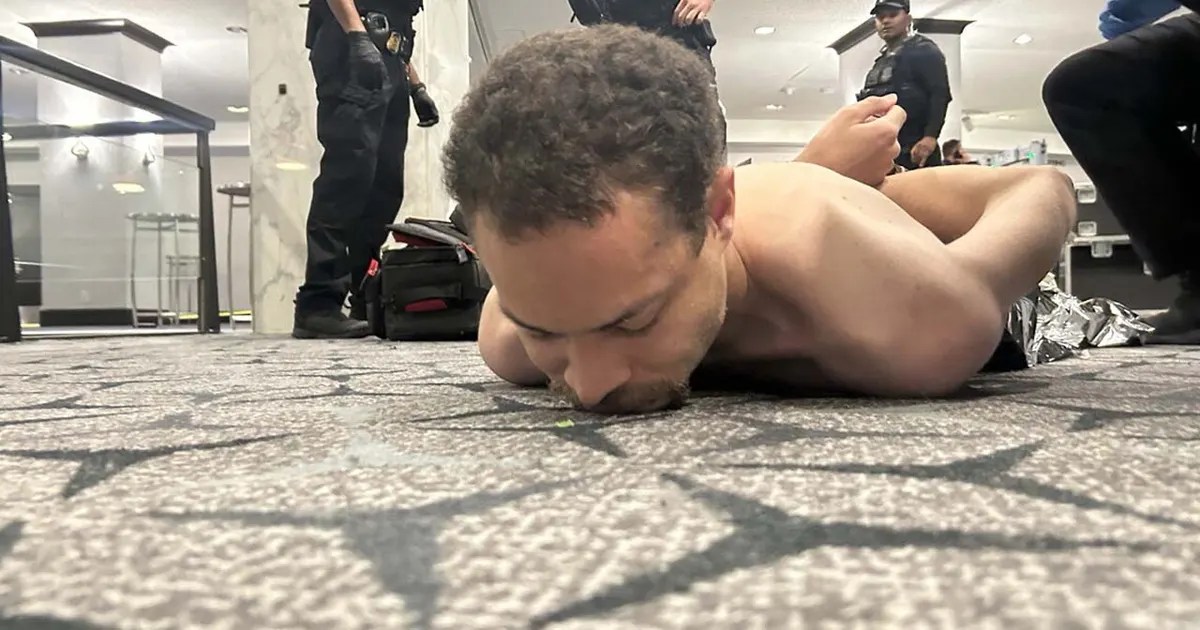
Then came April 25, 2026. Cole Tomas Allen, a 31-year-old CalTech-educated engineer from Torrance, California, rode cross-country by train, checked into the Washington Hilton, and attempted to assassinate President Trump and multiple high-ranking officials at the White House Correspondents’ Dinner. He had attended No Kings protests, was part of a progressive activist group, and donated to Kamala Harris’s presidential campaign.
Now, I would agree that a person’s political leanings don’t make their party responsible for their acts. However, if there is evidence that their evil intentions have been nurtured and promoted by the party, then the party bears responsibility for their contributions. Allen’s manifesto demonstrates he was not a fringe lunatic with no ideological home, but a man whose worldview was shaped by his party of choice.
His manifesto is the taxonomy made flesh. In it, he wrote that he was “no longer willing to permit a pedophile, rapist, and traitor to coat his hands with his crimes.” He did not invent those descriptions. He was taught them. “Pedophile.” “Rapist.” “Traitor.” These labels have circulated in mainstream progressive media and political commentary for years. That is Tier 3 language absorbed, internalized, and then acted upon by someone who took them seriously. Later in his manifesto he outlined his “rules of engagement” and stated he believed it was his righteous duty to target the administration. That is Tier 4 in purest form. He did not act with unhinged, impulsive rage, but within a moral framework that cast him as a begrudging, but selfless hero acting on behalf of the oppressed. To him, his violent plans were not an immoral excess, but a logical and righteous obligation. Those who knew him have expressed deep shock because he never gave signs of being mentally unstable. He was a normal, church-going man that, over years, seems to have been discipled into a worldview that did not produce hot-headed impulsiveness, but a deeply distorted sense of righteousness.
A Word to Those Who Pushed Back
This isn’t an “us vs. them” piece. It is a call for all citizens who care deeply about society to recognize and condemn speech on each other’s side and our own side that can contribute to the bloodshed we all lament. My hope is that all Americans — Left and Right — work together to oppose and reject truly dangerous words that are sickening our society in deadly ways. That way, we can get back to arguing about tax reform and medicaid without anyone dying.
The increase in political violence we’re seeing is not random. Words and ideas have consequences. It’s not restricted to one side only, but there is a disproportionality that’s undeniable. The evidence keeps confirming it. If we are unwilling to admit that, we may be practicing the very double-standard we accuse others of simply because it’s on our side of the fence.