
There’s No One (Not a One) Like Jesus

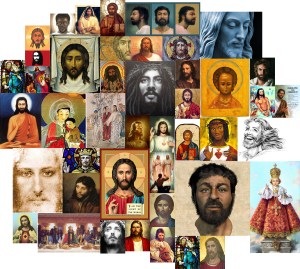
facesofjesusThere have been many religious leaders, but absolutely none of them are like Jesus. Jesus stands before us as one on a list of one.

John Stott gives us one reason of why.

Here, then, are the three main relationships that Jesus claimed.

  1. In relation to the Old Testament Scriptures, he was their fulfilment.
  2. In relation to God the Father, he enjoyed the unique intimacy of sonship.
  3. In relation to human beings, he claimed authority to be their saviour and their judge.

Three words encapsulate his claims – fulfilment, intimacy and authority. He claimed to be the Christ of Scripture, the Son of God and the saviour and judge of the world…

This is the paradox of Jesus. His claims sound like the ravings of a lunatic, but he shows no sign of being a fanatic, a neurotic or, still less, a psychotic. On the contrary, he comes before us in the pages of the Gospels as the most balanced and integrated of human beings.

Consider in particular his humility. His claims for himself are very disturbing, because they are so self-centred; yet in his behaviour he was clothed with humility. His claims sound proud, but he was humble. I see this paradox at its sharpest when he was with his disciples in the upper room before he died. He said he was their lord, their teacher and their judge, but he took a towel, got on his hands and knees, and washed their feet like a common slave. Is this not unique in the history of the world? There have been lots of arrogant people, but they have all behaved like it. There have also been humble people, but they have not made great claims for themselves. It is the combination of egocentricity and humility that is so startling – the egocentricity of his teaching and the humility of his behaviour.

Why am I a Christian? Intellectually speaking, it is because of the paradox of Jesus Christ. It is because he who claimed to be his disciples’ Lord humbled himself to be their servant. (Taken from, Why I Am a Christian, Kindle Locations 431-440)

There’s just no one like Jesus.

Posted in Uncategorized | Tagged , | Leave a comment

Bible Reading Plans for 2017

img_9354Alright, let’s talk about reading the whole Bible in 2017. Before we start with the various plans, allow a few preliminary words.

First, here are a few reasons reading all the Bible in 2017 should excite you.

Second, listen to a simple word of encouragement: you can read the whole Bible. Justin Taylor notes that, “The average person reads 200 to 250 words per minute; there are about 775,000 words in the Bible; therefore it takes less than 10 minutes a day to read the whole Bible in a year.” No matter how slow of a reader you are, you can still do it.

Third, if you are finding trouble getting motivated to dig into the Scriptures in 2017, read this.

Lastly, if you don’t plan to read the Bible this year, know this: you probably won’t. Good. Now that you are excited, encouraged, motivated, and hopefully sobered up, allow me to offer you some Bible reading plans to take on in 2017.

Bible Reading Plans

This list isn’t exhaustive, but it should serve as a helpful start. The list goes from plans that call for the least amount of chapters a day (easy plans) to plans that cover more ground in a faster amount of time (plans the require diligence).

The Bible Reading Record Keeper. This isn’t a reading plan, but it is a record keeping sheet that lists all the books of the Bible with their respective chapters numbered to the side. This tool helps keep track of what books in the Bible you have read and those you haven’t. For those who don’t want to follow a particular plan, but plan on regularly reading a few chapters each day, this is can serve as a helpful tool to make sure you’re covering all God’s Word. Here is the same idea, just much more pretty.

5 Day Bible Reading Plan. “This special Bible reading system allows you to read the entire Bible (or just the New Testament) in one year while only reading five times a week. Five readings a week gives room to catch up or take a needed day off, and makes daily Bible reading practical and do-able.”

52 Week Bible Reading Plan. “Read through the Bible in a year, with each day of the week dedicated to a different genre: Epistles, The Law, History, Psalms, Poetry, Prophecy, and Gospels.”

The Bible Reading Plan for Shirkers and Slackers. Justin Taylor describes this plan as one that, “takes away the pressure (and guilt) of ‘keeping up’ with the entire Bible in one year. You get variety within the week by alternating genres by day, but also continuity by sticking with one genre each day. Here’s the basic idea:

  • Sundays: Poetry
  • Mondays: Pentateuch (Genesis through Deuteronomy)
  • Tuesdays: Old Testament history
  • Wednesdays: Old Testament history
  • Thursdays: Old Testament prophets
  • Fridays: New Testament history
  • Saturdays: New Testament epistles (letters).”

The Discipleship Journal Bible Reading Plan. This gives you 25 readings each month from four different places (it begins in Genesis, Psalms, Matthew and Acts). Having 25 readings each month means you will have a few “catch up” days each month if you fell behind or “free days” to study passages that intrigued you more deeply.

The Chronological Bible Reading Plan. Read through the Bible in the order the events occurred chronologically. This helps some people focus on the unfolding story a little better.

The Historical Reading of the Bible. “The Old Testament readings are similar to Israel’s Hebrew Bible, and the New Testament readings are an attempt to follow the order in which the books were authored.”

The Kingdom Bible Reading Plan. In this plan the Old Testament receives three readings per day and the New Testament gets one reading per day. “The Old Testament readings follow the arrangement of Jesus’ Bible (Luke 24:44 – Law, Prophets, Writings), with one reading coming from each portion per day. In a single year, one reads through Psalms twice and all other biblical books once…Only twenty-five readings are slated per month in order to provide more flexibility in daily devotions. The plan can be started at any time of the year, and if four readings per day are too much, the plan can simply be stretched to two or more years (reading from one, two, or three columns per day).”

Read Through the Whole Bible in Order. “This plan calls for reading all the books of the Bible in canonical order in one year. Each day’s reading is about 3-4 chapters in length, with the exception of the Psalms (which are covered in 5 chapters per day). The idea is to read longer chapters in groups of three (e.g., Pentateuchal narratives, Gospels) and shorter chapters in groups of four. There are 7 “catch-up” days scattered throughout the calendar.”

The Ligonier Bible Reading Plan. “Two readings each day; one from the Old Testament and one from the New Testament.” Being from Ligonier, you can get the plan in the Ligonier App (iPhone / iPadAndroid, Kindle Fire & Windows Phone) and YouVersion.

The Legacy Plan. “This plan does not have set readings for each day. Instead, it has set books for each month, and set number of Proverbs and Psalms to read each week. It aims to give you more flexibility, while grounding you in specific books of the Bible each month.”

The Robert M’Cheyne Plan. My wife and I did this one in 2011 and enjoyed it. This plan starts you in the four great beginnings of Scripture (beginning of creation in Genesis 1, beginning of Israel’s return from Exile in Ezra 1, beginning of Christ’s incarnation in Matthew 1, and beginning of the church in Acts 1). This plan will have you read through the whole Old Testament once and the New Testament and Psalms twice. It is four chapters a day. One great thing is it has you in four different places in the Bible at once so when you hit the less than inspirational sections (genealogies, records, etc.), you will still be in more immediately helpful sections. Also, you can grab D.A. Carson’s marvelous devotional based on this reading plan here and here. If you don’t want to buy the book, you can subscribe to a daily email where you are sent the devotional for that day’s reading.

5X5X5 Plan. The Ligonier site explains this one as such: “Read through the New Testament in a year, reading Monday to Friday. Weekends are set aside for reflection and other reading. Especially beneficial if you’re new to a daily discipline of Bible reading.”

52 Week Plan. Gets you through the entire Bible in one year. Each day of the week (Monday through Sunday) is dedicated to a different Biblical genre: Epistles, The Law, History, Psalms, Poetry, Prophecy, and Gospels. This one provides huge variety in daily readings.

Professor Horner’s Plan. Professor Horner’s System is not for the faint of heart. It calls for 10 chapters per day. With this plan, you will read 10 chapters from 10 different books each day. It is a Bible reading immersion plan. No treading the waters with this one, just diving. Here is one pastor’s hearty recommendation.

A Few Helps Along the Way

Here are some resources to help make sure your Bible reading doesn’t amount to you sounding out empty words in your head without actually understanding what you’re reading.

Overview of the Bible. Lots of people don’t finish their plans to read the Bible because they get lost in what’s happening. Have R.C. Sproul help you grasp and overview of the Bible so you are equipped to read all that God has given you!

A Graph of the Old Testament Timeline. This is a simple map of the Old Testament timeline. It serves to help you locate where you are in the Old Testament timeline as you’re reading the Old Testament. Like a movie, we need to know how each scene fits into the larger plot.

Don’t Scorn Audio Bibles! Most of the Christians in the first few decades of the church most likely heard the Bible more than they read it, so don’t discount audio Bibles. Most audio Bibles are around 75 hours long, so you can listen to it in just over 12 minutes a day. Biblegateway has a lot of audio Bibles offered free of charge.

Reading the Bible Through the Jesus Lens. This is a fantastic book that provides a very brief background and introduction to every book in the Bible along with an explanation for how each respective books anticipates or points to the person and work of Jesus Christ. This way you are prepared to understand each book and how it relates to all of God’s redeeming work! Highly recommended.

God’s Big Picture. The publisher’s description describes it well: “In this excellent overview, Vaughan Roberts gives you the big picture – showing how the different parts of the Bible fit together under the theme of the kingdom of God. He provides both the encouragement and the tools to help you read the Bible with confidence and understanding. And he points you to the Bible’s supreme subject, Jesus Christ, and the salvation God offers through him.” Also, two other helpful books that provide the same overarching story line of the Bible are Carson’s The God Who is There and Graeme Goldsworthy’s According to Plan.

Of the making of Bible Reading plans, there is no end. This is not an exhaustive list and it will not be the last. There are a lot more plans out there (like these and these and these). But, in the end, I hope you will make a plan to read God’s Word. Don’t leave it to whenever you find the time because Satan will make sure the time evades you. As the old saying goes, “If you fail to plan, you are planning to fail.” Don’t fail to plan your Bible reading because then you’re planning to fail in reading your Bible.

Posted in Uncategorized | Tagged | Leave a comment

What If God Uses Your Suffering For This Reason?

Image processed by CodeCarvings Piczard ### FREE Community Edition ### on 2015-05-18 18:05:03Z | http://piczard.com | http://codecarvings.com

God promises in Romans 8:28 that He is working all things (the good and bad things, the pleasurable and the painful things, the good and the evil things) for the good of those who love Him. Everything that comes into the believer’s life is designed by God for their ultimate good.

So, how is does God use suffering for the good of believers? There’s about ten-million answers (see some more here and here and here), but one will do for now: God uses suffering to bring us closer to Jesus.

Gavin Ortlund explains:

Twice in 1 Peter the apostle commends suffering for Christ on the basis of the prior and larger reality of Christ’s suffering:

  • It is a gracious thing to suffer for good (2:19-20) because Christ also suffered for you (2:21-25)
  • Suffer for doing good (3:8-17) for Christ also suffered once for sins (3:18-22)

When we suffer for Christ, it is so helpful to remember: He was here first. Suffering is a doorway, an entrance to something new that we have not yet experienced. But its newness is to us, not to him…We are called to follow, not explore.

And because Christ walked ahead of us, we know greater fellowship with Him as we follow in his steps. To suffer for Christ is, in a mysterious way, to suffer with Christ—it is to “share Christ’s sufferings” (1 Peter 4:13) and to “know … the fellowship of His sufferings” (Philippians 3:10)… In our suffering we enter into this pattern. We “follow in his steps” (1 Peter 2:21); he is our “pioneer” (Hebrews 2:10); on the other side of that door is greater fellowship with Christ.

So, friend, when God brings clouds of sorrow into your life, at very least know this: He is bringing you closer to the Son.

See Gavin’s whole post here.

Posted in Uncategorized | Tagged , | Leave a comment

Three Realities All Christians Know About

indexAlthough God saves diverse people from all kinds of backgrounds, races, and countries, He saves them into one common faith (Ephesians 4:4-5). No matter the diversity of those saved, there will always be common things they share in salvation.

One of those shared things are the realities the Holy Spirit of God shows believers as they are coming to grips with the gospel of Jesus. All believers, no matter their backgrounds, at one point, have come to understand these three realities. Charles Spurgeon unpacks them well.

1) The Holy Spirit Shows Us the Reality of Our Sin. The first thing the Holy Spirit does when he comes into a man’s heart is this: he finds him with a very good opinion of himself: and there is nothing which prevents a man coming to Christ like a good opinion of himself. Why, says man, “I don’t want to come to Christ. I have as good a righteousness as anybody can desire. I feel I can walk into heaven on my own rights.” The Holy Spirit lays bare his heart, lets him see the loathsome cancer that is there eating away his life, uncovers to him all the blackness and defilement of that sink of hell, the human heart, and then the man stands aghast. “I never thought I was like this. Oh! those sins I thought were little, have swelled out to an immense stature. What I thought was a mole-hill has grown into a mountain; it was but the branch on the wall before, but now it has become a tree of Lebanon.

2) The Holy Spirit Shows Us the Reality of  Our Inability. “Oh,” saith the man within himself, “I will try and reform; I will do good deeds enough to wash these black deeds out.” Then comes the Holy Spirit and shows him that he cannot do this, takes away all his fancied power and strength, so that the man falls down on his knees in agony, and cries, “Oh! Once I thought I could save myself by my good works, but now I find that

‘Could my tears for ever flow,
Could my zeal no respite know,
All for sin could not atone,
Thou must save and thou alone.'”

3) The Holy Spirit Shows Us the Reality of Our Savior. Then the heart sinks, and the man is ready to despair. And saith he, “I never can be saved. Nothing can save me.” Then, comes the Holy Spirit and shows the sinner the cross of Christ, gives him eyes anointed with heavenly eye-salve, and says, “Look to yonder cross. that Man died to save sinners; you feel that you are a sinner; he died to save you.” And he enables the heart to believe, and to come to Christ. And when it comes to Christ, by this sweet drawing of the Spirit, it finds “a peace with God which passeth all understanding, which keeps his heart and mind through Jesus Christ our Lord.”

(Taken from the sermon titled, “Human Inability“)

Thank the Holy Spirit for His loving ministry of giving us the eyes to see our sin, our inability, and our Savior.


Posted in Uncategorized | Tagged , , , , | Leave a comment

None of Us Can Teach Like Jesus

chalkboard_appleIt doesn’t matter how great of a teacher you are, none of us can teach like Jesus. Thomas Watson explains how Jesus’ teaching differs from our own.

Jesus Teaches the Heart. Others may teach the ear, Christ teaches the heart. ‘Whose heart the Lord opened’ (Acts 16:14). All they can do is work knowledge, Christ works grace; they can only give the light of the truth, Christ gives the love of the truth; they can only teach what to believe, Christ teaches how to believe.

Jesus Gives Us a Taste of the Word. Ministers may set the food of the Word before you, and carve it out to you; but only Christ can cause you to taste it…It is one thing to hear a truth preached, another thing to taste it.

When Jesus Teaches, He Makes Us Obey. Others may instruct, but cannot command obedience. They teach to be humble, but men remain proud…Men come with armor so the sword of the Word will not enter, but when Jesus comes to teach, He removes this obstinacy; He not only informs the judgment, but inclines the will. He does not only come with the light of His Word, but the rod of His strength and makes the stubborn sinner yield to Him.

Jesus Makes Men Willing to Learn. Christ makes His people a willing people. They prize knowledge and hang it as a jewel upon their ear. Those that Christ teaches say, as Isaiah 2:3, ‘Come let us go up to the mountains of the Lord and He will teach us of His ways and we will walk in them.’

Jesus Doesn’t Only Illuminate, But He Animates. He so teaches that He gives life. ‘I am the Light of the World: he that follows me shall have the light of life.’ (John 8:12). By nature we are dead…But Christ teaches them that are dead and gives them the light of life!..The Philosophers say ‘heat and light increase together.’ Where Christ comes with His light, there is the heat of spiritual life going along with it. (Taken from A Body of Divinity, p. 168-167).

Nope, none of us can teach like Jesus. But thank God He can.

Posted in Uncategorized | Tagged , , | Leave a comment

Why Should Christians Study the Old Testament?

photoThe Old Testament can be intimidating for many Christians. It talks about things that happened a really long time ago in a really far away place among really foreign cultures. There’s lots of blood and judgment and other stuff that sometimes offends our delicate, modern sensibilities. So, for many, the pages of our Old Testament tend to stay a bit crispy in our Bibles.

But, that shouldn’t be for many reasons, but I will offer you one really important really. Graeme Goldsworthy offers the most compelling reason for why we should study the Old Testament:

The most compelling reason for Christian to read and study the Old Testament lies in the New Testament.

The New Testament witnesses to the fact that Jesus of Nazareth I the One in whom and through whom all the promises of God find their fulfillment. These promises are only to be understood from the Old Testament; the fulfillment of the promises can be understood only in the context of the promises themselves.

The New Testament presupposes a knowledge of the Old Testament. Everything that is a concern to the New Testament writers is part of the one redemptive history to which the Old Testament witnesses.

The New Testament writers cannot separate the person and work of Christ, nor the life of the Christian community, from this sacred history, which has its beginnings in the Old Testament. (Taken from The Gospel and the Kingdom. Crownhill, MK: Paternoster Press, 1981. P. 18-19.)

Tolle legge!

Posted in Uncategorized | Tagged , , | Leave a comment

Christian, Failures Need Not End You

1367075786bad-luck1Christian, do not fear failures. Only fear quitting along the way.

C.S. Lewis explains:

No amount of falls will really undo us if we keep picking ourselves up each time. We shall of course be very muddy and tattered children by the time we reach home. But the bathrooms are all ready, the towels put out, and the clean clothes in the cupboard. The only fatal thing is to lose one’s temper and give up. It is when we notice the dirt that God is most present in us; it is the very sign of his presence. (Taken from The Letters of Lewis, p. 199)

Get muddy and tattered, and get on.

Posted in Uncategorized | Tagged , | Leave a comment

Why Repentance Looks Different for Different Folks

ba81facfb41270dcec1257ec031ffe65Repenting of sin always involves the same process, but it doesn’t look the same.

Benjamin Shaw explains it well.

Imagine repentance as a man walking in one direction who suddenly realizes that he is walking in the opposite direction from which he should be walking. He stops. He turns around. Then he begins walking in the new direction. It is a quick and simple process. He realizes. He stops. He turns.

But imagine someone on a bicycle realizing he is going the wrong direction. In one sense, it is still obvious. He stops. He turns around. He begins bicycling in the new direction. But it is a longer process. He has to come to a stop. Depending on his speed, that may take some time. The turning around also takes longer. And it takes longer to get up to full speed in the new direction.

The process is the same for a man in a car. But it takes longer than for the man on the bike, and it may require going somewhat out of his way before he gets back on the right track.

The process is the same for a man in a speed boat. He has to slow down, enter the turn, and come back. But the time and distance required to do so is much longer than what was required for the man walking.

Now, imagine that the man is piloting a supertanker. It takes him miles to slow the ship down enough to even begin to make the turn. The turn itself is immense, taking him quite a distance from his intended course. Then again it also takes a large amount of time to get up to full speed in the new direction.

Now apply the images to repentance. Some sins are small and easy. We stop and walk the other way. Some sins, like the bicycle, are a little more difficult. In God’s work in the believer, He takes a little time to bring the believer to an awareness that his course is actually a sinful one. Then there is the process of coming to a stop, the process of the turn itself, and the process of getting up to speed in faithfulness. But some sins are enormous. We may not be aware that they really are sins. Or they may be so deeply ingrained in us that we are not willing, at first, to recognize them as sins. God works patiently with us, carefully slowing us down, as the captain does with the ship, so that He can bring us through the turn and into the new direction, where He can bring us up to full speed…

So if you have prayed for repentance for some particular sin, and there has been no instantaneous change, keep praying. God has promised to work, and He will. And you will be glad in the end that He did it slowly and carefully.

See the whole post here.

Posted in Uncategorized | Tagged | Leave a comment

Are You Bearing With & Forgiving Other Christians?

2100116a457cae5857534dd0a751d109A good sermon is a wonderful gift that should be welcomed and shared.


This past Sunday, one of our church’s pastors, Derick Zeulner, preached an encouraging and needed sermon (for my soul, at least) on Colossians 3:12-17. To spread it’s usefulness and encouragement, I want to post a section of the sermon here that I particularly needed. I assume you need it too. The specific section below has to do with the following text:

“Put on then, as God’s chosen ones, holy and beloved, compassionate hearts, kindness, humility, meekness, and patience, 13 bearing with one another and, if one has a complaint against another, forgiving each other; as the Lord has forgiven you, so you also must forgive. ” Colossians 3:12-13

From this text, Pastor Derick unpacks what Paul means by “bearing with one another…” and “forgiving one another.”

Do you know what you bear? Burdens.

This is a burdensome idea – you don’t bear with a friend when they surprise you with your favorite drink. You don’t bear with a person in whom you discover lots of common interests. You don’t have to bear with someone who loves to listen and ask interesting questions.

You bear with people who are abrasive or invade your personal space; you bear with someone who talks louder (or quieter) than you like or about subjects you don’t care to hear about.

NT Wright defines bearing with one another as “restraining your natural reaction towards odd or difficult people” and then he adds – “it’s letting them be themselves”… Letting them be themselves, even if that means they don’t act as you’d like them to, or in a way that’s easy for you to get along with.

Because, if you are dressed in compassion and kindness, humility, meekness, and patience… then you are going to bear with your fellow believers, and not just once, but each additional occasion.

And the second practical application: FORGIVING each other.

“And, if one has a complaint against another, forgiving each other; as the Lord has forgiven you, so you also must forgive.”

It’s one thing to bear with people that just kind of rub you the wrong way, in their personality or behaviors… but what about when they wrong you. When they sin against you.

Paul says: “If one has a complaint against another…” Have you ever had a complaint against someone else? Someone in the church perhaps? A fellow believer that did something, that you just could not believe. Maybe they turned their back on you. Or Made you feel left out. Maybe they made you feel insignificant or didn’t consult you about their plans. Maybe they slandered your name under the guise of “prayer concerns” or unfairly judged you. Maybe they burst out in anger at you, and said terrible things about you or your kids. Or maybe they just failed to listen, failed to care, failed to do something to help you, failed to be a friend or a brother…There are so many ways that we hurt each other, so many ways that we can bring pain into a relationship – and I have only listed the ways that I know I have sinned against others.

You see there are really just 2 ways that problems crop up in a relationship: I offend you. Or you offend me. But, Paul addresses the offended person and says you are to forgive. Now, this is not for the offender to point to and demand forgiveness. No, for you, your place is to apologize and go out of your way to make amends…

But Paul looks to the offended… and he says forgive.

Here we will start to object, “But, Paul! You don’t know what they did!” And Paul says, “Clothe yourself with Christ’s character and forgive.”

“But, you don’t understand how much they hurt me!” And Paul says, “As the Lord has forgiven you, so you also must forgive…”

Let those who have ears, hear.

Posted in Uncategorized | Tagged , , | 1 Comment

The Saturday Post(s)

Saturday Post

Donald Trump Discusses His Favorite Books of the Bible. LOL city. “Numbers & Deuteronomy: NO ONE has more respect for the Mosaic Law than me. I have never once broken it.”

Roman Catholics & the Bible. One (among several) important difference between Roman Catholics and Protestants.

Stealing Back Halloween. Christians and Halloween have a complicated relationship. For the record, my attitude is best articulated by Jared Wilson in the post.

The Interview That Ended Poorly. Douglas Wilson being provocative, funny, and insightful again.

Book on Transgenderism. It’s good book for a hot topic.

Meet the Baby Born Twice. Vis a vis abortion.


Posted in Uncategorized | Tagged , , , , | Leave a comment