My Conversion Was a Train Wreck

TrainWreck01What happens when a 37 year old lesbian, tenured English professor who specializes in Queer Theory repents and trusts in Jesus for salvation? In her excellent book, The Secret Thoughts of an Unlikely Convert, Rosaria Champagne Butterfield, gives us her answer as she offers a glimpse of what coming to Christ meant for her life.

In the pages that follow, I share what happened in my private world through what Christians politely call conversion. This word – conversion – is simply too tame and too refined to capture the train wreck that I experienced in coming face-to-face with the Living God. I know of only one word to describe this time-released encounter: impact. Impact is, I believe, the space between the multiple car crash and the body count. I try, in the pages that follow, to relive the impact of God in my life. (p. xi)

Making a life commitment to Christ was not merely a philosophical shift. It was not a one-step process. It did not involve rearranging the surface prejudices and fickle loyalties of my life. Conversion didn’t “fit” my life. Conversion overhauled my soul and personality. It was arduous and intense. I experienced with great depth the power and authority of God in my life. In it I learned — and am still learning — how to love God with all my heart, soul, strength, and mind. When you die to yourself, you have nothing from your past to use as clay out of which to shape your future. (p. 34)

This was my conversion story in a nutshell: I lost everything but the dog. (p. 63)

Coming to Christ changes absolutely everything in every way. This is not only true for the 37 year old lesbian professors who come to Christ, but it is true for everyone who bows to Jesus. Conversion is a “train wreck” for all. There are no survivors of true salvation. Jesus taught us this when he said:

If anyone would come after me, let him deny himself and take up his cross and follow me. For whoever would save his life will lose it, but whoever loses his life for my sake and the gospel’s will save it” Mark 8:34-35

Coming to Christ is having your old self put to death; never to rise again. The old man is executed and left for dead; the new man is brought to life (2 Corinthians 5:17). In this way, coming to Christ is much more significant than a train wreck because, He not only kills, but gives new life. Trains can’t do that, but Jesus does.


Posted in Uncategorized | Tagged , , , , , , | 3 Comments

Three Languages All Christians Should Learn to Speak

stick-figure-discussion1Whenever you study anything in depth, you learn new language. Up and coming baseball fans eagerly learn new words/rules/phrases like RBI, line drive, pickle, strike zone, and home run. Cooks gladly learn the new words and phrases of the kitchen like bolognaise, bullion, whetstone, whisk, shank, shred, shuck, and score. Far from dampening their love for the game or kitchen, learning the new language increases it. Whenever you are interested in something and think it is important, you willingly and gladly learn the language that comes alone with it. Though it takes time and though the words/phrases sometimes seem clunky and foreign you will learn it because learning the words/phrases of your new pursuit will enhance your enjoyment of it and make you better at it.

The same is true for Christianity.

Christianity has its own language and those who are Christians need to learn it if they desire to enjoy the depths of God’s riches in Jesus Christ and become better at communicating those riches to others around them. However, for the Christian, there is not one language we need to excel at, but three. Christians must labor to learn three different languages and know how to speak them fluently.

We Need to Learn Plain Language. This is the common language of the community in which God has placed you. Plain language is what is spoken at sports games, grocery stores, and malls. It isn’t high and lofty or precise and technical; it is mundane, common, regular, normal, everyday kind of speech. It is the kind of language your neighbors will naturally use when talking about the family, the weather or work. Christians need to be able to speak plain language with those around them so they are able to communicate the amazing truths of God’s Word in understandable ways to those who don’t know Christ or are new-believers. Without distorting or diluting God’s Word, it is important for Christians to know how to speak it plainly so it can be easily understood.

We Need to Learn Biblical Language. Biblical language is the language that is found in the Bible. It includes words like sin, holiness, justification, propitiation, sanctification, majesty, glory, etc. Often times Biblical language is condescending referred to as Christianese and many folks are told to stay away from using it. However, although that is true when we are speaking to people with little to no familiarity with the Bible or the gospel, it is not totally true. Christians need to know Biblical language and use it.

There are several reasons Christians should know Biblical language. First, the we need to know Biblical language because biblical words perfectly capture biblical meaning. Biblical language communicates Biblical meaning in a way that other words simply cannot. Any time we try to translate Biblical language by using other words, we lose important meaning. For example, when people choose to say that we are forgiven instead of justified, the concept of being declared without sin and righteous by God is lost. Forgiveness is good, but justification is better. Forgiveness says, “You are forgiven of your sin.” Justification says, “I declare that you are without sin and that you are perfectly righteous; you are not just forgiven, but you are approved of.” A second reason for Christians to learn Biblical language is that it will help them read the Bible better. The Bible speaks in Biblical language. If we know the language we will understand its message better. If we don’t know Biblical language, we will end up either missing the point or inserting our own meaning where it doesn’t belong. The third reason to know Biblical language is that it is the language of our faith. Christians need to learn and understand Christianese because it is the language they receive from their Savior and the tongue of their homeland. It is the language of their faith. Spaniards learn Spanish, Germans learn German, and Christians speak Christianese. For a Christian to not know Biblical language is as weird as a Frenchman to not know French. So, far from shying away from learning and using Biblical language, Christians should make it a priority to study, memorize, meditate on, and use it for the betterment of their souls and the accuracy of their teaching.

We Need to Learn Theological Language. The last language Christians should strive to learn is theological language. This is language the church has created to speak accurately and articulately about the truths taught in the Bible, yet the words themselves are not in the Bible. Examples of theological language are words such as Trinity, Incarnation, Omniscience, Omnipotence, etc. Again, these words are not actually in the Bible, but they have been created by the church in order to helpfully and accurately explain truths that are taught clearly in the Bible. It is important for Christians to know this language so they can accurately speak about the truths of God’s word in a concise, precise, and clear manner. Also, theological language is important to learn in order to read and better understand theological books that can help us grow our knowledge of Christ and His blessings. God has given us precious truth in the Scriptures that we must be study with seriousness and handle with care. Theological language has enabled the church to preserve the uniqueness and fullness of God’s Word throughout the ages. It would do us well to know it.

So how about you? Do you know how to speak about God’s Word in plain language of those around you? Are you familiar with Biblical langauge? Do you know what the Bible means when it uses words like propitiation (1 John 2:2; 4:10; Romans 3:25), justification (Romans 3:21-23; 5:1; Galatians 2:16), wrath (John 3:36; Romans 1:18; 1 Thessalonians  1:10), or even love (John 3:16; 1 John 4:10)? And do you know theological language? Do you understand what the Trinity is or what omniscience, incarnation, or hypostatic union mean? If not, don’t feel guilty, feel invited. There is a whole new world of learning waiting for you that is rich with treasure and blessing.

Let the baseball fans learn the language of baseball. Let the cooks learn kitchen speak. Let the Christians learn the language of the community, the Bible, and the Church. All this for the good of our souls, the benefit of others, and the glory of God.


Posted in Uncategorized | Tagged , , , , , , | 1 Comment

The Saturday Post(s)

Saturday Post

I Am Ryland. This is such an important article. “I am so thankful that my parents gave me the freedom to act more boyish than my sisters.  I am thankful that they didn’t freak out, or make any life-altering decisions for me.  I am so thankful that, for a season of my life, I was allowed to act more like a stereotpyical boy than a girl.  I am also thankful that I was allowed to become more feminine later in life, when it felt natural to do so.”

Why Catholics Pray to Mary? A 6 minute audio clip explaining how Catholics began to pray to Mary.

The Trinity in Less Than 200 Words. Can you do that? I always appreciate when people present significant teachings in concise ways.

My Second Round With Depression. I have been appreciating this apologists frank talks about his struggle with depression as a Christian.

How Do You See the Saints? A needed reminder. “If God sees his children as excellent ones and takes great delight in each one, shouldn’t we? And especially if God sees you as one of his majestic ones, shouldn’t you do the same others?”

In Praise of the Quiet Time. I know quiet times aren’t quite in with some Christians today. Because of that, I offer this article as subversion. “If Jesus expressed and experienced his relationship with the Father through a “quiet time,” if the One who was, in fact, eternally one with the Godhead still took intentional time for personal prayer and Bible study, we would do well to follow his pattern. Because, yes, if you love Someone, you do want to spend time with him.”

Three Free Videos from Ligonier. If you don’t know about R.C. Sproul and Ligonier Minsitry, then download all these free videos and watch. If you do, then you know what to do.

Theology as the Last Resort. A very shot and very powerful word for the church.

SuperDog.

Posted in Uncategorized | Tagged , , , , , , , , | Leave a comment

Our Cruel Idols

Idols_2013_logoA lot of folks think that only primitive people groups worship idols. It is an activity born of ignorance and we have graduated from it in our enlightened status. Since we have science, technology, and great learning, we are no longer tempted to bow down gods as represented by little figurines or statues. We are beyond that. We are evolved.

Is that really true? Are we really invulnerable to idolatry just because we have wifi and a materialistic view of life? Have we truly reversed the tide of recorded human behavior and reached a kind of where we are slave to no god(s)? I submit not. Although most of those reading this post don’t worship supernatural deities whose presence is manifested and venerated by little statues, the impulse of idolatry still lives strong within our hearts. By speaking of ancient Greek mythology, Tim Keller does a marvelous job showing that idolatry still thrives in the human heart.

(In ancient Greek religion) There was Aphrodite, the goddess of beauty; Ares, the god of war; Artemis, the goddess of fertility and wealth; Hephaestus, the god of craftsmanship.

Our contemporary society is not fundamentally different from these ancient ones. Each culture is dominated by its own set of idols. Each has its own “priesthoods,” its totems and rituals. Each one has its shrines – whether office towers, spas and gyms, studios, or stadiums – where sacrifices must be made in order to procure the blessings of the good life and ward off disaster. What are the gods of beauty, power, money, and achievement but these same things that have assumed mythic proportions in our individual lives and in our society?

We may not physically kneel before the statue of Aphrodite, but many young women today are driven into depression and eating disorders by an obsessive concern over their body images.

We may not actually burn incense to Artemis, but when money and career are raised to cosmic proportions, we perform a kind of child sacrifice, neglecting family and community to achieve a higher place in business and gain more wealth and prestige.

In the ancient times, the deities were bloodthirsty and hard to appease. They still are. (Taken from Counterfeit Gods, p. xiv-xv).

History shows that humanity has religion in its veins. We can’t rid ourselves of the impulse to give our lives to something. We will even sacrifice cherished things in hopes of greater rewards. Our hearts have been fashioned to worship and worship we will. The question, however, is what will we choose to worship? What will we choose to live our lives for? There are only two possible answers one can give to this question: we will either worship the Creator or His creation. Only one of those will bring our hearts to rest; the other will condemn us to a heart of restlessness.

Among the idols calling for your heart, hear the True God’s plea.

The Lord, the king of Israel, is the Lord All-Powerful, who saves Israel. This is what he says: “I am the beginning and the end. I am the only God. Who is a god like me? That god should come and prove it. Let him tell and explain all that has happened since I set up my ancient people. He should also tell what will happen in the future. Don’t be afraid! Don’t worry! I have always told you what will happen. You are my witnesses. There is no other God but me. I know of no other Rock; I am the only One (Isaiah 44:6-8).

Posted in Uncategorized | Tagged , , , | Leave a comment

The Holy Spirit’s Floodlight Ministry

Unique-exterior-house-lighting-with-Laser-Beam-Omni-2It has often been noted that many Christians aren’t too knowledgeable about the Person and Work of the Holy Spirit. This is something that must be remedied because the Person and Work of the Holy Spirit is of immense importance for all. To guide you in your learning, I recommend checking out this page for some good places to start.

From one of those very books, I have found an excerpt that has been immensely helpful to me in thinking about the central work of the Holy Spirit in the Christian life. It comes from our old friend J.I. Packer:

The Holy Spirit’s distinctive new covenant role, then, is to fulfill what we may call a floodlight ministry in relation to the Lord Jesus Christ. So far as this role was concerned, the Spirit “was not yet” (John 7:39, literal Greek) while Jesus was on earth; only when the Father had glorified him (see John 17:15) could the Spirit’s work of making men aware of Jesus’ glory begin.

I remember walking to a church one winter evening to preach on the words “he shall glorify me,” seeing the building floodlit as I turned a corner, and realizing that this was exactly the illustration my message needed.

When floodlighting is well done, the floodlights are so placed that you do not see them; you are not in fact supposed to see where the light is coming from; what you are meant to see is just the building on which the floodlights are trained. The intended effect is to make it visible when otherwise it would not be seen for the darkness, and to maximize its dignity by throwing all its details into relief so that you see it properly. This perfectly illustrates the Spirit’s new covenant role. He is, so to speak, the hidden floodlight shining on the Savior.

Or think of it this way. It is as if the Spirit stands behind us, throwing light over our shoulder, on Jesus, who stands facing us.

The Spirit’s message is never,

“Look at me;

listen to me;

come to me;

get to know me,”

but always

“Look at him, and see his glory;

listen to him, and hear his word;

go to him, and have life;

get to know him, and taste his gift of joy and peace.

The Spirit, we might say, is the matchmaker…whose role it is to bring us and Christ together and ensure that we stay together. (Taken from Keeping in Step with the Spirit: Finding Fullness in Our Walk with God, 2nd ed.; p. 57).

As we think about the Holy Spirit, we need to know that His desire is for our eyes to be fixed on Christ (Hebrews 12:1-2). Jesus Himself taught, “When the Advocate (The Holy Spirit) comes, whom I will send to you from the Father—the Spirit of truth who goes out from the Father—he will testify about me” (John 15:26). He is most pleased when we are most Christ-centered. To say it shortly, the Holy Spirit is the most Christ-centered person I know and His work shows that.

Posted in Uncategorized | Tagged , | Leave a comment

A Secret to Prayer

tumblr_lvehpgL8gL1qdp1nyo1_500After living for so long in self-dependent spirit, I have found prayer a hard thing for me to become good at. However, who really thinks they are good at prayer? I have never met someone who thinks they prayer enough or perfectly all the time. But I digress. Back to my initial point, prayer has been something I always want/need help and guidance in. One thing that has helped me tremendously in prayer has nothing really to do with me, but how I think of God as I pray. More specifically, one of the most helpful aides to my practice of prayer is to remember that through Jesus Christ, God is my Father who loves me like His own son.

Jesus taught me this when He taught that his people should pray by addressing God as their father. In his model prayer found in Matthew 6, Jesus says we should start off praying to God with these precious two words, “Our Father…” Sometimes the weight of that goes over our head. The God of the universe, the One who crafted all creation out of nothing by the power of His Word, the One who holds all things together by His power, the One who laughs at the nations’ rebellion, this God, wants us to call Him, “Dad.” Out of all the titles that are rightly His (e.g. King of Kings, Ancient of Days, Sovereign Lord, Almighty Maker), He tells us to call Him, “Dad.” Astounding.

I don’t think it is a stretch to say that it would do us well to think deeply about what God’s Fatherhood in Christ means and how that should affect our life; especially our praying. Along that vein of thinking, I offer the words of Charles Spurgeon as he sought to help his people understand what the Fatherhood of God meant for their prayers:

“Lord, hear what I have got to say. You are my Father.”

“Lord, if I call you King you will say, ‘You are a rebellious subject; go away!’

If I call you Judge you will say, ‘Be still or out of your own mouth will I condemn you.’

If I call you Creator you will say to me, ‘It grieves me that I made man upon the earth.’

If I call you my Preserver you will say to me, ‘I have preserved you, but you have rebelled against me.’

But if I call you Father, all my sinfulness does not cancel my claim. If you are my Father, then you love me; if I am your child, then you will consider me, and though my language is poor, you will not despise it.”

If a child were told to speak in the presence of a many people, how very afraid would he be lest he should not use right language. I sometimes feel when I have to address a mighty audience, unless I select choice words…I will always have carping critics to rail at me. But if I had my Father here and if you could all stand as a father to me, I should not be very worried about what language I used.

When I talk to my Father I am not afraid he will misunderstand me; if I put my words a little out of place he understands my meaning somehow. When we are little children we only prattle; still our father understands us. Our children talk a great deal more like Dutchmen than Englishmen when they begin to talk, and strangers come in and my, “Dear me, what is the child talking about?” But we know what it is and though in what they say there may not be an intelligible sound that any one could print, and a reader make it out, we know they have got certain little wants, and having a way of expressing their desires, and we can understand them.

So when we come to God, our prayers are little broken things; we cannot put them together but our Father, he will hear us. (Taken from a marvelous sermon on entitled, The Fatherhood of God).

Do you struggle with prayer? Remember, God is your Father and even though your prayers may be fumbling, stumbling, mumbling, and scattered, He will always understand you and He will always lean in to listen to you intently. Remembering that, through Jesus Christ, God is now your Father and let that guide you on bended knee.

May we always remember that Jesus calls us to child-like faith (Mark 10:15) because we serve a Father-like God.

Posted in Uncategorized | Tagged , , , , | Leave a comment

Jesus Lived for You

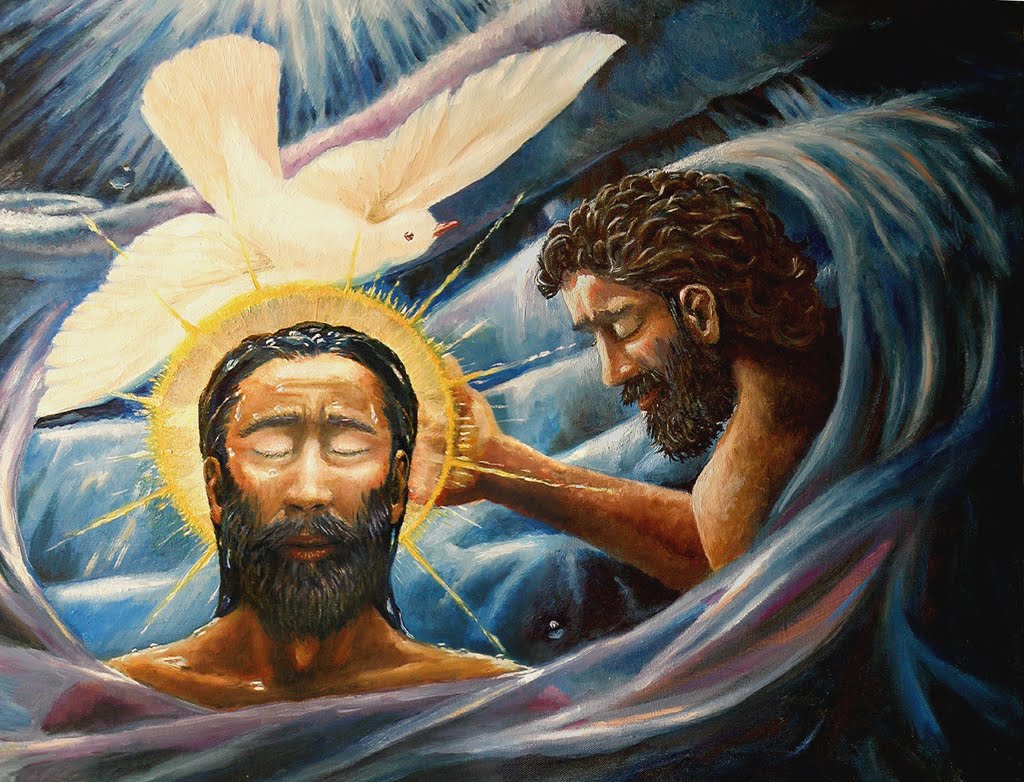
Baptism-of-Christ“Then Jesus came from Galilee to the Jordan to John, to be baptized by him. John would have prevented him, saying, ‘I need to be baptized by you, and do you come to me?’But Jesus answered him, ‘Let it be so now, for thus it is fitting for us to fulfill all righteousness’” (Matthew 3:13-15).

Ever wondered what Jesus meant when He told John the Baptist that He had to be baptized because He had to “fulfill all righteousness” (Matthew 3:15)?

I always thought R. C. Sproul explains it well:

In all of the New Testament, I do not think there is any more important text defining the work of Jesus. It tells us that Jesus was sent to fulfill all righteousness. For the Jews, that meant obeying every jot and tittle of the law. In undergoing baptism, Jesus was not acting for Himself but for His people. Since His people were required to keep the Ten Commandments, He had to keep the Ten Commandments. Likewise, since His people were now required, according to the command of the prophet John the Baptist, to submit to this baptismal ritual, He had to submit to it.

Jesus had to adhere to the whole law of God because the redemption He brought was not accomplished solely by His death on the cross. God did not send Jesus to earth on Good Friday so He could go straight to the cross. Jesus not only had to die for our sins, but also had to live for our righteousness. If Jesus had only died for our sins, His sacrifice would have removed all of our guilt, but that would have left us merely sinless in the sight of God, not righteous. We would not have done anything to obey the law of God, which is righteousness.

In theology, we distinguish between the passive obedience of Jesus and His active obedience. The passive obedience of Christ was His willingness to submit to the pain that the Father inflicted on Him as He hung on the cross. He passively received the curse of God there. His active obedience was His whole life of obeying the law of God, whereby He qualified to be the Savior. It was by His perfect obedience that He became the Lamb without blemish.

The covenant with Moses declared that everyone who fulfilled the law received the blessing and that those who disobeyed the law received the curse. What did Jesus do? He obeyed the law perfectly, so He earned the blessing and not the curse. At the cross, our sin was transferred to His account and was laid upon Him. That meant He received the curse, not the blessing. But in our redemption, His righteousness is imputed to us, so we receive the blessing and not the curse we deserve. Jesus would not have had that righteousness if He had not lived a life of perfect obedience.

The bottom line is that Jesus’ life of perfect obedience was just as necessary for our salvation as His perfect atonement on the cross. The reason is that there is a double imputation: our sin to Him and His righteousness to us. That is what Scripture is getting at when it says, “THE LORD OUR RIGHTEOUSNESS” (Jer. 33: 16). (Taken from The Work of Christ: What the Events of Jesus’ Life Mean for You (pp. 71-72).

The work of Christ is an object of inexhaustible study that is ready to enflame the heart of any humble listener. Study the work of Christ my friend and be filled!


Posted in Uncategorized | Tagged , , , | 1 Comment

The Saturday Post(s)

Saturday Post

Things Jesus Will Never Say to You. A great list. One of my favorites is, “Yeah, good job on ___________, but what about ____________?”

Ten Promises for Parents. “Here are ten promises from the Bible that every Christian parent should remember, especially the Christian parent writing this blog.”

What is Your Mud Pie? “One of C.S. Lewis’ illustrations: An ignorant child who wants to go on making mud pies in a slum because he cannot imagine what is meant by the offer of a holiday at the sea. It is a vivid illustration and one that is simple enough to see in the lives of other people—those people who settle for lesser pleasures when the greatest of all pleasures awaits…” What is your mud pie?

Seven Ways to Love Your Pastor. “In this charge, Pastor Paul shared seven ways that a congregation can love their shepherd, and his words of encouragement are applicable to every local church context…”

Five Questions Answered by the Five Solas. If you don’t know what a Sola is, read this. If you do, read this.

Should a Church Display an American Flag? “A few years ago, Christianity Today asked me to weigh in on this issue, in a Village Green conversation with Douglas Wilson and Lisa Velthouse. Wilson says “Don’t Do It” and Velthouse, a Marine Corps wife, thinks churches should enthusiastically display the Stars and Stripes. I say, “Yes, But.” You can read all three essays here at Christianity Today.”

On Being the Pastor’s Kid. The son of a very popular pastor sheds some light on what it is like to be a pastor’s kid. I think the things shared are valuable for anyone belonging to a church.

Amazing Guitar. People are amazing creatures.

Posted in Uncategorized | Leave a comment

Something Worth Fighting Over

Boxing-LondonThomas Watson:

We glorify God by standing up for His truths. Much of God’s glory lies in His truth. God has entrusted us with His truth, as a master entrusts His servant with His purse to keep. We have not a richer jewel to trust God with than our souls, nor has God a richer jewel to trust us with than His truth. Truth is a beam that shines from God. Much of His glory lies in His truth. When we are advocates for truth we glorify God. Jude calls us to, “Contend earnestly for the truth.” The Greek word to contend signifies great contending, as one would contend for his land and not suffer his right to be taken from him; so we should contend for the truth. Were there more of this holy contention God would have more glory. Some contend earnestly for trifles and ceremonies, but not for truth. We should count him indiscreet that would contend more for a picture than for his inheritance; for a box of counters than for his box of title deeds. (Taken from Body of Divinity, p. 15).


Posted in Uncategorized | Tagged , , , | Leave a comment

The Essential Gospel in Four Words

0cdf5f6376a4fa303c9e2b6156a69788If I asked you to tell me the essential elements of the gospel in 30 seconds, would you be able to do it? What would you make sure to say and what would you feel comfortable leaving out? What aspects of the gospel message are essential for faithful evangelism?

Mark Dever gives a fantastic answer in his book The Deliberate Church (p. 51-52).

What are the essentials of evangelism? We can sum them up in four words: God, man, Christ, and response.

God is our holy Creator and righteous Judge. He created us to glorify Him and enjoy Him forever (Gen. 2:7; 16-17; 18:25; Matt. 25:31-33).

But Mankind has rebelled against God by sinning against His holy character and law (Gen. 3:1-7). We’ve all participated in this sinful rebellion, both in Adam as our representative head and in our own individual actions (1 Kings 8:46; Rom. 3:23; 5:12, 19; Eph. 2:1-3). As a result, we have alienated ourselves from God and have exposed ourselves to His righteous wrath, which will banish us eternally to hell if we are not forgiven (Eph. 2:12; John 3:36; Rom. 1:18; Matt. 13:50).

But God sent Jesus Christ, fully God and fully man, to die the death that we deserved for our sins – the righteous for the unrighteous – so that God might both punish our sin in Christ and forgive it in us (John 1:14; ROm. 3:21-26; 5:6-8; EPh. 2:4-6).

The only saving response to this Good News is repentance and belief (Matt. 3:2; 4:17; Mark 1:15; Luke 3:7-9; John 20:31). We must repent of our sins (turn from them and to God) and believe in Jesus Christ for forgiveness of our sins and reconciliation to God.

God, man, Christ, response. Remember – it is not evangelism without the evangel (the good news).

This is the good news of the gospel of Jesus. A loving & righteous God, rebellious Man, a merciful Savior, and an urgent response are all necessary elements of the gospel message. More can be said, most definitely, but not less. For a fuller explanation of the gospel of Jesus Christ, check this out.

Posted in Uncategorized | Tagged , , | 2 Comments